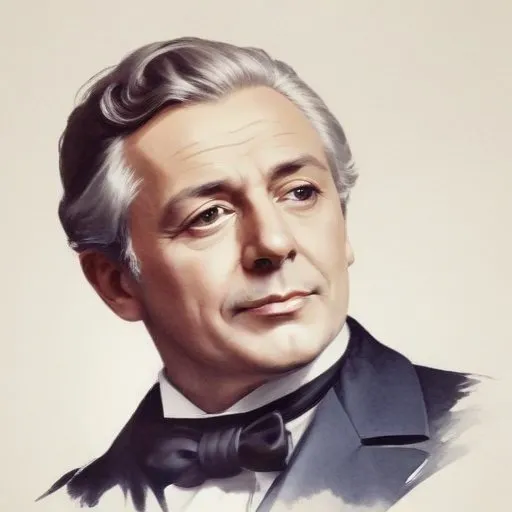
Pietro Mascagni: The Mastermind Behind Verismo Opera
The Sensation That Started It All: Cavalleria Rusticana
Pietro Mascagni is renowned for his 1890 masterpiece, Cavalleria Rusticana, an opera that singlehandedly ushered in the Verismo movement in Italian dramatic music. This iconic work caused a sensation in the opera world, cementing Mascagni's position as a pioneering composer of his time.
Early Life and Education
Born on December 7, 1863, in Livorno, Tuscany, Mascagni was the second son of Domenico and Emilia Mascagni. His father owned a bakery, and the family's humble beginnings had no indication of the musical genius that was to emerge. Mascagni's early life was marked by a passion for music, which was nurtured by his teacher, Alfredo Soffredini. Under Soffredini's guidance, Mascagni began composing rapidly, producing several works between 1879 and 1880, including Sinfonia in do minore, Prima sinfonia in fa maggiore, Elegia, Kyrie, Gloria, and Ave Maria.
A Musical Career That Defied Expectations
Mascagni's musical career was a testament to his innovative spirit and versatility. His first cantata, In Filanda, premiered at the Istituto Cherubini in 1881, winning the first prize at a musical contest in Milan. This success was followed by his Cantata alla gioia, composed in 1882, which further established his reputation as a rising star in the musical world. Mascagni's meeting with renowned musicians
Arrigo Boito and
Amilcare Ponchielli in Milan in 1881 marked the beginning of a new era in his career.
A Prolific Composer and Conductor
Mascagni's compositional output was remarkable, with 15 operas, an operetta, several orchestral and vocal works, songs, and piano music to his credit. He enjoyed immense success during his lifetime, not only as a composer but also as a conductor of his own and other people's music. Mascagni's operas showcased his ability to experiment with different styles, making him a standout figure in the world of opera.
Notable Works and Legacy
- Lamico Fritz (1891) and Iris (1898), two operas that have remained in the European repertoire since their premieres.
- Zanetto (1896), an opera that marked a departure from his earlier Verismo style.
- Amica (1905), an opera that showcased his ability to blend drama and music.
Mascagni's legacy extends beyond his compositions. He was a pioneer of the Verismo movement, paving the way for future generations of composers. His influence can be seen in the works of composers like
Giacomo Puccini and Ruggero Leoncavallo.
Awards and Honors
Mascagni received numerous accolades during his lifetime, including:
- The title of Cavaliere (Knight) of the Order of the Crown of Italy (1891).
- The title of Commendatore (Commander) of the Order of the Crown of Italy (1895).
- A honorable mention at the Paris Exposition (1900).
Personal Life and Relationships
Mascagni's personal life was marked by a close friendship with Giovanni Targioni-Tozzetti, who was born in the same year and city as Mascagni. This lifelong friendship was a source of inspiration and support for Mascagni. He married Lina Carbognani in 1893, and the couple had two sons, Domenico and Remo.
A Lasting Impact
Pietro Mascagni's contribution to the world of opera is immeasurable. He was a true innovator, pushing the boundaries of musical expression and style. As we celebrate his life and legacy, we are reminded of the power of music to inspire and uplift. Mascagni's work continues to captivate audiences, ensuring his place as one of the most important figures in the history of opera.
FAQ
What is Pietro Mascagnis most famous opera?
Pietro Mascagnis most famous opera is Cavalleria Rusticana, which premiered in 1890 and became an instant success.
What was Pietro Mascagnis contribution to Italian opera?
Pietro Mascagnis contribution to Italian opera lies in his innovative use of verismo, a style that emphasized realism and everyday life. His operas are known for their emotional intensity and vivid orchestration.
How did Pietro Mascagnis life influence his music?
Pietro Mascagnis life, marked by poverty and hardship, heavily influenced his music. His experiences are reflected in his operas, which often explored themes of love, death, and social class.
What were some of Pietro Mascagnis notable collaborations?
Pietro Mascagni collaborated with several prominent librettists and composers of his time, including Giovanni Targioni-Tozzetti and Guido Menasci.
What is Pietro Mascagnis legacy in opera?
Pietro Mascagnis legacy in opera lies in his role in shaping the verismo movement and his contribution to the development of Italian opera in the late 19th and early 20th centuries.