


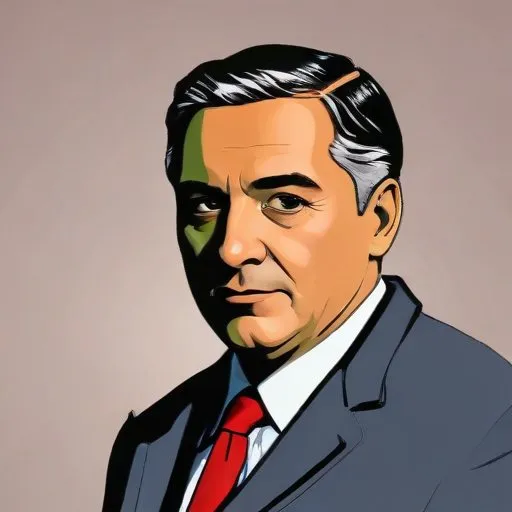
Leader of the Italian Socialist Party who played a key role in shaping post-WWII Italian politics and was a strong advocate for European integration. He was a prominent figure in Italian politics for over three decades.
Pietro Nenni, a prominent Italian socialist politician and statesman, is best known for his role as the national secretary of the Italian Socialist Party (PSI) and senator for life since 1970. He was a key figure in shaping Italy's political landscape from the 1920s to the 1960s, earning him the Lenin Peace Prize in 1951.
Nenni was born on February 9, 1891, in Faenza, Emilia-Romagna, to peasant parents. After their passing, he was taken in by an aristocratic family and placed in an orphanage. Every Sunday, he would recite his catechism before the countess, receiving a silver coin as a reward if he did well – an experience he later recalled as both generous and humiliating.
In 1908, Nenni became the editor of a republican paper in Forlì, where he crossed paths with Benito Mussolini, who was editing a socialist paper at the time. This marked the beginning of Nenni's journey in politics, as he joined the Italian Republican party in 1909.
In 1911, Nenni was arrested and imprisoned for seven months for participating in a socialist protest against Italy's imperialistic war in Libya, alongside Mussolini. This experience only strengthened his resolve, and he continued to advocate for social change.
During World War I, Nenni volunteered for the Isonzo front in 1915, where he was wounded and eventually sent home. Upon his return, he became the editor of the republican paper Mattine d'Italia, where he defended Italy's participation in the war while trying not to alienate his socialist friends.
In 1921, Nenni joined the Socialist Party, which had split from the wing that would form the Italian Communist Party. This marked a crucial turning point in his career, as he dedicated himself to fighting against fascism and promoting socialism in Italy.
As the PSI's national secretary, Nenni played a pivotal role in shaping the party's agenda and resisting fascist ideologies. He was a vocal critic of Mussolini's regime, and his bravery in the face of oppression earned him both admiration and respect from his contemporaries.
In recognition of his tireless efforts to promote peace and socialism, Nenni was awarded the Lenin Peace Prize in 1951. He was also appointed senator for life in 1970, a testament to his enduring impact on Italian politics.
Today, Pietro Nenni is remembered as a champion of social justice and a key figure in Italy's transition from fascism to democracy. His life's work serves as a powerful inspiration to future generations of politicians, activists, and citizens seeking to create a more just and equitable society.
Born in 1898
The 5th President of Italy, a lawyer and politician, served from 1964 to 1971, playing a key role in shaping the country's post-war politics and economy. He's remembered for his efforts to modernize Italy and strengthen its international relations.
Born in 1893
An Italian politician who played a crucial role in shaping the country's post-WWII government and was a key figure in the Italian Communist Party, known for his efforts to reform the justice system.
Born in 1881
Italian journalist and politician who served as the 30th Prime Minister of Italy, leading the country's post-WWII reconstruction and European integration efforts. He's known for his key role in shaping modern Italy's politics and economy.
Born in 1922
Leader of the Italian Communist Party who implemented a policy of Eurocommunism, seeking to reform the party and distance it from Soviet influence.
Born in 1896
A courageous anti-fascist journalist and politician who served as President of Italy, known for his strong democratic values and commitment to social justice.
Born in 1925
The 11th President of Italy, a seasoned journalist and politician, served two terms from 2006 to 2015, playing a key role in stabilizing the country's economy and politics during a tumultuous period. He's known for his diplomatic efforts and commitment to European integration.
88 Years Old
Italian academic and politician who served as Prime Minister of Italy, known for his efforts to reform the country's economy and politics. He played a key role in shaping the European Union's constitution.
