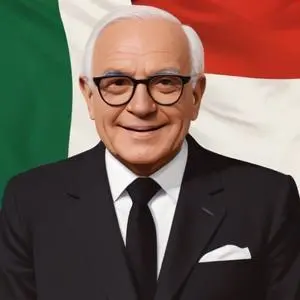
Sandro Pertini: A Beacon of Democracy and Resilience in Turbulent Times
Introduction to a Legendary Statesman
Sandro Pertini was a towering figure in Italian politics, serving as the President of Italy from 1978 to 1985. He is revered for his unwavering commitment to democracy, socialism, and human rights, earning him the nickname "The Partisan President." Throughout his life, Pertini remained a steadfast opponent of fascism, totalitarianism, and oppression, inspiring generations of Italians and international leaders alike.
Early Life and Formative Years
Born on September 25, 1896, in Stella, Province of Savona, Pertini was the son of a wealthy landowner, Alberto. He received his education at a Salesian college in Varazze and later at the Chiabrera lyceum high school in Savona. It was during this period that he was deeply influenced by his philosophy teacher, Adelchi Baratono, a reformist socialist who introduced him to the ideals of socialism and the Ligurian labour movements.
World War I and the Rise of Fascism
In 1915, at the age of 19, Pertini opposed Italy's entry into World War I but nonetheless enlisted in the army, where he served as a lieutenant and was decorated for bravery. The war experience had a profound impact on him, and he soon became disillusioned with the rising tide of fascism in Italy. After the armistice in 1918, Pertini joined the Unitary Socialist Party (PSU) and later settled in Florence, where he graduated in political science with a thesis entitled "La Cooperazione" (Cooperation) in 1924.
Resistance to Fascism
Pertini's outspoken criticism of fascism led to him being physically beaten by Fascist squads on several occasions. However, he never lost faith in his ideals, famously declaring, "To the most perfect dictatorship, I will always prefer the most imperfect democracy." This unwavering stance earned him the respect and admiration of his contemporaries, including prominent figures such as Gaetano Salvemini, Carlo and Nello Rosselli, and Ernesto Rossi.
Escape to France and the Fight Against Fascism
In 1926, Pertini was sentenced to internment but managed to go into hiding. Alongside Carlo Rosselli and Ferruccio Parri, he organized and accompanied the escape to France of Filippo Turati, the most prominent figure of the PSU. This daring act cemented his reputation as a courageous and determined leader in the fight against fascism.
Post-War Politics and the Presidency
After the fall of fascism, Pertini continued to play a vital role in Italian politics. He was elected to the Constituent Assembly in 1946 and later served as a member of the Chamber of Deputies. In 1978, he was elected President of Italy, a position he held until 1985. During his presidency, Pertini worked tirelessly to promote national unity, social justice, and human rights.
Legacy and Impact
Sandro Pertini's life was a testament to his unwavering commitment to democracy, socialism, and human rights. His legacy continues to inspire generations of Italians and international leaders alike. He remains an iconic figure in modern Italian history, symbolizing resistance, resilience, and the unwavering pursuit of justice and equality.
Personal Milestones and Key Life Events
- 25 September 1896: Born in Stella, Province of Savona
- 1915: Enlisted in the army during World War I
- 1918: Joined the Unitary Socialist Party (PSU)
- 1924: Graduated in political science with a thesis entitled "La Cooperazione" (Cooperation)
- 1926: Sentenced to internment but managed to go into hiding
- 1946: Elected to the Constituent Assembly
- 1978: Elected President of Italy
- 24 February 1990: Passed away at the age of 93
Philosophical Contributions and Beliefs
Pertini's philosophical approach was deeply rooted in his commitment to democracy, socialism, and human rights. He believed in the inherent value of individual freedom and the importance of collective action in promoting social justice and equality.
Influence on Modern Society
Sandro Pertini's unwavering commitment to democracy and human rights has had a profound impact on modern Italian society. His legacy continues to inspire generations of Italians, promoting a culture of tolerance, inclusivity, and social justice.
Historical Context and Legacy
Pertini's life and legacy are inextricably linked to the tumultuous history of 20th-century Italy. His courageous resistance to fascism and his unwavering commitment to democracy have made him an iconic figure in modern Italian history. His legacy serves as a powerful reminder of the importance of promoting and protecting human rights, social justice, and democracy in the face of oppression and tyranny.