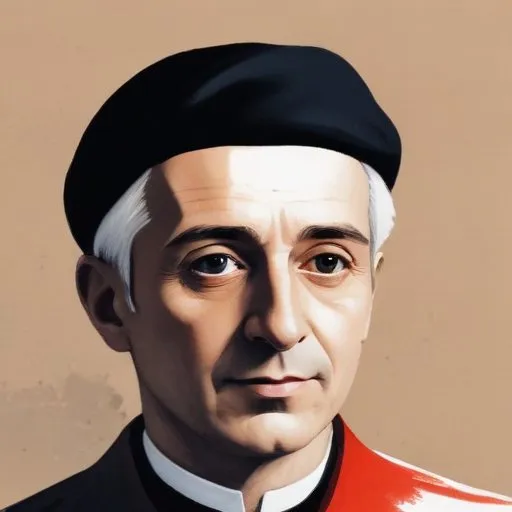
Pietro Paolini: The Baroque Painter Who Captivated Rome and Beyond
A Master of Light and Shadow
Pietro Paolini, known as il Lucchese, was a renowned Italian painter of the Baroque period, celebrated for his dramatic and emotive works that responded to the innovative style of Caravaggio. Born on June 3, 1603, in Lucca, Paolini's artistic career spanned over four decades, leaving an indelible mark on the art world.
Early Life and Training
Paolini was born into a wealthy family, with his mother, Ginevra Raffaelli, descending from a prominent Lucchese family. At the tender age of 16, his father, Tommaso Paolini, sent him to Rome to apprentice in the workshop of Angelo Caroselli, a follower of Caravaggio. Although previously thought to be a traditional master-apprentice relationship, recent discoveries suggest a more complex and collaborative dynamic between Caroselli and Paolini.
Rome and the Caravaggesque Tradition
During his time in Rome, Paolini was exposed to the influences of the second generation of naturalist painters in the Caravaggesque tradition, including Bartolomeo Manfredi, Cecco del Caravaggio, and Bartolomeo Cavarozzi. This exposure allowed him to develop a unique style that blended the dramatic chiaroscuro of Caravaggio with the lyrical brushstrokes of his contemporaries.
Venice and the Influence of the North
From circa 1629 to 1631, Paolini lived in Venice, where he was inspired by the works of Paolo Veronese and Tintoretto. This period marked a significant shift in his artistic approach, as he began to incorporate the vibrant colors and sweeping gestures of the Venetian school into his repertoire.
Return to Lucca and Founding of the Academy
Paolini returned to his native Lucca in the early 1630s, where he established an academy that would nurture the next generation of Lucchese painters. This institution not only cemented his reputation as a master painter but also fostered a sense of community and artistic innovation in the region.
Artistic Legacy and Contributions
Paolini's oeuvre is characterized by its emotional intensity, masterful use of light and shadow, and a deep sense of humanity. His paintings, often featuring dramatic and dynamic compositions, continue to captivate audiences with their beauty and expressive power.
- The Martyrdom of Saint Lawrence, a rare example of Paolini's work in a public collection, is housed in the Galleria Nazionale di Palazzo Mansi in Lucca.
- Paolini's Ecstasy of Saint Francis, a masterpiece of Baroque art, is considered one of the most important works of the 17th century.
Personal Life and Milestones
Paolini's life was marked by significant personal milestones, including the death of his parents and the responsibility of supporting his many siblings. Despite these challenges, he remained dedicated to his art, leaving behind a rich legacy that continues to inspire artists and art lovers alike.
Pietro Paolini's remarkable journey, from his early training in Rome to his later years as a master painter in Lucca, is a testament to his unwavering passion for art and his contributions to the evolution of the Baroque style.
A Lasting Impact
Paolini's influence can be seen in the works of his contemporaries and followers, including artists such as Simone del Tintore and Francesco Vanni. His legacy extends beyond the art world, as his paintings continue to captivate audiences with their beauty, drama, and emotional resonance.
FAQ
What was Pietro Paolinis contribution to Italian art?
Pietro Paolini was a prominent Italian painter of the Baroque period, known for his vivid depictions of mythological and biblical scenes.
How did Pietro Paolinis style influence Italian art?
Pietro Paolinis style, characterized by its use of chiaroscuro and dramatic lighting, influenced the development of Italian art, particularly in the areas of painting and architecture.
What were Pietro Paolinis greatest works?
Pietro Paolinis greatest works include his paintings of mythological and biblical scenes, which are renowned for their beauty and emotional power.
How did Pietro Paolini impact the development of the Baroque style?
Pietro Paolinis contributions to the development of the Baroque style helped shape the artistic and cultural landscape of 17th-century Italy.
What can we learn from Pietro Paolinis life and art?
We can learn about the importance of artistic innovation, technical skill, and emotional expression from Pietro Paolinis life and art.