


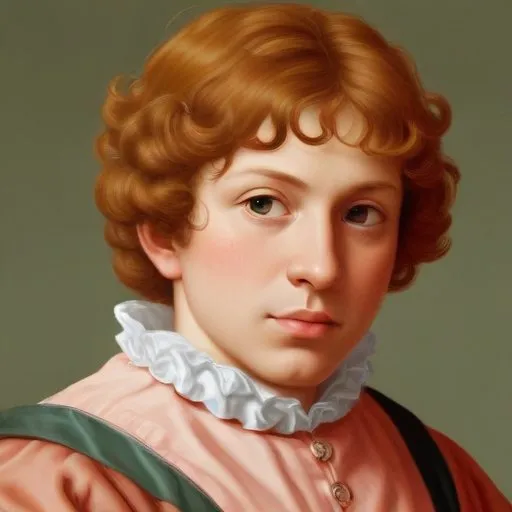
A prominent painter of the Baroque period, known for his vivid and emotive depictions of mythological and biblical scenes, which greatly influenced the development of 17th-century art.
Domenichino, born Domenico Zampieri, was an Italian Baroque painter renowned for his exceptional skill in the Bolognese School of painters. His diminutive stature earned him the nickname "little Domenico," which stuck with him throughout his career.
Born on October 21, 1581, in Bologna, Italy, Domenichino was the son of a shoemaker. He initially studied under Denis Calvaert, a prominent painter of the time. However, a quarrel with Calvaert led him to leave and join the Accademia degli Incamminati of the Carracci, where he honed his skills.
In 1602, Domenichino left Bologna for Rome, where he became one of the most talented apprentices to emerge from Annibale Carracci's supervision. He lived with his colleagues Albani and Guido Reni and worked alongside Lanfranco, who later became a chief rival.
Domenichino's most important project of the first decade was the decoration of the Cappella dei Santissimi Fondatori in the medieval basilica of the Abbey of Grottaferrata (1608-1610). He also completed frescoes in the church of Sant'Onofrio (c. 1604-05), feigned stucco decoration in the Palazzo Mattei (1606-07), and a large scene of The Flagellation of St. Andrew at San Gregorio Magno.
Domenichino's style was characterized by his use of classical motifs, harmonious colors, and attention to detail. His work had a significant impact on the development of Baroque art, influencing artists such as Poussin and Claude Lorraine.
Domenichino's personal life was marked by his close friendships with his colleagues, including Albani and Guido Reni. He also received support from prominent figures, including Monsignor Giovanni Battista Agucchi and Cardinal Girolamo Agucchi.
Domenichino's contributions to the world of art are undeniable. His work continues to inspire artists and art lovers alike, and his legacy as a master of the Bolognese School remains unwavering.
Domenichino's remarkable talent, combined with his dedication to his craft, has left an indelible mark on the world of art. His legacy continues to inspire and delight audiences to this day.
| Year | Event |
|---|---|
| 1581 | Born in Bologna, Italy |
| 1602 | Left Bologna for Rome |
| 1604-05 | Completed frescoes in the church of Sant'Onofrio |
| 1606-07 | Completed feigned stucco decoration in the Palazzo Mattei |
| 1608-10 | Decorated the Cappella dei Santissimi Fondatori in the Abbey of Grottaferrata |
| 1641 | Died in Naples, Italy |
This visual timeline highlights the most significant events in Domenichino's life and career, showcasing his journey from a young apprentice to a renowned master of the Baroque style.
Born in 1575
A prominent Baroque painter and illustrator, renowned for his vivid and emotive depictions of mythological and religious scenes. His works are celebrated for their dramatic lighting and intense emotional power.
Born in 1560
A pioneering figure in the Baroque style, known for dramatic lighting, intense emotions, and classical influences in his works, which revitalized Italian art in the late 16th century.
Born in 1555
A prominent figure in the Bolognese School, he was a master of dramatic lighting and intense emotions, creating powerful and expressive works that influenced many artists.
Born in 1557
A prominent figure in the Bolognese School of painting, known for his innovative etchings and influential art academy that shaped the development of Baroque art.
Born in 1596
A prominent Baroque painter who created elaborate, dramatic, and emotive works that adorned the ceilings of Roman palaces and churches, influencing the development of 17th-century art.
Born in 1598
A renowned Baroque master who crafted exquisite sculptures and paintings that captivated 17th-century Rome, leaving an indelible mark on the art world.
Born in 1599
A Baroque mastermind who crafted iconic Roman churches, blending dramatic curves and geometric precision to create awe-inspiring spaces.
Born in 1642
A 17th-century Jesuit Brother who excelled as an architect and painter, creating stunning Baroque trompe l'oeil ceilings that seemed to defy gravity. His works continue to inspire artists and architects today.
