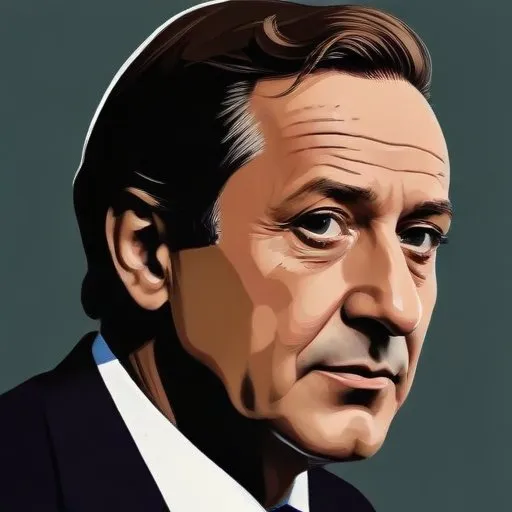
Pino Rauti: The Controversial Figure of Italy's Far-Right
A Lifetime of Right-Wing Politics and Allegations
Pino Rauti is known for being a prominent figure in Italy's far-right political scene, having played a significant role in shaping the country's post-war politics. As a founding member and leader of the Italian Social Movement (MSI), Rauti was a dominant force in the country's radical right-wing faction for many years.
Early Life and Political Beginnings
Born on November 19, 1926, in Cardinale, Calabria, Rauti's early life was marked by his involvement with the Guardia Nazionale Repubblicana of the Italian Social Republic during World War II. After briefly going into exile with the Spanish Foreign Legion, Rauti returned to Italy in 1946 and joined the MSI two years later.
Rise to Prominence and Association with Julius Evola
Rauti's rapid rise within the MSI saw him become a leading member of the party and a key figure in the New European Order initiative. His association with
Julius Evola, a prominent Italian philosopher and esotericist, had a significant impact on his own theoretical writings. In fact, Rauti's work was heavily influenced by Evola's philosophy, with some critics even accusing him of plagiarism.
The Ordine Nuovo and Split from MSI
In 1954, Rauti established his own group within the MSI, known as the Ordine Nuovo. However, he soon became disillusioned with the MSI's moderate stance and its support for the presidency bid of
Giovanni Gronchi and the premiership of
Giuseppe Pella. This led to a dramatic split from the MSI in 1956, with Rauti launching a scathing attack on the party's leadership as he departed.
Allegations of Terrorism and the Strategy of Tension
Rauti's political career was also marred by allegations linking him to the terror campaigns associated with the strategy of tension. As a vocal anticommunist, Rauti allegedly endorsed a twin-track approach against communists, involving both direct street fights and infiltration of left-wing groups to provoke violent action.
Legacy and Impact on Modern Italian Politics
Despite the controversies surrounding his career, Rauti's impact on modern Italian politics cannot be overstated. His influence on the far-right faction of the MSI and his role in shaping the country's post-war political landscape are undeniable. Love him or loathe him, Pino Rauti remains a significant figure in Italy's political history.
Personal Life and Milestones
- Rauti passed away on November 2, 2012, at the age of 85.
- He was a prolific writer and published several books on politics and philosophy.
- Rauti's association with Julius Evola had a lasting impact on his own philosophical beliefs.
Philosophical Contributions and Beliefs
Rauti's writings were heavily influenced by Evola's esotericism and traditionalism. He believed in the importance of preserving traditional values and combating the perceived threats of communism and liberalism.
Influence on Pop Culture and Historical Context
Rauti's controversial career and alleged involvement in terror campaigns have made him a figure of fascination in popular culture. His story serves as a reminder of the complex and often fraught history of Italian politics in the post-war era.
FAQ
What is Pino Rautis legacy in Italian politics?
Pino Rautis legacy in Italian politics is that of a pioneering politician who helped to shape the Italian far-right movement in the post-war era.
What is Pino Rautis most notable political role?
Pino Rautis most notable political role is probably his leadership of the Italian Social Movement, a far-right political party that he helped to found in the 1940s.
What is Pino Rautis contribution to Italian journalism?
Pino Rauti is known for his significant contributions to Italian journalism, particularly in the areas of right-wing politics and ideology.
What awards did Pino Rauti receive for his journalism?
Pino Rauti received several awards for his journalism, including the Italian National Syndicate of Journalists award.
What is Pino Rautis legacy in Italian history?
Pino Rautis legacy in Italian history is that of a controversial figure who played a significant role in shaping the Italian far-right movement in the 20th century.