


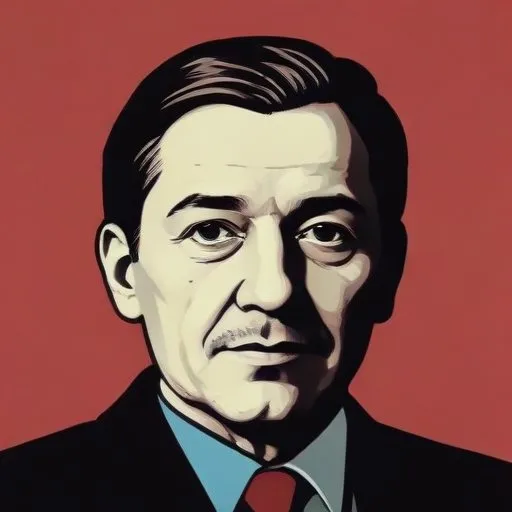
A Russian-born scholar who developed theories on social change, cultural dynamics, and the cyclical pattern of history, known for his work on the sociology of revolution and the critique of modernity.
Pitirim Sorokin, a pioneering Russian-American sociologist, is renowned for his groundbreaking contributions to the social cycle theory, a concept that explores the cyclical patterns of social and cultural development. As a prominent figure in the realm of sociology, Sorokin's work has had a profound impact on our understanding of human societies and their intricate dynamics.
Sorokin was born on February 4, 1889, in the small village of Turya, Russia, to a Russian father and Komi mother. His early life was marked by hardship, with his mother passing away when he was just five years old. Despite these challenges, Sorokin's father, a skilled craftsman, instilled in him a love for learning and a strong moral foundation.
Sorokin's educational journey took him to the University of St. Petersburg, where he earned a degree in law and began to develop an interest in sociology. His academic pursuits were interrupted by the Russian Revolution, during which he became actively involved in the Socialist Revolutionary Party.
After fleeing Russia, Sorokin found himself in Czechoslovakia, where he received assistance from notable figures Thomas Masaryk and Edouard Beneš. This led to his appointment as a professor of sociology at the University of Minnesota in 1924, marking the beginning of his illustrious academic career.
In 1930, Sorokin became the head of the newly formed department of sociology at Harvard University, a position he held for nearly three decades. During this period, he published numerous influential works, including Principles of Rural-Urban Sociology and Social and Cultural Dynamics, cementing his status as a leading authority in the field.
Sorokin's most significant contribution to sociology is his social cycle theory, which posits that societies undergo recurring cycles of development, marked by periods of growth, decay, and rebirth. This concept has far-reaching implications for understanding social and cultural phenomena, and has influenced scholars across disciplines.
Throughout his career, Sorokin was committed to exploring the intricacies of human societies, delving into topics such as rural-urban sociology, social mobility, and cultural dynamics. His work continues to inspire new generations of sociologists, anthropologists, and scholars of cultural studies.
Pitirim Sorokin's legacy extends beyond academia, with his ideas influencing social and cultural policies worldwide. His commitment to understanding the complexities of human societies has inspired countless scholars, policymakers, and social reformers.
Today, Sorokin's work remains a testament to his unwavering dedication to understanding the intricacies of human societies, and his social cycle theory continues to resonate with scholars and researchers across the globe.
As a champion of social justice and equality, Sorokin believed in the power of education to transform societies. He once noted, "Education is the most important weapon in the struggle for social justice."
Throughout his life, Sorokin remained committed to the principles of social reform, advocating for a more equitable and just society. His philosophical beliefs continue to inspire new generations of scholars, policymakers, and social reformers.
Pitirim Sorokin's remarkable life and career serve as a testament to the power of intellectual curiosity, social commitment, and unwavering dedication. As a pioneering sociologist, his work continues to shape our understanding of human societies, and his legacy inspires us to strive for a more just and equitable world.
Born in 1864
Developed the concept of "social action" and is known for his theories on bureaucracy, capitalism, and the role of religion in shaping society.
Born in 1818
A 19th-century philosopher who developed the theory of communism, arguing that capitalism would eventually be replaced by a socialist society. He's known for his critique of capitalism and the concept of class struggle.
Born in 1858
A founder of modern sociology, known for establishing the field and exploring the relationships between individuals and society, particularly in his work "Suicide".
Born in 1820
A pioneering thinker who coined the phrase "survival of the fittest" and applied evolutionary principles to social sciences, shaping modern sociology and philosophy.
Born in 1855
Developed the concept of Gemeinschaft and Gesellschaft, which distinguishes between community-based and society-based social organizations. His work laid the foundation for modern sociology and social theory.
Born in 1848
An Italian economist and sociologist who developed the Pareto principle, which states that a small proportion of causes often have a significant impact, and is also known for his work on income inequality.
