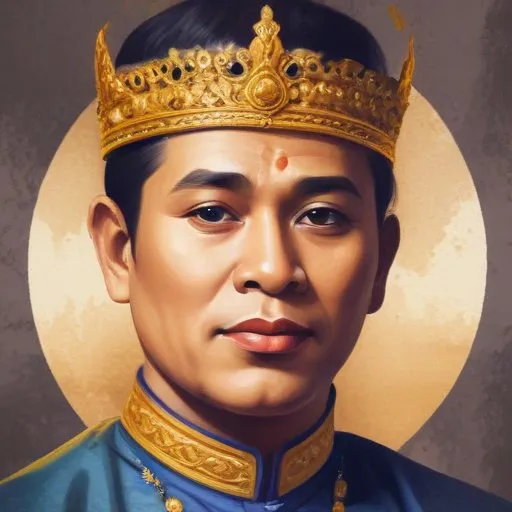
Prajadhipok: The Unlikely King Who Abandoned the Throne
A Turbulent Reign and a Historic Abdication
Prajadhipok, also known as Rama VII, is famously remembered as the seventh king of Siam from the Chakri dynasty, who reigned from 1925 to 1935. His reign was marked by political and social upheaval, culminating in his unprecedented decision to abdicate the throne, making him the only Siamese monarch of the Chakri dynasty to do so.
Early Life and Education
Somdet Chaofa Prajadhipok Sakdidej was born on November 8, 1893, in Bangkok, Siam (now Thailand), to King Chulalongkorn and Queen Saovabha Phongsri. As the youngest of nine children born to the couple, and the 33rd and youngest of Chulalongkorn's sons, Prince Prajadhipok was unlikely to succeed to the throne. Nevertheless, he chose to pursue a military career, studying at Eton College in 1906 and later at the Woolwich Military Academy, from which he graduated in 1913.
Military Career and Royal Duties
Commissioned in the Royal Horse Artillery in the British Army based in Aldershot, Prince Prajadhipok was forced to resign his British commission and return to Siam immediately when his brother, King Vajiravudh, ordered him to do so upon the outbreak of World War I. Back in Siam, he became a high-ranking military official and, in 1917, was ordained temporarily as a monk, a customary practice for most Buddhist Siamese men. In August 1918, he married his childhood friend and cousin, Rambai Barni, a descendant of King Mongkut and his Royal Consort Pia.
Accession to the Throne and Abdication
Following the death of his brother, King Vajiravudh, in 1925, Prince Prajadhipok ascended to the throne, becoming King Rama VII. His reign was marked by constitutional changes, economic instability, and growing political unrest. In 1932, the Siamese revolution led to the transformation of the country from an absolute monarchy to a constitutional monarchy. Faced with the prospect of losing his powers and the monarchical institution, King Prajadhipok chose to abdicate the throne in 1935, leaving Siam for England, where he lived in exile until his death in 1941.
Legacy and Impact
Prajadhipok's abdication had significant implications for the Chakri dynasty and the future of Siam. His decision paved the way for a new era of constitutional monarchy, with the monarch's powers significantly reduced. Today, King Prajadhipok is remembered as a crucial figure in Siam's transition from an absolute monarchy to a modern, democratic nation.
Personal Milestones and Key Life Events
- Born on November 8, 1893, in Bangkok, Siam (now Thailand)
- Graduated from Woolwich Military Academy in 1913
- Ordained as a monk in 1917
- Married Rambai Barni in 1918
- Ascended to the throne in 1925
- Abdicated the throne in 1935
- Died in exile in England on May 30, 1941
Historical Context and Comparative Analysis
Prajadhipok's reign and abdication must be viewed within the context of the tumultuous period of Siam's transition from an absolute monarchy to a constitutional monarchy. His decision to abdicate, although unprecedented, was influenced by the growing nationalist movement and the increasing pressure from the People's Party. In comparison to his contemporaries, King Prajadhipok's choices were guided by his sense of duty to the monarchical institution and his country, rather than personal ambition or desire for power.
FAQ
What is Prajadhipoks role in Thai history?
Prajadhipok was the seventh monarch of the Chakri dynasty, reigning from 1925 to 1935, and played a crucial role in Thailands transition from absolute monarchy to constitutional monarchy.
What reforms did Prajadhipok introduce during his reign?
Prajadhipok introduced several significant reforms, including the establishment of a constitutional monarchy, creation of a national parliament, and promotion of education and economic development.
How did Prajadhipok respond to the 1932 Siamese Revolution?
Prajadhipok initially resisted the demands of the 1932 Siamese Revolution, but eventually agreed to the establishment of a constitutional monarchy, marking a significant shift in Thailands political system.
What was Prajadhipoks relationship with the military?
Prajadhipoks relationship with the military was complex, with him struggling to maintain power against the rising influence of the military leaders, ultimately leading to his abdication in 1935.
What is Prajadhipoks legacy in Thai politics?
Prajadhipoks legacy in Thai politics is significant, with his reforms laying the foundation for modern Thailands democratic system, and his abdication marking the end of absolute monarchy in the country.