


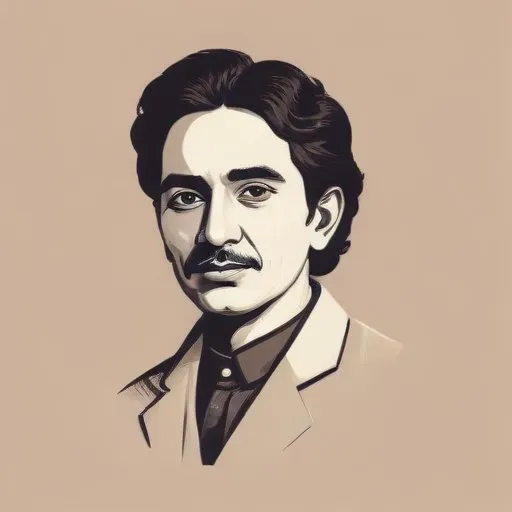
Indian physicist and politician who played a crucial role in developing India's nuclear program and was a key figure in the country's first nuclear test in 1974. He also made significant contributions to the development of India's science and technology infrastructure.
Raja Ramanna, a renowned Indian physicist, is best known for his instrumental role in India's nuclear program, culminating in the successful nuclear weapon test, codenamed "Smiling Buddha," on May 18, 1974. As the director of India's nuclear program in the late 1960s and early 1970s, Ramanna's leadership paved the way for India's emergence as a nuclear power.
Ramanna was born on January 28, 1925, in India. He earned his bachelor's degree in physics from Madras University and later pursued his Ph.D. from King's College, London. This strong educational foundation laid the groundwork for his future accomplishments in the field of nuclear physics.
Ramanna's association with the Tata Institute of Fundamental Research and the Bhabha Atomic Research Centre (BARC) marked the beginning of his illustrious career in nuclear physics. Working under the guidance of Homi Jehangir Bhabha, Ramanna's expertise soon caught attention, and he became the director of India's nuclear program in 1967.
Under Ramanna's leadership, the nuclear program witnessed significant growth and development. He played a crucial role in the design and execution of the first nuclear device test in 1974. This milestone cemented India's position as a nuclear power and earned Ramanna international recognition.
Ramanna's contributions to the nuclear program extended beyond the scientific realm. He facilitated research for the Indian Armed Forces and worked closely with the government to shape India's defence policies.
Ramanna's exceptional contributions to the field of nuclear physics earned him numerous awards and honors. He was conferred the Padma Vibhushan, India's second-highest civilian decoration, in 1975. Additionally, he received multiple honorary doctorates from various universities.
In the later stages of his career, Ramanna advocated against nuclear proliferation and testing. He served as a Member of Parliament, Rajya Sabha, from 1997 to 2003 and was the Minister of State for Defence in 1990.
Ramanna's legacy extends beyond his scientific achievements. He founded and directed the National Institute of Advanced Studies and chaired the board of governors at IIT Bombay. His commitment to education and research continues to inspire future generations of scientists and scholars.
Raja Ramanna passed away on September 24, 2004, at the age of 79, leaving behind a legacy of scientific excellence and national pride.
Born in 1909
Pioneering physicist who made groundbreaking contributions to the development of quantum mechanics and the discovery of subatomic particles, earning him the title "Father of Indian Nuclear Physics".
Born in 1919
Pioneering Indian physicist and academic who played a key role in the development of India's space program and founded the Indian Space Research Organisation (ISRO). He's also credited with establishing the Indian Institute of Management (IIM) in Ahmedabad.
Born in 1920
Pioneering Indian engineer who played a crucial role in the development of India's space program, particularly in the launch of the country's first satellite, Aryabhata.
95 Years Old
Indian engineer, academic, and politician who served as the 11th President of India, known for his contributions to the development of India's space program and missile technology. He's also a renowned author and inspirational figure.
94 Years Old
The 13th Prime Minister of India, a renowned economist who led the country through a period of rapid economic growth and liberalization, implementing reforms that transformed India's economy. He is credited with helping to lift millions of people out of poverty.
Born in 1889
India's first Prime Minister, a key figure in the country's struggle for independence from British rule, and a champion of democracy and secularism. He played a crucial role in shaping modern India's government and economy.
Born in 1917
The first female Prime Minister of India, serving from 1966 to 1977 and again from 1980 until her assassination in 1984, known for her strong leadership and economic reforms.
82 Years Old
The 6th Prime Minister of India, a key figure in Indian politics, known for introducing economic reforms and promoting technology in the country. He was also a strong advocate for social justice and equality.
