


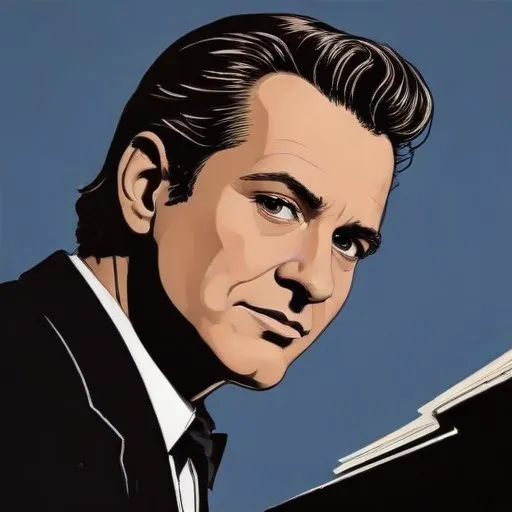
A talented pianist, composer, and conductor who led a popular orchestra in the 1940s and 1950s, known for his energetic performances and innovative arrangements.
Ralph Flanagan, an American big band leader, pianist, composer, and arranger, is best known for repopularizing the Glenn Miller sound in the late 1940s and early 1950s. His orchestra's unique blend of jazz and swing music captivated audiences, and his hits like "Rag Mop" and "Hot Toddy" remain iconic to this day.
Born Ralph Elias Flenniken on April 7, 1914, in Lorain, Ohio, Flanagan was an accomplished student at Lorain High School, where he was a member of the National Honors Society, student senate, school newspaper staff, HiY, and chorus.
During World War II, Flanagan served in the Merchant Marine from 1942 to 1946. After the war, he began his music career, working as a pianist and arranger for prominent orchestras, including those of Hal McIntyre, Sammy Kaye, Blue Barron, Charlie Barnet, and Alvino Rey.
By 1949, Flanagan formed his own successful orchestra, which was managed by Herb Hendler, a former RCA executive who had signed Glenn Miller to his final record contract. Hendler encouraged Flanagan to adopt the Miller sound, which led to his success.
Flanagan's orchestra recorded many hits, including "Singing Winds," "Rag Mop," and "Hot Toddy," which was co-written by Hendler. In 1952, Flanagan's recording of "Slow Poke" became a number 6 hit, and was also the first song played on the initial edition of the Today Show.
The Ralph Flanagan orchestra had two theme songs, "Giannina Mia" and "Singing Winds," the latter of which was also the name of the orchestra's singing group.
Flanagan's extensive discography includes albums such as "Ralph Flanagan Plays Rodgers" and many singles, showcasing his unique blend of jazz and swing.
As of 2010, Ralph Flanagan and his Orchestra were listed as missing royaltors by EMI Music, indicating that the record company had lost contact with Flanagan's estate and heirs. Despite this, Flanagan's music continues to be celebrated and enjoyed by audiences today.
Flanagan's legacy as a pianist, composer, and arranger is cemented in the history of American big band music. His contributions to the genre, particularly in repopularizing the Glenn Miller sound, remain an essential part of our cultural heritage.
Born in 1913
A legendary jazz musician and bandleader, known for his virtuosic saxophone and clarinet playing, and leading his iconic orchestra through the swing and bebop eras.
Born in 1910
A virtuosic clarinetist and innovative bandleader, he revolutionized the swing era with his unique sound and iconic hits like "Begin the Beguine" and "Stardust".
Born in 1909
A virtuosic clarinetist and bandleader, known as the "King of Swing," who revolutionized jazz music with his energetic and sophisticated style, leading a racially integrated orchestra in the 1930s.
Born in 1899
A legendary jazz pianist, composer, and bandleader who revolutionized the genre with his unique style and iconic compositions, such as "Take the A Train" and "Mood Indigo".
Born in 1904
A legendary jazz pianist and bandleader who led a iconic orchestra, blending swing and blues to create a unique sound that influenced generations of musicians. Known for his distinctive "less-is-more" style and hits like "April in Paris" and "One O'Clock Jump".
Born in 1912
A renowned saxophonist, composer, and bandleader, known for his iconic big band sound and hits like "Sentimental Journey" and "My Heart Belongs to Daddy".
Born in 1916
A legendary trumpet virtuoso and charismatic bandleader, known for his technical brilliance and romantic ballads, as well as his film appearances alongside iconic stars like Betty Grable.
38 Years Old
A talented actor who brought laughter and joy to many through his roles in popular sitcoms and films, particularly in the 1980s.
