


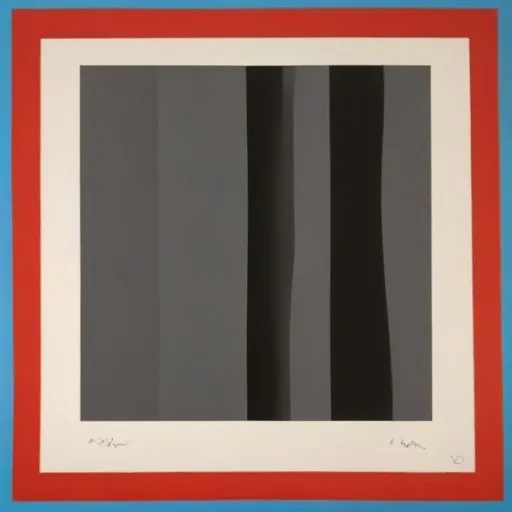
A pioneering American modernist, known for bold, geometric paintings and photographs of industrial landscapes, capturing the essence of urbanization and mechanization. 42
Ralston Crawford, a renowned American artist, is best known for his abstract representations of urban life and industry, which showcased his unique blend of precision and creativity. With a career spanning over five decades, Crawford's work has been instrumental in shaping the landscape of modern art, earning him a reputation as a pioneer of abstract urban landscapes.
Crawford was born on September 5, 1906, in St. Catharines, Ontario, and spent his childhood in Buffalo, New York. His artistic journey began in 1927 when he enrolled at the Otis Art Institute in California, where he honed his skills in art. His early years were marked by a stint at the Walt Disney Studio, followed by further studies at the Pennsylvania Academy of the Fine Arts and the Barnes Foundation, where he was exposed to the works of Picasso and Matisse.
In 1932, Crawford enrolled at the Academia Colarossi in Paris, and later at the Academie Scandinave, where he refined his craft. His travels took him to Spain, where he was fascinated by bullfighting and the religious processions during Holy Week in Seville. A visit to New Orleans introduced him to the vibrant jazz scene and the city's unique cemeteries, which he captured through his camera lens.
1934 marked a significant milestone in Crawford's career with his first one-man show at the Maryland Institute College of Art. His work during this period was characterized by realistic, sharp portrayals of factories, bridges, and shipyards, earning him a place among the Precisionist artists, alongside Niles Spencer and Charles Sheeler.
However, Crawford's artistic trajectory took a dramatic turn as he delved deeper into abstraction. His geometrically abstract works were a departure from his earlier realistic style, showcasing his ability to evolve and adapt. As he aptly put it, "I don't feel obligated to reveal the forms. They may be totally absent to the viewer of the work, or even to myself, but what is there, however abstract, grows out of something I have seen. I make pictures."
In 1946, Crawford was commissioned by Fortune Magazine to record a nuclear weapons test at the Bikini Atoll, a testament to his versatility as an artist. Throughout his career, he received numerous accolades, including an award from the National Academy of Design in 1972.
Ralston Crawford passed away on April 27, 1978, leaving behind a rich legacy of art that continues to inspire generations of artists, students, and art enthusiasts. His works are now part of the public collections at the Honolulu Museum of Art, the Metropolitan Museum of Art, and the Museum of Modern Art, among others.
Crawford's work reflects his deep-seated philosophy of capturing the essence of urban life and industry, rather than mere representation. His abstract works invite the viewer to engage with the underlying emotions and energies that drive the urban landscape, rather than merely observing its surface.
Through his art, Crawford encourages us to look beyond the obvious, to uncover the hidden patterns and rhythms that govern our lives. His legacy serves as a testament to the power of art to inspire, provoke, and transform our understanding of the world around us.
Born in 1883
Pioneering modernist artist capturing industrial landscapes and still-life compositions through photography and painting, blurring lines between representation and abstraction.
56 Years Old
A Zimbabwean cricketer who played international cricket and later became a coach, known for his spin bowling and leading the national team to several victories.
Born in 1882
A pioneering realist artist capturing the essence of modern American life through poignant, cinematic scenes of urban isolation and melancholy, evoking a sense of nostalgia and quiet contemplation.
Born in 1887
Pioneering American modernist artist famous for bold, colorful depictions of enlarged flowers, landscapes, and abstract compositions that explored new ways of representing the American Southwest. Her innovative style and independence inspired generations of artists.
Born in 1880
Pioneering abstract artist and educator who explored expressive forms and colors, creating a unique American modernist style. Known for his innovative and emotive works that bridged representation and abstraction.
Born in 1877
A pioneering figure in American Modernism, creating vibrant, symbolic paintings that explored the relationship between nature and human experience. Known for his bold, expressive works that blended abstraction and representation.
Born in 1865
A pioneering figure in American art, known for advocating for a more spontaneous and expressive approach to painting, and for teaching and mentoring many notable artists.
Born in 1892
A pioneering American modernist, blending cubism and abstract expressionism to create vibrant, jazz-inspired paintings that explored the intersection of art and everyday life.
