


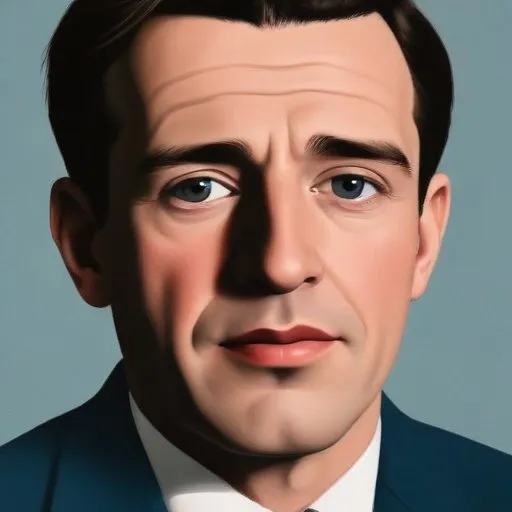
Pioneering modernist artist capturing industrial landscapes and still-life compositions through photography and painting, blurring lines between representation and abstraction.
Known for his innovative Precisionist paintings, groundbreaking commercial photography, and avant-garde film, Charles Sheeler is an American artist who left an indelible mark on the art world. His 1921 film, Manhatta, created in collaboration with Paul Strand, solidified his position as a pioneer of modernism in American art.
Born on July 16, 1883, in Philadelphia, Pennsylvania, Charles Rettew Sheeler Jr. was drawn to the arts from a young age. He attended the Pennsylvania Museum School of Industrial Art from 1900 to 1903, followed by the Pennsylvania Academy of Fine Arts, where he honed his skills under the guidance of renowned artist William Merritt Chase.
During his early years, Sheeler's education focused on drawing and applied arts, laying the foundation for his future success as a painter and photographer. A trip to Italy with fellow students introduced him to the works of medieval Italian masters like Giotto and Piero della Francesca, which had a profound impact on his artistic vision.
A trip to Paris in 1909 exposed Sheeler to the revolutionary works of Cubist artists Pablo Picasso and Georges Braque. This encounter had a profound effect on his artistic style, as he began to incorporate modernist elements into his paintings.
However, Sheeler soon realized that making a living as a modernist painter in the United States would be a challenge. This prompted him to turn to commercial photography, where he could apply his artistic skills to a more lucrative field. He taught himself photography using a $5 Brownie camera, eventually specializing in architectural subjects.
The sudden loss of his close friend Morton Livingston Schamberg in 1918 during the influenza epidemic had a profound impact on Sheeler's life and work. Schamberg's fascination with machinery and technology influenced Sheeler's own artistic themes, which would become a hallmark of his Precisionist style.
Sheeler's farmhouse in Doylestown, Pennsylvania, which he shared with Schamberg, became a sanctuary and a subject of many of his photographs. He affectionately referred to the home's 19th-century stove as his "companion" and often featured it in his work. The farmhouse, with its rustic charm, served as a constant source of inspiration for Sheeler, earning him the nickname "cloister."
Throughout his career, Charles Sheeler explored the boundaries of art, photography, and film, leaving a lasting legacy in the art world. His Precisionist paintings, characterized by clean lines, geometric forms, and a focus on industrial and urban landscapes, continue to inspire artists to this day.
Through his art, Charles Sheeler continues to captivate audiences, inspiring new generations of artists, photographers, and filmmakers to explore the intersection of modernism, technology, and creativity.
Born in 1864
A pioneering photographer and curator who promoted modern art in the early 20th century, showcasing works by avant-garde artists like Georgia O'Keeffe and Henri Matisse.
Born in 1879
A pioneering photographer and painter who blurred the lines between art and commerce, capturing iconic images for Vogue and Harper's Bazaar while pushing the boundaries of modern art.
56 Years Old
A Zimbabwean cricketer who played international cricket and later became a coach, known for his spin bowling and leading the national team to several victories.
Born in 1895
Documented the lives of those affected by the Great Depression and the Dust Bowl through powerful, poignant photographs that humanized the struggles of the era. Captured iconic images that shaped the national conversation around poverty and social justice.
Born in 1903
Documenting everyday American life through poignant and influential photographs, capturing the essence of the Great Depression and post-war era.
Born in 1902
Pioneering landscape photographer and conservationist capturing iconic black-and-white images of the American West, advocating for environmental protection through art.
Born in 1882
A pioneering realist artist capturing the essence of modern American life through poignant, cinematic scenes of urban isolation and melancholy, evoking a sense of nostalgia and quiet contemplation.
Born in 1887
Pioneering American modernist artist famous for bold, colorful depictions of enlarged flowers, landscapes, and abstract compositions that explored new ways of representing the American Southwest. Her innovative style and independence inspired generations of artists.
