


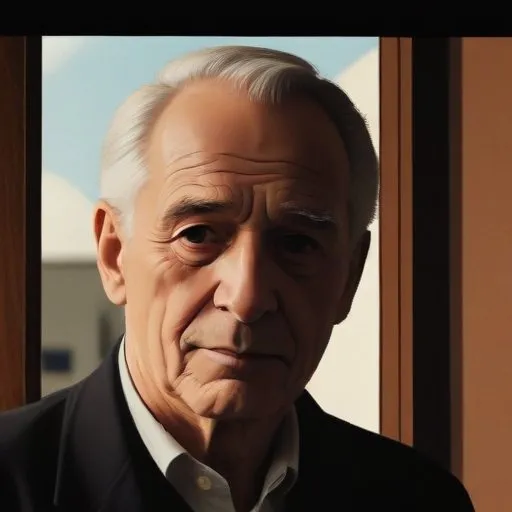
Pioneering photographer and filmmaker who captured the essence of modern life through his innovative and influential works, blending art and documentary styles. 82
Paul Strand, a legendary American photographer and filmmaker, is renowned for his groundbreaking contributions to establishing photography as a respected art form in the 20th century. Alongside modernist masters like Alfred Stieglitz and Edward Weston, Strand's innovative style and technical expertise helped redefine the medium, pushing its boundaries, and inspiring generations of photographers.
Born Nathaniel Paul Stransky on October 16, 1890, in New York, Strand's early life was marked by his Bohemian parents' influence and a passion for photography that began at the age of 12, when his father gifted him a camera. This sparked a lifelong journey, which would take him to the esteemed Ethical Culture Fieldston School, where he studied under the tutelage of renowned documentary photographer Lewis Hine.
A pivotal moment in Strand's career came during a field trip to the 291 art gallery, operated by Stieglitz and Edward Steichen. The exposure to forward-thinking modernist photographers and painters had a profound impact on Strand, encouraging him to take his photography more seriously. This chance encounter led to Stieglitz promoting Strand's work in the 291 gallery, Camera Work, and his own studio, solidifying their mentor-protégé relationship.
Strand's early work, such as the iconic "Wall Street" (1915), showcased his experimentation with formal abstractions, influencing prominent artists like Edward Hopper and his urban vision. This distinctive style not only demonstrated Strand's innovative approach but also reflected his commitment to using photography as a tool for social reform. He employed unconventional techniques, like using a false brass lens to capture candid portraits, often without his subjects' knowledge, sparking both admiration and criticism.
In 1936, Strand co-founded the Photo League, a cooperative of photographers united by a shared social and creative vision. This collective aimed to promote photography as a medium for social reform, challenging the status quo, and pushing the boundaries of visual storytelling.
Throughout his six-decade career, Strand's diverse body of work has had a profound impact on modern photography, inspiring generations of photographers, and cementing his status as a pioneer in the medium. His contributions to photography's recognition as an art form have been invaluable, leaving an indelible mark on the art world.
"The photograph itself doesn't interest me. I want to know what it means."
Strand passed away on March 31, 1976, leaving behind a profound legacy that continues to inspire and influence photographers worldwide. His remarkable journey, marked by innovation, experimentation, and a commitment to social reform, has cemented his position as one of the most important photographers of the 20th century.
Born in 1864
A pioneering photographer and curator who promoted modern art in the early 20th century, showcasing works by avant-garde artists like Georgia O'Keeffe and Henri Matisse.
Born in 1879
A pioneering photographer and painter who blurred the lines between art and commerce, capturing iconic images for Vogue and Harper's Bazaar while pushing the boundaries of modern art.
Born in 1895
Documented the lives of those affected by the Great Depression and the Dust Bowl through powerful, poignant photographs that humanized the struggles of the era. Captured iconic images that shaped the national conversation around poverty and social justice.
Born in 1902
Pioneering landscape photographer and conservationist capturing iconic black-and-white images of the American West, advocating for environmental protection through art.
Born in 1882
A pioneering realist artist capturing the essence of modern American life through poignant, cinematic scenes of urban isolation and melancholy, evoking a sense of nostalgia and quiet contemplation.
Born in 1887
Pioneering American modernist artist famous for bold, colorful depictions of enlarged flowers, landscapes, and abstract compositions that explored new ways of representing the American Southwest. Her innovative style and independence inspired generations of artists.
Born in 1880
Pioneering abstract artist and educator who explored expressive forms and colors, creating a unique American modernist style. Known for his innovative and emotive works that bridged representation and abstraction.
Born in 1883
Pioneering modernist artist capturing industrial landscapes and still-life compositions through photography and painting, blurring lines between representation and abstraction.
