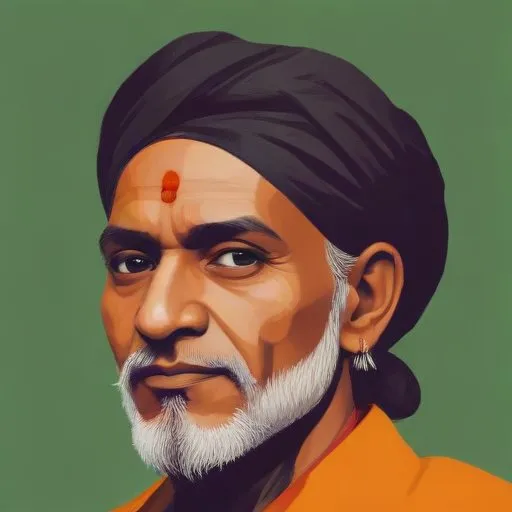
Ram Singh Kuka

Ram Singh Kuka

Ram Singh Kuka was born on February 3rd, 1816

Full Name: Ram Singh Kuka
Born: 1816
Place of Birth: India
Profession: Activist
Nationality: Indian
Known For: Non-cooperation Movement
Movement: Kuka Movement
Death: 1872

A pioneer of Indian independence, credited with sparking the Non-cooperation movement, inspiring masses to boycott British goods and institutions, paving the way for India's freedom struggle.

Written by: Emma Thompson Emma Thompson

The Fearless Crusader: Ram Singh Kuka

A Champion of Social Reform and Justice

Ram Singh Kuka, the renowned Sikh reformer and revolutionary, is best known for his fearless crusade against the British Raj and his tireless efforts to uplift the socio-economic condition of the marginalized communities in Punjab. As the founder of the Namdhari sect, Kuka movement, Ram Singh Kuka left an indelible mark on the Indian freedom struggle, inspiring countless individuals to fight against oppression and injustice.

The Early Life and Inspirations

Born in 1816 in the village of Bhaini, Punjab, Ram Singh Kuka was deeply influenced by the teachings of Guru Nanak and the Sikh gurus. His early life was marked by a strong sense of social justice, and he was deeply disturbed by the exploitation and atrocities committed by the British colonial powers. This sense of injustice paved the way for his future endeavors as a social reformer and freedom fighter.

The Kuka Movement

In 1857, Ram Singh Kuka launched the Kuka movement, a socio-religious reform movement aimed at eradicating social evils, promoting education, and fighting against the British colonial rule. The movement gained widespread popularity, attracting thousands of followers from across Punjab and beyond. Through his movement, Kuka emphasized the importance of self-reliance, education, and spiritual growth.

Acts of Bravery and Defiance

The British Response and Persecution

The British government, threatened by the growing popularity and influence of the Kuka movement, launched a series of repressive measures to crush the movement. Ram Singh Kuka and his followers were subjected to brutal persecution, imprisonment, and even execution. Despite these challenges, the movement continued to thrive, inspiring a new generation of freedom fighters.

Legacy and Impact

Ram Singh Kuka's legacy extends far beyond his lifetime. He played a pivotal role in shaping the Indian freedom struggle, inspiring leaders like Mahatma Gandhi and Subhas Chandra Bose. His movement's emphasis on education, self-reliance, and social justice continues to resonate with modern Indians. Today, the Namdhari sect, founded by Kuka, remains a symbol of Sikh identity and cultural heritage.

Personal Milestones and Key Life Events

Philosophical Contributions and Beliefs

Ram Singh Kuka's philosophy was deeply rooted in Sikhism and the teachings of Guru Nanak. He believed in the importance of spiritual growth, self-reliance, and education. He advocated for the upliftment of marginalized communities, and his movement's emphasis on social justice continues to inspire modern Indians.

Inspirational Quotes and Memorable Sayings

"The British government may have power, but we have the power of truth and justice on our side."

"Education is the key to unlocking the chains of slavery and oppression."

Ram Singh Kuka's fearless crusade against the British Raj and his tireless efforts to uplift the marginalized communities of Punjab continue to inspire generations of Indians. His legacy serves as a powerful reminder of the importance of social justice, education, and self-reliance.
Timeline
1816
Birth in Punjab
Ram Singh Kuka was born in 1816 in the Punjab region of India, during the reign of the Sikh Empire.
1857
Non-Cooperation Movement
Kuka launched the Non-Cooperation Movement, a peaceful resistance against British colonial rule in India.
1872
Arrest and Exile
Kuka was arrested by the British and exiled to Burma (now Myanmar), where he spent several years in prison.
1885
Release from Prison
Kuka was released from prison and returned to India, where he continued to advocate for Indian independence and social reform.
1885
Death in Punjab
Kuka died in 1885, but his legacy as a pioneer of Indian independence continues to inspire generations.
Ram Singh Kuka

Ram Singh Kuka Quiz

What was Ram Singh Kuka's significant contribution to the Indian independence movement?

Score: 0/5
FAQ
What was Ram Singh Kukas role in the Indian independence movement?
Ram Singh Kuka was an Indian freedom fighter who played a significant role in the Indian independence movement. He was a key figure in the Namdhari movement, which was a Sikh movement that aimed to overthrow British rule in India.
What was Ram Singh Kukas relationship with the British government?
Ram Singh Kuka was a vocal critic of British rule in India and believed that Indian independence could only be achieved through armed struggle. He was arrested and exiled by the British government on several occasions for his anti-British activities.
What was Ram Singh Kukas significance in the Namdhari movement?
Ram Singh Kuka was the leader of the Namdhari movement, which was a Sikh movement that aimed to promote Indian independence and social reform. He was a charismatic leader who inspired thousands of Indians to join the movement and fight against British rule.
What was Ram Singh Kukas legacy in Indian history?
Ram Singh Kuka is remembered as a hero in Indian history for his bravery and sacrifice in the fight against British rule. He is considered one of the pioneers of the Indian independence movement and an inspiration to future generations of freedom fighters.
How did Ram Singh Kuka die?
Ram Singh Kuka died on January 17, 1885, in Aden, Yemen, where he was exiled by the British government. He was 55 years old at the time of his death.

Related People:

Mahatma Gandhi

Born in 1869

Indian freedom fighter, activist, and philosopher who led India to independence from British rule through non-violent civil disobedience, inspiring civil rights movements worldwide.

Lala Lajpat Rai

Born in 1865

A leading figure in India's struggle for independence from British rule, known for his role in the Indian independence movement and his advocacy for Hindu-Muslim unity.

Bal Gangadhar Tilak

Born in 1856

A leading figure in India's independence movement, he used his writings and oratory skills to inspire and mobilize the masses against British rule. He's known as the "Father of the Indian Unrest" for his bold and provocative ideas.

Gopal Krishna Gokhale

Born in 1866

Indian economist and politician who played a key role in India's struggle for independence from British rule, advocating for social and economic reforms. He was a mentor to Mahatma Gandhi and influenced India's early 20th-century politics.

Bipin Chandra Pal

Born in 1858

Indian freedom fighter and social reformer who played a key role in the Indian independence movement and advocated for women's rights and education.

Rash Behari Bose

Born in 1886

An Indian revolutionary who fought for independence from British rule, leading the Indian Independence League and forming the Indian National Army to battle against British colonial forces.

Chittaranjan Das

Born in 1870

Indian independence activist and founder of the Swaraj Party, known for his role in the Non-Cooperation Movement and his advocacy for Hindu-Muslim unity.

Subhas Chandra Bose

Born in 1897

Indian freedom fighter and politician who led the Indian National Army against British rule and was a key figure in the country's struggle for independence. He is also known for his mysterious disappearance in 1945.