


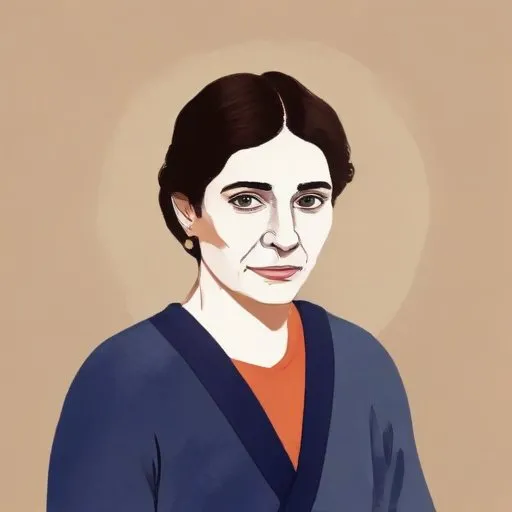
Ramón Gómez de la Serna, a Spanish writer, dramatist, and avant-garde agitator, is renowned for his innovative and humorous literary style, which has left an indelible mark on Spanish literature. His brainchild, the "Greguería," a short form of poetry that offers a fresh and often humorous perspective, has become an integral part of Spanish literary heritage.
Born on July 3, 1888, in Madrid, Spain, Ramón Gómez de la Serna defied his family's expectations by shunning a career in law or politics. Instead, he chose to pursue a life of art and literature, embracing the bohemian lifestyle of a bourgeois artist.
His early writings were published in the journal Prometeo, which was funded by his father between 1908 and 1912. This exposure enabled him to develop his unique writing style, which was heavily influenced by the avant-garde movement.
In 1909, Gómez de la Serna published the manifesto of futurism in Prometeo, marking a significant milestone in his literary career. This bold move earned him recognition as Spain's chief exponent of avant-garde writing.
The Greguería, a short, witty, and often humorous form of poetry, was born during this period. This innovative style allowed Gómez de la Serna to express himself freely, without the constraints of conventional poetry. The Greguería's unique blend of humor and insight has captivated readers and inspired generations of writers.
Gómez de la Serna's literary output was prolific, with over 90 works to his credit, spanning various genres including poetry, drama, and prose. Some of his notable works include:
These works showcase Gómez de la Serna's remarkable ability to experiment with language, form, and content, earning him a reputation as a master of Spanish avant-garde literature.
Gómez de la Serna's influence extends beyond Spanish literature to the world of art and cinema. His friend and collaborator, Luis Buñuel, a renowned surrealist filmmaker, was heavily influenced by Gómez de la Serna's work.
Today, Gómez de la Serna's legacy continues to inspire writers, artists, and thinkers around the world. His contribution to Spanish literature is undeniable, and his innovative spirit remains a beacon of creativity and inspiration.
In 1933, Gómez de la Serna was invited to Buenos Aires, where he remained until the end of his life, avoiding the tumultuous Spanish Civil War and the subsequent Spanish State.
Despite his exile, Gómez de la Serna continued to write and publish, leaving behind a rich literary heritage that continues to captivate readers to this day.
Ramón Gómez de la Serna's pioneering spirit, innovative style, and commitment to artistic expression have cemented his place as one of the most important figures in Spanish literature.
Born in 1902
A Spanish poet and playwright celebrated for his avant-garde style and powerful anti-fascist writings, which greatly influenced 20th-century Spanish literature.
Born in 1898
A Spanish poet and author, celebrated for his surreal and introspective works that explored the human condition, earning him the Nobel Prize in Literature in 1977.
Born in 1898
A renowned Spanish poet and philologist who made significant contributions to the study of Spanish literature, particularly in the field of Golden Age poetry. He's also known for his own poetry, which explores themes of love, death, and existential crisis.
Born in 1898
A Spanish poet, playwright, and director who explored themes of love, death, and Spanish culture through his works, including the famous play "Blood Wedding".
Born in 1902
A Spanish poet and critic, known for his lyrical and introspective poetry that explores themes of love, identity, and exile, with a unique blend of modernism and classicism.
Born in 1893
A Spanish poet, critic, and academic who explored themes of love, nature, and human existence through lyrical and introspective verse, earning him the Cervantes Prize.
Born in 1910
A 20th-century poet and playwright who explored themes of love, death, and social justice, creating powerful and emotive works that continue to resonate with readers today.
Born in 1875
A leading figure in Spanish literature, known for his innovative and influential poetry that explored themes of love, nature, and the human condition. His works are considered a bridge between modernism and the Generation of '27.
