


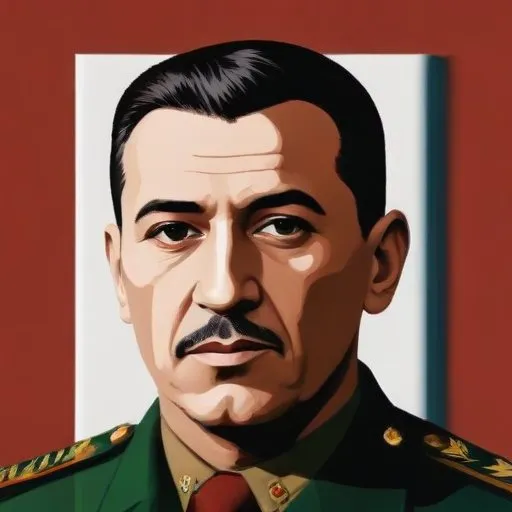
A Bosnian general who led the Army of Bosnia and Herzegovina during the Bosnian War, known for his key role in defending Sarajevo and leading the country to independence.
Rasim Deli, a career officer in the Yugoslav Army, is known for his role as the chief of staff of the Bosnian Army during the Bosnian War, as well as his subsequent conviction for war crimes by the International Criminal Tribunal for the former Yugoslavia. His career was marked by both military achievements and controversy, making him a complex and intriguing figure in modern military history.
Deli began his military career in the Yugoslav Peoples Army (JNA) on October 1, 1967, at the Military Academy for Land Forces. He completed his studies on July 31, 1971, and went on to serve in an artillery division of the JNA based in Sarajevo from 1971 to 1985. During this time, he held various positions, including commander of a joint artillery regiment and chief of staff and deputy commander of a joint artillery regiment.
In April 1992, Deli officially requested to leave the JNA and was subsequently appointed as Head of the Training and Operations Organ of the Territorial Defence of the Republic of Bosnia and Herzegovina (RBiH). He worked on the formation of units in central Bosnia and eventually became the head of the Visoko Tactical Group. By May 1992, he had become a member of the Main Staff and was tasked with organizing and commanding armed combat activities in various municipalities in central Bosnia.
In 2001, Deli was convicted by the International Criminal Tribunal for the former Yugoslavia for failing to prevent and punish crimes committed by the El Mujahid unit under his command during the Bosnian War. He was sentenced to three years in prison, sparking controversy and debate about the role of military leaders in preventing human rights abuses.
Deli's legacy is complex and multifaceted, reflecting both his military achievements and the controversy surrounding his conviction for war crimes. His career serves as a reminder of the importance of military leaders taking responsibility for preventing human rights abuses and promoting accountability within their ranks.
Rasim Deli's life and career serve as a reminder of the complexities of military leadership and the importance of promoting accountability and human rights in times of conflict.
83 Years Old
A Serbian general who orchestrated the Siege of Sarajevo and other atrocities during the Bosnian War, earning him the nickname "The Butcher of Bosnia".
81 Years Old
The first President of Republika Srpska, a convicted war criminal, known for his role in the Bosnian War and ethnic cleansing. He's infamous for his involvement in the Srebrenica massacre.
67 Years Old
The president of Republika Srpska, a Bosnian Serb entity, who has been a dominant figure in Bosnian politics, known for his nationalist views and controversial statements. He has been accused of undermining Bosnia's central government and promoting separatism.
96 Years Old
The 2nd President of Republika Srpska, a Bosnian Serb politician, is known for her role in the Bosnian War and her controversial views on nationalism and genocide. She was the first woman to be indicted for war crimes.
85 Years Old
The first President of Serbia, a mastermind behind the Yugoslav Wars, and a key figure in the Kosovo conflict, known for his nationalist and authoritarian rule.
72 Years Old
A Serbian lawyer and politician who served as Deputy Prime Minister of Serbia, known for his nationalist and far-right views, as well as his involvement in the Yugoslav Wars.
