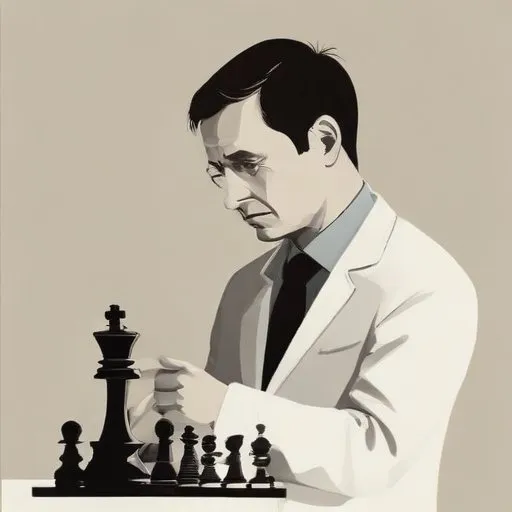
Raul Renter: The Estonian Economist and Chess Mastermind
A Legacy of Economic Forecasting and Chess Dominance
Raul Renter, an Estonian economist and chess player, left an indelible mark on both fields with his groundbreaking research and exceptional skill. Twice crowned the Estonian Chess Champion, Renter's unique blend of analytical thinking and strategic prowess made him a force to be reckoned with in the world of economics and chess.
Early Life and Education
Born on August 1, 1920, Renter graduated from the prestigious Tallinn French Lyceum in 1938. He went on to pursue his higher education at the Faculty of Economics in Tallinn Polytechnical Institute, where he earned his degree in 1948. Renter's academic prowess continued to shine as he defended his Candidate of Economic Sciences degree in 1964, followed by his doctoral dissertation in Economics in 1975.
Career Highlights and Major Works
Renter's professional career spanned multiple decades, with significant contributions to the field of economics. From 1957 to 1965, he served as the deputy chief of the Department of Economics at the Council of Ministers of the Estonian SSR. He then became the director of the laboratory in the Estonian Academy of Sciences Institute of Economics from 1965 to 1978. Renter's crowning achievement was his role as the head of the Department in Institute of Economic Management, a position he held from 1978 until his passing in 1992.
Chess Achievements and Legacy
Renter's passion for chess was evident in his numerous achievements in the sport. He won two gold medals in the Estonian Chess Championships in 1946 and 1949, in addition to a silver medal in 1945 and three bronze medals in 1943, 1947, and 1952. Renter's expertise in chess was further solidified with his co-authorship of the chess textbook "Malepik" in 1955, which was written in the Estonian language.
Philosophical Contributions and Beliefs
Renter's work in economic forecasting was guided by his philosophical approach to understanding economic systems. He believed in the importance of data-driven analysis and the application of statistical models to predict economic trends. Renter's contributions to the field of economics have been recognized for their accuracy and reliability, cementing his status as a pioneer in economic forecasting.
Personal Milestones and Key Life Events
Renter's life was marked by several significant milestones, including his graduation from the Tallinn French Lyceum and his defense of his doctoral dissertation. His dedication to his work and passion for chess earned him numerous accolades and recognition within his community.
Impact on Modern Society
Renter's work in economic forecasting has had a lasting impact on modern society. His research has informed economic policy and decision-making, enabling governments and organizations to make more informed choices. Additionally, his contributions to the world of chess have inspired generations of players and enthusiasts, promoting the development of critical thinking and strategic skills.
Influence on Pop Culture
Renter's dual expertise in economics and chess has made him a unique figure in popular culture. His achievements have been recognized and celebrated in various forms of media, solidifying his status as a cultural icon in Estonia and beyond.
Trivia and Fun Facts
- Renter's chess games and profiles can be accessed through online platforms, providing a glimpse into his exceptional skill and strategic thinking.
- He was an active participant in chess competitions, representing Estonia in various national and international tournaments.
- Renter's work in economic forecasting continues to be studied and applied by scholars and policymakers around the world.
Legacy and Historical Context
Raul Renter's legacy extends far beyond his own accomplishments. He has inspired future generations of economists and chess enthusiasts, leaving behind a rich body of work that continues to shape our understanding of economics and strategic thinking. As a testament to his enduring impact, Renter's contributions will remain a vital part of Estonia's cultural and intellectual heritage.
FAQ
What is Raul Renters claim to fame?
Raul Renter is a renowned Estonian economist and chess player who has made significant contributions to the fields of economics and chess, earning him international recognition and acclaim.
What inspired Raul Renters interest in economics?
Raul Renters interest in economics was inspired by his desire to understand the complexities of economic systems and to develop policies that promote economic growth and development.
What is Raul Renters most notable achievement in chess?
Raul Renters most notable achievement in chess is his victory in the Estonian Chess Championship, which he won several times throughout his career.
How did Raul Renters background influence his career?
Raul Renters background as an Estonian influenced his career, as he drew on his experiences living in a rapidly changing economic and political environment to inform his work in economics and chess.
What is Raul Renters legacy in Estonian economics and chess?
Raul Renters legacy in Estonian economics and chess is that of a distinguished expert who has made significant contributions to both fields, inspiring future generations of economists and chess players.