


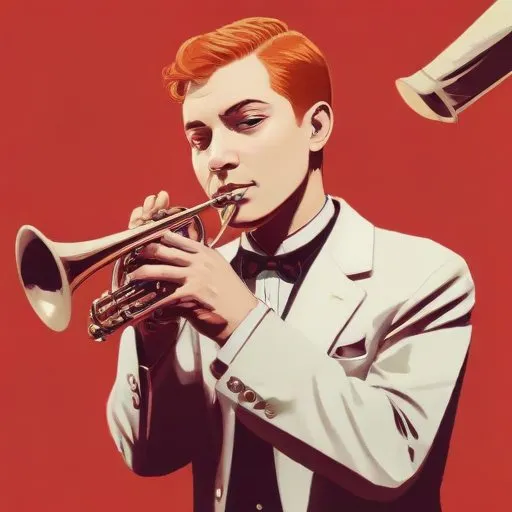
A virtuosic cornet player, composer, and bandleader who led the "Five Pennies" orchestra, blending jazz and swing styles in the 1920s-30s. Known for his innovative arrangements and solos.
Known for his polished, clean, and incisive style, Red Nichols was an American jazz cornetist, composer, and jazz bandleader who made a significant impact on the jazz scene in the early 20th century. With his unique sound and collaborators like Miff Mole, Jimmy Dorsey, and Benny Goodman, Nichols created a distinctive brand of jazz that still resonates today.
Born Ernest Loring Red Nichols on May 8, 1905, in Ogden, Utah, Nichols was raised in a musical family. His father, a college music professor, taught him the basics of music, and by the age of 12, Nichols was playing difficult set pieces for his father's brass band.
Nichols' early influences included the Original Dixieland Jazz Band and Bix Beiderbecke, whose recordings had a profound impact on his style. In the early 1920s, he moved to the Midwest and joined a band called the Syncopating Seven, which eventually led to his move to New York City in 1923.
In New York, Nichols met trombonist Miff Mole, and the two formed a partnership that would last for nearly a decade. They began recording for Brunswick Records, and in 1926, they launched Red Nichols and His Five Pennies, a band that would become synonymous with Nichols' unique sound.
Under the Brunswick label, Nichols and his bands recorded over 100 sides, including hits like "Ida, Sweet as Apple Cider" and "Imagination." The band's lineup was constantly evolving, with musicians like Benny Goodman, Glenn Miller, and Jack Teagarden passing through its ranks.
Nichols' collaborations with Miff Mole, Jimmy Dorsey, and Benny Goodman were instrumental in shaping his sound. He also recorded with other notable musicians, including Pee Wee Russell, Joe Venuti, and Eddie Lang. These collaborations helped cement Nichols' reputation as a consummate jazz musician.
Red Nichols' legacy extends far beyond his own music. He was a pioneer of the jazz movement, helping to shape the genre and pave the way for future generations of jazz musicians. His influence can be heard in the music of later jazz greats like Duke Ellington, Count Basie, and Dizzy Gillespie.
Nichols' music also transcended the jazz scene, influencing popular culture and entertainment. His songs have been featured in films, television shows, and commercials, introducing his music to new generations of fans.
Nichols' personal life was marked by his strong Mormon faith and his devotion to his family. He married his wife, Dorothy, in 1926, and they had two children together. Nichols continued to perform and record music throughout his life, eventually passing away on June 28, 1965, at the age of 60.
Red Nichols' story is one of passion, dedication, and innovation. His music continues to inspire and delight audiences today, a testament to his enduring legacy as a jazz great.
Born in 1890
A renowned violinist, composer, and bandleader who popularized classical music and jazz, earning the title "The King of Jazz" for his innovative orchestral arrangements. He introduced many Americans to classical music and helped launch the careers of famous musicians like Bing Crosby and Hoagy Carmichael.
Born in 1903
A jazz legend who played the cornet with a unique, lyrical style and composed iconic pieces like "In a Mist," blending jazz with classical music. Known for his innovative, expressive sound that influenced generations of musicians.
Born in 1901
A legendary jazz musician who revolutionized the genre with his unique trumpet playing and raspy vocals, leaving an indelible mark on American music.
Born in 1899
A legendary jazz pianist, composer, and bandleader who revolutionized the genre with his unique style and iconic compositions, such as "Take the A Train" and "Mood Indigo".
Born in 1904
A legendary jazz pianist and bandleader who led a iconic orchestra, blending swing and blues to create a unique sound that influenced generations of musicians. Known for his distinctive "less-is-more" style and hits like "April in Paris" and "One O'Clock Jump".
Born in 1909
A virtuosic clarinetist and bandleader, known as the "King of Swing," who revolutionized jazz music with his energetic and sophisticated style, leading a racially integrated orchestra in the 1930s.
Born in 1910
A virtuosic clarinetist and innovative bandleader, he revolutionized the swing era with his unique sound and iconic hits like "Begin the Beguine" and "Stardust".
