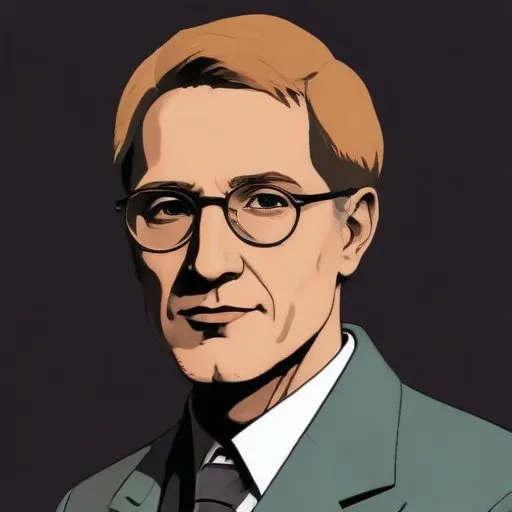
Reiner Kunze: The Dissident Writer Who Challenged the Iron Curtain
A Voice of Defiance Behind the Curtain
Reiner Kunze is a German writer and dissident, renowned for his poignant critique of the Communist regime in East Germany (GDR) during the Cold War era. His literary masterpieces, written under various pseudonyms, offered a scathing portrayal of life behind the Iron Curtain, earning him both acclaim and persecution.
A Life of Dissent
Born on August 16, 1933, in Oelsnitz, Erzgebirge, Saxony, Kunze studied media and journalism at the University of Leipzig. His involvement with the SED, the ruling party of East Germany, was short-lived, as he became disillusioned with the government's ideology and abandoned the party in 1968, following the Soviet-led invasion of Czechoslovakia.
The Literary Catalyst
Kunze's most celebrated work, "The Lovely Years," published in 1976, was a searing critique of the GDR's policies and social realities. This book, which could only be published in West Germany, exposed the harsh truths about life under communism, making Kunze an overnight sensation in the literary world.
Expatriation and New Beginnings
In 1977, the GDR regime expelled Kunze, forcing him to flee to West Germany, where he continues to reside near Passau in Bavaria. This exile marked a new chapter in his life, as he continued to write and translate, cementing his status as a prominent literary figure.
Literary Oeuvre
Kunze's body of work encompasses poetry, prose, and essays, with a special focus on Czech poetry and prose translation. His writings are a testament to his unwavering commitment to freedom of expression and his unrelenting critique of totalitarian regimes.
AWARDS AND HONORS
- 1968: Translator's Prize of the Czechoslovak Writers' Association
- 1971: German Youth Book Prize
- 1973: Great Literature Prize of the Bavarian Academy of Fine Arts
- 1977: Georg Trakl Prize, Austria, Andreas Gryphius Prize, and Georg Büchner Prize
- 1979: Bavarian Film Awards, Best Screenplay
- 1981: Geschwister Scholl Prize
- 1984: Eichendorff Literature Prize
- 1988: Bavarian Order of Merit
- 1989: Culture Prize of East Bavaria
- 1990: Herbert and Elsbeth Weichmann Prize and Hanns Martin Schleyer Prize
- 1993: Commander's Cross of the Order of Merit of the Federal Republic of Germany
- 1995: Honorary citizenship of the city of Greiz and Culture Prize of the district of Passau
- 1997: Weilheimer Literature Prize
- 1999: Friedrich Hölderlin Prize
- 2000: Christian Ferber Honorary Award of the German Schiller Foundation
- 2001: Hans Sahl Prize and Bavarian Maximilian Order for Science and Art
- 2002: Art Prize of the German-Czech Association
A Legacy of Courage and Conviction
Reiner Kunze's remarkable life and literary contributions serve as a testament to the power of dissent and the human spirit. His unyielding commitment to freedom of expression has inspired generations of writers, thinkers, and activists, cementing his place in the annals of literary history.
FAQ
What was Reiner Kunzes literary style?
Reiner Kunze was a celebrated German poet and translator, known for his lyrical and introspective poetry, which explored themes of love, nature, and social criticism.
How did Reiner Kunzes early life influence his writing?
Reiner Kunze grew up in a family of intellectuals and was influenced by his experiences in East Germany, which shaped his views on politics and social justice.
What were Reiner Kunzes most notable works?
Reiner Kunze published numerous poetry collections, including Wohin sage ich mich, Die wunderbaren Jahre, and Scheinkeramik, which earned him critical acclaim and several literary awards.
How did Reiner Kunzes writing impact German literature?
Reiner Kunzes poetry contributed significantly to post-war German literature, offering a unique perspective on the countrys social and political landscape.
What awards did Reiner Kunze win for his writing?
Reiner Kunze received several prestigious awards, including the Georg Büchner Prize and the Friedrich-Gundolf-Preis, recognizing his contributions to German literature.