


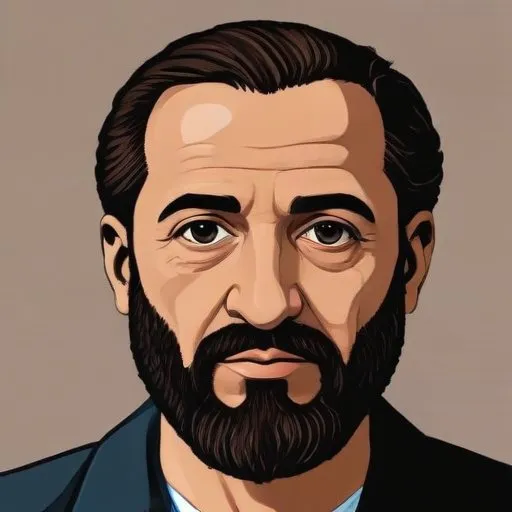
A Greek scholar and literary critic, renowned for his insightful analyses and critiques of ancient Greek literature and philosophy. His work has significantly shaped the field of classical studies.
Renos Apostolidis, a luminary in the realm of Greek literature, is renowned for his profound contributions as a writer, philologist, and literary critic. His works, imbued with the essence of Greek culture, have left an indelible mark on the country's literary landscape.
Born in Athens on March 2, 1924, Renos Apostolidis was blessed with a family legacy of intellectual pursuits. His father, Heracles N. Apostolidis, was a notable journalist and director of the National Library between 1945 and 1959, while his mother, Elpiniki, was a dedicated teacher. This environment instilled in Apostolidis a deep appreciation for knowledge and a strong sense of national identity.
Apostolidis' educational journey began at Varvakeios High School, where he developed a strong foundation in the humanities. During this period, he demonstrated his commitment to social causes, organizing a student protest on October 28, 1941, and later participating in the December 3, 1944, march with EAM followers, which was banned by the Papandreou government.
As a young man, Apostolidis was forced to suspend his studies to fulfill his duties in the Greek Army during the Civil War. This experience had a profound impact on him, and he vowed not to engage in violence, instead choosing to record his experiences in his writing. His novel, Pyramid 67, published in 1947, is a testament to the lessons he learned during this tumultuous period.
Apostolidis' emergence as a writer began in 1944 with the publication of his essay "Time of Being" in the Grammata periodical. This was followed by his first essay collection, Three Stations in a Course, in 1945. Throughout his career, he continued to write prolifically, producing works that showcased his mastery of the Greek language and his deep understanding of the country's cultural heritage.
In addition to his literary pursuits, Apostolidis was a dedicated teacher, sharing his knowledge of Ancient and Modern Greek, History, and Latin with students at private high schools in Athens. His commitment to education and mentorship helped shape the minds of future generations, ensuring the continuation of Greece's rich cultural legacy.
Renos Apostolidis' contributions to Greek literature and culture are immeasurable. His works continue to inspire and educate, offering a window into the country's turbulent past and its resilient spirit. As a writer, philologist, and literary critic, Apostolidis left an indelible mark on the Greek literary landscape, cementing his place among the nation's most revered intellectuals.
Renos Apostolidis' remarkable life and legacy serve as a testament to the power of literature and education in shaping the course of a nation's history.
Born in 1859
A leading figure of the Greek literary generation of the 1880s, he wrote influential poetry and plays that explored themes of Greek identity and national revival. His works are considered cornerstones of modern Greek literature.
Born in 1884
A leading figure in the Greek literary revival of the 20th century, known for blending folk traditions with modernist experimentation in his poetry and plays. His work explores themes of identity, mythology, and the human condition.
Born in 1900
A Greek poet and diplomat who won the Nobel Prize in Literature in 1963 for his lyrical and symbolic poetry that explored Greek identity and culture. His work is known for its evocative and introspective style.
Born in 1911
A Greek poet and critic, renowned for his lyrical and evocative works that explored the human experience, mythology, and the Greek identity. His poetry is celebrated for its musicality and depth.
Born in 1909
A celebrated Greek poet and playwright, known for his powerful and evocative works that often explored themes of love, politics, and the human condition. His poetry is characterized by its lyricism and accessibility.
Born in 1883
A Greek philosopher, author, and playwright who explored the human condition through novels like "Zorba the Greek" and "The Last Temptation of Christ", delving into themes of spirituality, morality, and individualism.
