


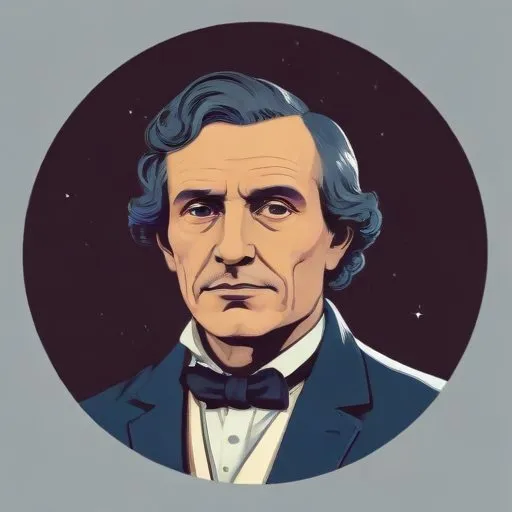
A renowned astronomer and academic, he is most known for his groundbreaking research on the formation of stars and galaxies, and his leadership in the development of the Atacama Large Millimeter/submillimeter Array (ALMA) telescope.
Meet Richard Edwin Hills, a renowned British astronomer celebrated for his groundbreaking contributions to the field of radio astronomy, particularly in the development of telescopes and instrumentation for exploring the uncharted territories of the millimeter and submillimeter wavelengths.
Hills' legacy is intertwined with some of the most significant astronomical projects of our time, including the James Clerk Maxwell Telescope and the Atacama Large Millimeter/submillimeter Array (ALMA) telescope, which has enabled scientists to study distant quasars and star formation processes in unprecedented detail.
Born on September 30, 1945, Hills was educated at Bedford School and later pursued the Natural Science Tripos at Queens' College, Cambridge. He then ventured to the University of California, Berkeley, where he earned his Doctor of Philosophy degree.
Hills' professional journey began at the Max Planck Institute in Bonn, where he worked as a research scientist from 1972 to 1974. He then returned to the University of Cambridge, where he played a pivotal role in shaping the development of telescopes and instrumentation for astronomy.
As the project scientist for the James Clerk Maxwell Telescope, Hills oversaw its design and construction, subsequently utilizing the telescope to observe distant, redshifted quasars and the processes associated with star formation.
In 2007, he was appointed project scientist for the ALMA telescope, a submillimeter interferometer situated in the Atacama Desert of Northern Chile. This pioneering project has enabled scientists to study the universe in unprecedented resolution and clarity.
Richard Edwin Hills' contributions have profoundly impacted our understanding of the universe, inspiring future generations of astronomers and scientists. His tireless efforts to push the boundaries of human knowledge have left an indelible mark on the scientific community.
Through his work, Hills has demonstrated an unwavering commitment to advancing our understanding of the cosmos, leaving behind a legacy that will continue to inspire and fascinate us for years to come.
Fellow of St Edmund's College, Cambridge
Director of Studies for Natural Sciences at St Edmund's College, Cambridge (1990-2007)
Professor of Radio Astronomy at the University of Cambridge (1990-2007)
Deputy Head of the Department of Physics at the University of Cambridge (1999-2003)
Emeritus Professor of Radio Astronomy at the University of Cambridge (until his death on June 5, 2022)
Born in 1918
A pioneering radio astronomer who made groundbreaking discoveries about the universe, including the detection of quasars and the mapping of the cosmic microwave background radiation.
Born in 1924
A British astronomer who discovered pulsars, a type of neutron star, and was awarded the Nobel Prize in Physics in 1974 for this groundbreaking finding.
83 Years Old
A pioneering astrophysicist who discovered pulsars, a type of neutron star, revolutionizing our understanding of the universe. Her groundbreaking work has opened doors to new areas of research in astronomy.
84 Years Old
A brilliant mind who unraveled the mysteries of black holes and the universe, making complex physics accessible to all through bestselling books.
95 Years Old
A renowned expert in the fields of physics, mathematics, and philosophy, known for his groundbreaking work on black holes, cosmology, and the nature of consciousness. His theories have reshaped our understanding of the universe and the human mind.
91 Years Old
A renowned space expert who explored the universe, searching for life beyond Earth and explaining complex science in simple terms.
Born in 1917
Pioneering science fiction author who wrote prophetic and imaginative novels, such as "2001: A Space Odyssey", that explored the intersection of technology and humanity.
Born in 1915
A renowned astronomer and science fiction author who proposed the steady state theory of the universe and coined the term "Big Bang", making significant contributions to our understanding of the cosmos.
