


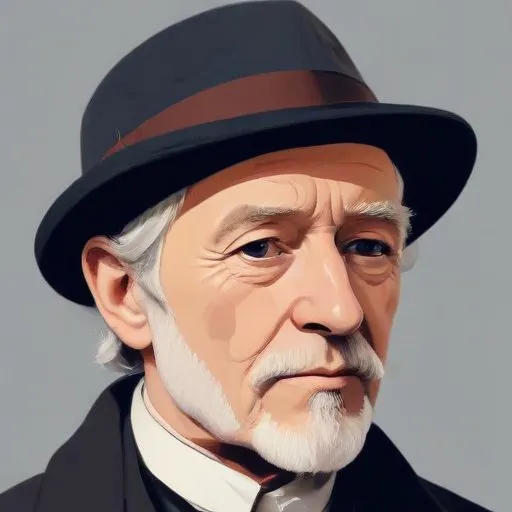
A Romantic-era painter celebrated for his vivid, expressive, and often turbulent seascapes and landscapes, which captivated the art world with their sense of drama and movement.
Richard Parkes Bonington was a renowned English Romantic landscape painter who made a significant impact on the art world with his breathtaking coastal scenes and exquisite handling of light and atmosphere. Known for his unique style, which blended traditional techniques with modern applications, Bonington's works continue to inspire artists and art enthusiasts to this day.
Bonington was born on October 25, 1802, in Arnold, a small town near Nottingham, England. His father, also named Richard, was a gaoler, drawing master, and lacemaker, while his mother was a teacher. The young Bonington learned watercolour painting from his father and exhibited his works at the Liverpool Academy at the tender age of 11.
In 1817, Bonington's family moved to Calais, France, where his father established a lace factory. It was here that Bonington began taking lessons from the painter François Louis Thomas Francia, who introduced him to the English watercolour technique. The following year, the Bonington family moved to Paris, where Richard befriended the famous French painter Eugène Delacroix and started working on copies of Dutch and Flemish landscapes in the Louvre.
Bonington's talent was quickly recognized, and he began attending the École des Beaux-Arts in Paris, where he studied under Antoine-Jean, Baron Gros. He started going on sketching tours in the suburbs of Paris and the surrounding countryside, capturing the beauty of the landscapes on canvas. His first paintings were exhibited at the Paris Salon in 1822, marking the beginning of his illustrious career.
Bonington's artistic style was characterized by his use of vivid colours, bold brushstrokes, and a focus on capturing the fleeting effects of light and atmosphere. He was particularly known for his coastal scenes, often featuring a low horizon and large sky. His works also showcased a unique blend of traditional and modern techniques, influenced by the old masters and the burgeoning Romantic movement.
The Grand Canal, Venice (1826) - A stunning example of Bonington's ability to capture the play of light on water and architecture.
The Coast of Normandy (1823) - A beautiful depiction of the French coastline, showcasing Bonington's skill in rendering the subtleties of atmosphere and light.
The Rialto Bridge, Venice (1826) - A magnificent work that highlights Bonington's talent for capturing the majesty of architecture and the vitality of urban life.
Bonington's untimely death at the age of 25 did not hinder his impact on the art world. In fact, his work continued to inspire generations of artists, including the likes of J.M.W. Turner and John Constable. Today, Bonington is recognized as one of the most influential British artists of his time, and his paintings continue to be celebrated for their beauty, technical skill, and emotional depth.
Bonington's personal life was marked by his close friendship with Eugène Delacroix, who often hosted him at his studio. The two artists shared a love for art, literature, and music, and their conversations often revolved around the latest developments in the Romantic movement.
Despite his short life, Bonington left an indelible mark on the art world. His pioneering style, which blended traditional techniques with modern applications, paved the way for future generations of artists. Today, his works continue to inspire and captivate audiences, ensuring his legacy as one of the greatest Romantic landscape painters of all time.
Born in 1776
A Romantic-era painter celebrated for capturing the essence of the English countryside through serene, naturalistic landscapes, often featuring skies and clouds.
Born in 1727
A prominent 18th-century painter of landscapes and portraits, capturing the essence of British aristocracy and gentry with elegance and refinement.
Born in 1697
A pioneering artist and social commentator, known for his witty and insightful depictions of 18th-century English life, morality, and politics through his paintings and engravings.
Born in 1723
A prominent portrait painter and art educator who helped establish the Royal Academy of Arts, known for his influential teachings and masterful depictions of 18th-century British aristocracy.
Born in 1769
A prominent portrait painter and educator who dominated English art in the late 18th and early 19th centuries, capturing the likenesses of European royalty and aristocracy.
Born in 1738
A pioneering portrait painter who captured the likenesses of American colonists and British aristocrats with remarkable realism and detail. His works offer a glimpse into 18th-century American and British society.
Born in 1907
The 43rd Governor of Michigan was a prominent businessman and politician who played a significant role in shaping the state's economy and politics. He's most known for his innovative leadership and advocacy for civil rights.
Born in 1756
A Scottish portrait painter renowned for capturing the subtleties of human expression and character in his vivid, psychologically astute works, often featuring members of the Scottish aristocracy.
