


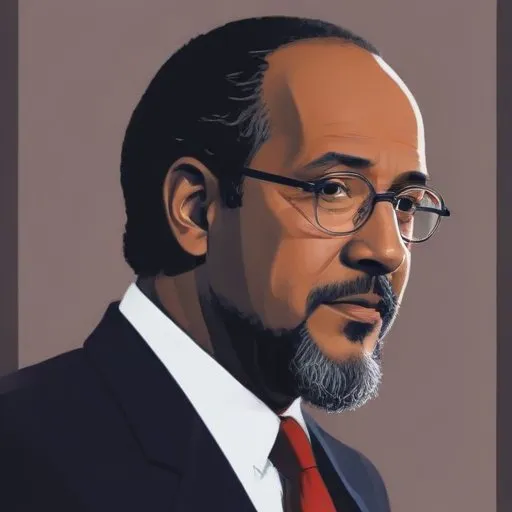
A former CEO of Time Warner and Citigroup, he's a renowned figure in corporate America, known for his leadership and strategic vision in the media and finance industries.
Richard Parsons, a luminary in the world of business, is predominantly recognized as the former chairman of Citigroup and the former chairman and CEO of Time Warner, leaving an indelible mark on the corporate landscape.
Throughout his illustrious career, Parsons has demonstrated an unparalleled aptitude for leadership, guiding prominent organizations through periods of transformation and growth. His tenure as CEO of Time Warner, which spanned from 2002 to 2007, was marked by a strategic realignment of the company's business units, underscoring his ability to adapt and innovate in response to shifting market dynamics.
Parsons' professional trajectory began to take shape in the early 1970s, when he served as a lawyer for the staff of New York Governor Nelson Rockefeller. This experience not only provided him with a unique insight into the inner workings of government but also facilitated his eventual transition into the corporate world. Following Rockefeller's appointment as Vice President of the United States, Parsons accompanied him to Washington D.C., where he worked closely with President Gerald Ford.
Throughout his career, Parsons has consistently espoused the importance of strategic planning, adaptability, and collaboration. He has emphasized the need for business leaders to remain attuned to the nuances of their operating environment, cultivating an organizational culture that is responsive to change. This pragmatic approach has enabled him to navigate the complexities of corporate governance with ease, earning him the respect of his peers and contemporaries.
Richard Parsons was born on April 4, 1948, in Brooklyn, New York City, to an African American family. His maternal grandfather, a groundskeeper at the John D. Rockefeller estate, Kykuit, played a significant role in shaping his early life. Parsons' academic endeavors took him to the University of Hawaii at Manoa, where he attended for four years before pursuing a law degree at Albany Law School of Union University, New York. His exceptional academic performance earned him a Juris Doctor in 1971, with honors.
Throughout his career, Parsons has overseen the management of vast resources, generating significant revenue for the organizations under his leadership. His net worth, estimated to be in the hundreds of millions, is a testament to his exceptional business acumen and strategic vision.
Richard Parsons' contributions to the business world have had a profound impact on modern society. His leadership has not only shaped the trajectory of corporate entities but has also influenced the broader economic landscape. By fostering an environment of innovation and collaboration, he has inspired generations of business leaders to adopt a more holistic approach to management.
Like many prominent figures, Parsons has faced his share of controversies, including criticisms of his leadership style and business decisions. However, his ability to navigate these challenges with aplomb has earned him a reputation as a resilient and effective leader, able to weather the most turbulent of storms.
Throughout his career, Parsons has been known for his insightful remarks and quotable quotes. One of his most notable statements, "Leadership is about making tough decisions, not about being popular," underscores his commitment to pragmatism and effectiveness in decision-making.
Richard Parsons' legacy extends far beyond his individual accomplishments, reflecting a broader historical context in which African American leaders have made significant strides in the corporate world. His achievements serve as a testament to the power of perseverance, dedication, and strategic thinking, inspiring future generations of business leaders to follow in his footsteps.
80 Years Old
The 74th United States Secretary of the Treasury played a crucial role in shaping the country's economic policies, particularly during the 2008 financial crisis, and is known for his bold decisions to stabilize the economy. He's also a prominent banker and politician.
65 Years Old
The 75th United States Secretary of the Treasury, who played a crucial role in responding to the 2008 financial crisis and implementing policies to stabilize the economy. He's known for his leadership during a tumultuous period in American economic history.
72 Years Old
The Chairman of the Federal Reserve during the 2008 financial crisis, credited with implementing unconventional monetary policies to stabilize the economy. Known for his calm and decisive leadership during tumultuous times.
Born in 1926
Former Chairman of the Federal Reserve, guiding the US economy through periods of growth and crisis, and known for his influence on monetary policy.
88 Years Old
Served as Treasury Secretary under President Clinton, playing a key role in shaping the country's economic policies and overseeing the deregulation of the financial industry. Known for his influence on the Gramm-Leach-Bliley Act, which repealed parts of the Glass-Steagall Act.
71 Years Old
A renowned economist and academic who served as the Chief Economist of the World Bank and Secretary of the Treasury, known for his influential economic policies and theories.
70 Years Old
A prominent CEO of JPMorgan Chase, leading the company through significant financial crises and becoming a influential voice in global banking. Known for his strong leadership and economic insights.
96 Years Old
A highly successful investor and CEO of Berkshire Hathaway, known for his value investing philosophy and immense wealth, using his fortune to support various philanthropic causes.
