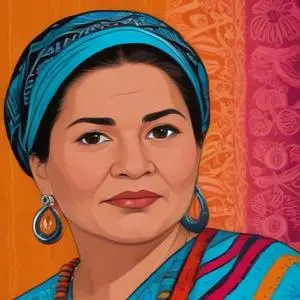
Rigoberta Menchú: A Voice for the Voiceless
A Nobel Laureate and Champion of Indigenous Rights
Rigoberta Menchú is a Guatemalan human rights activist, feminist, and Nobel Peace Prize laureate, renowned for her unwavering dedication to promoting the rights of indigenous peoples, particularly during and after the Guatemalan Civil War (1960-1996). Through her tireless efforts, she has become a symbol of hope and resilience for the marginalized and oppressed.
A Life of Activism
Born on January 9, 1959, in Laj Chimel, Guatemala, Rigoberta Menchú was raised in a poor indigenous family of K'iche' Maya descent. Her parents, Vicente Menchú Pérez and Juana Tum K'otoja, instilled in her the values of social justice and respect for her cultural heritage. Tragedy struck when her brother, Patrocinio, and mother were kidnapped, tortured, and murdered by the Guatemalan Army in 1979-1980. This devastating event marked the beginning of her journey as a human rights activist.
Awards and Recognition
Rigoberta Menchú's outstanding contributions to promoting peace, justice, and indigenous rights have earned her numerous awards and honors, including:
- Nobel Peace Prize (1992)
- Princess of Asturias Award (1998)
- UNESCO Goodwill Ambassador
Autobiographical Works
Menchú has written two influential autobiographical works:
- I, Rigoberta Menchú (1983), a testimonial biography that chronicles her life and struggle for indigenous rights
- Crossing Borders (1998), an autobiographical work that explores her experiences as a human rights activist
Political Pursuits
In 2007 and 2011, Menchú ran for president of Guatemala, founding the country's first indigenous political party, Winaq. Although she did not win the presidency, her candidacies marked a significant milestone in Guatemala's political landscape.
Philosophical Contributions and Beliefs
Rigoberta Menchú's spirituality is deeply rooted in her Maya heritage and Catholic upbringing. She believes in living in harmony with nature and respecting the cultural identities of indigenous peoples. Her philosophy emphasizes the importance of education, social justice, and community empowerment.
Impact on Modern Society
Menchú's relentless advocacy has inspired a new generation of human rights activists, feminists, and indigenous leaders. Her work has contributed significantly to:
- Raising awareness about the plight of indigenous peoples
- Promoting cultural diversity and understanding
- Advancing women's rights and empowerment
Legacy and Historical Context
Rigoberta Menchú's remarkable journey is a testament to the power of courage, resilience, and determination. As a pioneering figure in the struggle for indigenous rights, she has left an indelible mark on modern history. Her legacy serves as a beacon of hope for marginalized communities worldwide, inspiring future generations to continue the fight for social justice and human dignity.
FAQ
What is Rigoberta Menchús role in Guatemalan politics?
Rigoberta Menchú is a Guatemalan activist and politician who has been a prominent voice for indigenous rights and social justice in Guatemala.
What is Rigoberta Menchús connection to the Nobel Peace Prize?
Rigoberta Menchú was awarded the Nobel Peace Prize in 1992 for her work promoting social justice and indigenous rights in Guatemala.
What is Rigoberta Menchús stance on human rights?
Rigoberta Menchú has been a vocal advocate for human rights, particularly for indigenous peoples, and has worked to expose human rights abuses in Guatemala.
How has Rigoberta Menchú contributed to education and cultural preservation?
Rigoberta Menchú has worked to promote education and cultural preservation among indigenous communities in Guatemala, including the establishment of schools and cultural centers.
What is Rigoberta Menchús legacy in modern Guatemala?
Rigoberta Menchú is widely respected as a champion of social justice and indigenous rights in Guatemala, and her work continues to inspire a new generation of activists and leaders.