


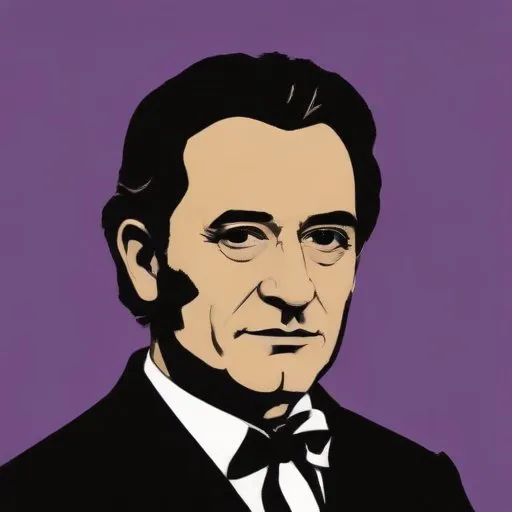
A renowned composer and educator, known for his eclectic and lyrical style, blending elements of jazz, rock, and classical music to create a unique sound.
Robert Beaser is a luminary in the world of classical music, renowned for his innovative compositions that seamlessly blend tradition with modernity. As a celebrated American composer, conductor, and educator, Beaser has left an indelible mark on the musical landscape, captivating audiences with his unique fusion of jazz, folk, and classical elements.
Born on May 29, 1954, in Boston, Massachusetts, Beaser grew up in a family of scientists, with his father a physician and mother a chemist. Despite the absence of a musical background, Beaser's natural talent for music emerged at a young age, and he began to distinguish himself as a percussionist, composer, and conductor.
Beaser's prodigious talent earned him a debut with the Greater Boston Youth Symphony at Jordan Hall when he was just 16, conducting the premiere of his orchestral work Antigone. He went on to study at Yale College, graduating summa cum laude, Phi Beta Kappa in 1976, and later receiving his Master of Music, M.M.A., and Doctor of Musical Arts degrees from the Yale School of Music.
In 1977, Beaser became the youngest composer to win the prestigious Rome Prize from the American Academy in Rome. This watershed moment marked a significant shift in his compositional style, as he began to incorporate more tonal language, synthesizing diverse influences from jazz to folk into his work.
Beaser's work has been recognized with numerous awards and commissions from acclaimed orchestras such as the New York Philharmonic, the Baltimore Symphony, and the Chicago Symphony. His compositions have been performed at esteemed venues, including the Glimmerglass Opera and the New York City Opera.
Beaser has held various academic and artistic positions, including professor and chairman of the Composition Department at the Juilliard School in New York (1993) and co-music director and conductor of the contemporary chamber ensemble Musical Elements at the 92nd Street Y (1978-1990).
During his tenure at Musical Elements, Beaser premiered over 200 works, showcasing his dedication to nurturing new talent and promoting contemporary classical music.
Robert Beaser's innovative approach to classical music has left a lasting impact on the genre. His unique blend of traditional and modern elements has inspired a new generation of composers, and his dedication to education and performance has enriched the musical landscape.
As a composer, conductor, and educator, Beaser continues to shape the course of classical music, ensuring a vibrant future for this timeless art form.
Through his remarkable body of work, Robert Beaser has cemented his place as a leading figure in modern classical music, inspiring future generations of composers and musicians to push the boundaries of this timeless art form.
Born in 1918
A renowned musician who blended jazz, classical, and Broadway styles, creating iconic works like West Side Story, and inspiring generations with his charismatic performances and innovative compositions.
Born in 1900
A renowned composer, conductor, and educator who blended folk and modernist elements to create iconic American classical music, including "Appalachian Spring" and "Fanfare for the Common Man".
Born in 1910
A renowned pianist and composer who blended romanticism and modernism, creating iconic works like "Adagio for Strings" that evoke powerful emotions.
Born in 1908
A pioneering composer of modern classical music, known for his complex and innovative works that pushed the boundaries of harmony and rhythm.
Born in 1910
A renowned composer and educator, he was the first president of the Juilliard School and won the Pulitzer Prize for Music in 1943. He's known for his contributions to American classical music.
Born in 1923
A renowned composer and writer, known for his lyrical and accessible music, as well as his witty and insightful memoirs that offer a unique glimpse into the world of classical music.
88 Years Old
A Pulitzer Prize-winning composer and academic, known for blending modernist and romantic styles in his works, including operas, symphonies, and film scores.
Born in 1915
An American composer and educator, known for his neoclassical style and contributions to the development of American music, particularly in the mid-20th century.
