


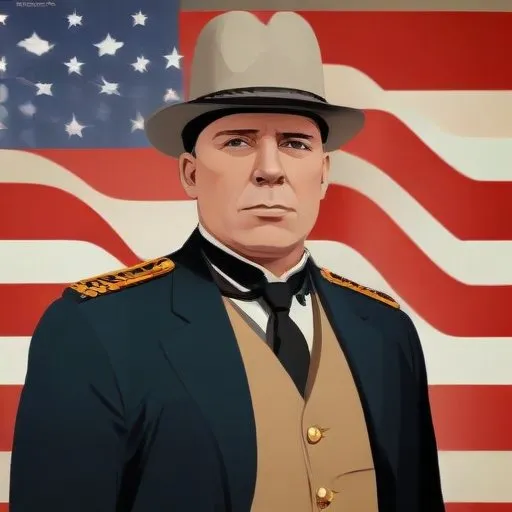
A prominent figure in American politics and law, known for his advocacy of freethought and agnosticism, as well as his powerful oratory skills.
Robert G. Ingersoll, nicknamed the Great Agnostic, was a prominent American lawyer, writer, and orator who passionately advocated for agnosticism during the Golden Age of Free Thought. As a vocal critic of religious dogma, Ingersoll's lectures and writings continue to influence modern thought, making him one of the most significant figures in American intellectual history.
Born on August 11, 1833, in Dresden, New York, Robert Ingersoll was the son of John Ingersoll, a Congregationalist preacher with abolitionist sympathies. The family's frequent relocations due to Rev. Ingersoll's radical opinions exposed young Robert to a diverse range of ideologies, which would later shape his skeptical worldview. The elder Ingersoll's liberal views, however, were a constant source of conflict with his parishioners, leading to frequent church trials and eventually forcing him to abandon his ministerial career.
Ingersoll's legal career spanned over three decades, during which he argued several high-profile cases and became known for his eloquence and persuasive abilities. His writings and lectures, however, are his most enduring legacy. Some of his notable works include:
Ingersoll's agnosticism was rooted in his commitment to reason, science, and individual freedom. He argued that the absence of empirical evidence for religious claims justified a skeptical approach to faith. His philosophical contributions laid the groundwork for later thinkers like Bertrand Russell and Christopher Hitchens, who similarly challenged religious orthodoxy.
Ingersoll's ideas have had a lasting impact on American society, contributing to the growth of secularism and the protection of individual liberties. His advocacy for women's suffrage, freedom of speech, and the separation of church and state continue to resonate with contemporary debates. Moreover, his influence can be seen in the work of later freethinkers, humanists, and atheists who have continued to challenge religious dogma.
Ingersoll's personal life was marked by controversy and public scrutiny. A notable incident occurred in 1885, when he was accused of blasphemy for his lecture "The Gods" and subsequently arrested. The trial, which ended in acquittal, only strengthened his reputation as a champion of free speech. Ingersoll married Eva Parker in 1862, and the couple had two daughters, Eva and Maud.
Ingersoll's wit and eloquence are legendary, and his quotes continue to inspire and provoke. Some of his most famous sayings include:
Ingersoll's life and work coincided with the Golden Age of Free Thought, a period marked by intellectual ferment and challenges to established authority. His contemporaries, including writers like Mark Twain and Ambrose Bierce, shared his skepticism towards religious dogma. Today, Ingersoll's legacy continues to inspire new generations of thinkers, writers, and activists.
As a champion of reason, individual freedom, and critical inquiry, Robert G. Ingersoll's influence extends far beyond his own lifetime. His courage to challenge the status quo has left an indelible mark on American intellectual history, cementing his place as one of the most important figures of the 19th century.
Born in 1809
Led the United States through its Civil War and ultimately abolished slavery, leaving a lasting legacy in American history.
Born in 1822
Led the Union Army to victory in the Civil War and later became President, known for issuing the Emancipation Proclamation and strengthening federal authority.
Born in 1860
A prominent lawyer and politician who served as Secretary of State, famously advocating for progressive reforms and delivering the iconic "Cross of Gold" speech. He's also known for his role in the Scopes Trial, debating evolution in schools.
Born in 1857
Noted lawyer who famously defended controversial cases, including the Scopes "Monkey Trial," and was a pioneer in the development of modern American legal defense strategies.
Born in 1880
A satirical journalist and social critic who ridiculed American culture and politics, known for his witty writings and sharp commentary on the human condition.
Born in 1835
Witty writer of classics like "The Adventures of Tom Sawyer" and "The Adventures of Huckleberry Finn", known for humor and social commentary.
Born in 1820
Pioneering figure in the women's suffrage movement, fighting for women's right to vote and own property. Her tireless efforts led to significant advancements in women's rights.
Born in 1815
Pioneering women's rights activist who led the women's suffrage movement, fighting for women's right to vote and own property.
