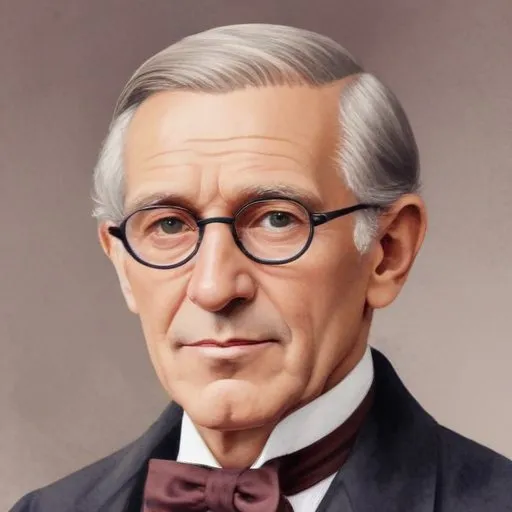
Robert G. W. Anderson: The Visionary Historian of Chemistry
A Life Dedicated to Preserving the History of Science
Robert G. W. Anderson, a British museum curator and historian of chemistry, is renowned for his extensive research and contributions to the field of chemistry. With a career spanning over four decades, Anderson has been at the helm of some of the world's most prestigious museums, shaping the way we understand and appreciate the history of science.
Early Life and Education
Born on May 2, 1944, to Herbert Patrick Anderson and Kathleen Diana Burns, Anderson's fascination with chemistry began at a young age. He pursued his passion at Woodhouse Grammar School in Finchley, North London, and later at St John's College, University of Oxford. Anderson earned his B.A. in chemistry in 1966, followed by his B.Sc. and D.Phil. in 1970. His doctoral thesis focused on the electrical conduction in free radical solutions and inelastic scattering of neutrons from adsorbed molecules.
A Career Marked by Innovation and Leadership
Anderson's professional journey began at the Royal Scottish Museum as an Assistant Keeper in 1970. In 1975, he joined the chemistry department of the Science Museum, London, where he became an Assistant Keeper of Chemistry. One of his notable achievements was the incorporation of materials from the Wellcome Museum of the History of Medicine's collection into the Science Museum's holdings.
Landmark Contributions
- Organized a conference and edited a comprehensive account to celebrate the 250th Anniversary of the Faculty of Medicine of the University of Edinburgh, titled The Early Years of the Edinburgh Medical School.
- Published a catalogue, The Playfair Collection and the Teaching of Chemistry at the University of Edinburgh 1713–1858, in 1978.
- Spearheaded the renovation and expansion of the chemistry and industrial chemistry galleries at the Science Museum in 1977.
Directorship and Presidential Roles
Anderson's leadership skills and expertise were soon recognized, and he went on to hold directorial and presidential roles at some of the world's most esteemed institutions:
- Director of the Science Museum, London
- Director of the National Museums of Scotland
- Director of the British Museum, London
- President and CEO of the Chemical Heritage Foundation (now the Science History Institute) in Philadelphia
Legacy and Impact
Anderson's contributions to the history of chemistry and his leadership roles have had a profound impact on the way we understand and appreciate the history of science. His work has inspired a new generation of historians, curators, and scientists to explore the rich heritage of chemistry.
Inspirational Quotes
"The history of science is not just about the past; it's about understanding how we got to where we are today and how we can shape the future." – Robert G. W. Anderson
Through his tireless efforts, Anderson has left an indelible mark on the world of chemistry and beyond. His legacy continues to inspire and educate, ensuring that the history of science remains a vital part of our collective heritage.
FAQ
What is Robert G. W. Andersons background in chemistry?
Robert G. W. Anderson is an English chemist and historian, with a Ph.D. in chemistry from the University of Cambridge, and a deep understanding of the history of chemistry.
What is Robert G. W. Andersons work in museums?
Anderson has worked in various museums, including the Science Museum in London, where he curated exhibitions on the history of chemistry and medicine, and the Museum of the History of Science in Oxford.
What are Robert G. W. Andersons publications?
Anderson has published numerous papers and books on the history of chemistry, including The Royal Society and the Promotion of Science since 1600, and The Cambridge Dictionary of Scientists.
What awards has Robert G. W. Anderson received?
Anderson has been awarded the History of Chemistry Award by the Royal Society of Chemistry, and the Dexter Award for Outstanding Achievement in the History of Chemistry, among others, for his contributions to the field.
What is Robert G. W. Andersons current work?
Anderson is currently Emeritus Director of the British Museum, where he continues to research and publish on the history of science and chemistry.