


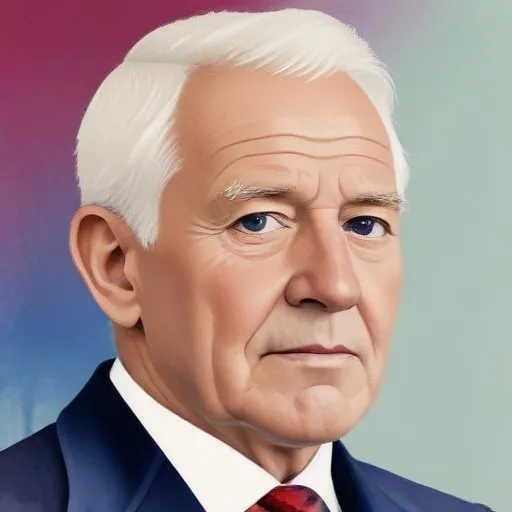
The 3rd Premier of Queensland, a Scottish-Australian politician, played a crucial role in shaping the state's early development and infrastructure. He's most known for his efforts in establishing a railway system and promoting immigration.
Sir Robert Ramsay Mackenzie, 10th Baronet, was a pioneering figure in Australian politics and pastoralism, renowned for his tenure as the Premier of Queensland from August 1867 to November 1868. During his premiership, Mackenzie played a pivotal role in shaping the state's economic and social landscape, earning him a lasting legacy in the annals of Australian history.
Born on July 21, 1811, in Coul, Ross-shire, Scotland, Mackenzie was the fourth son of Sir George Steuart Mackenzie and Mary, daughter of Donald Macleod of Geanies, Ross-shire. In 1832, he arrived in Sydney, New South Wales, aboard the Wave, accompanied by his brother James and 750 sheep, which they purchased for 500. The brothers grazed their flock at Riddlesdale, near Dungog, New South Wales, marking the beginning of Mackenzie's foray into pastoralism.
Mackenzie's entrepreneurial spirit led him to engage in land speculation with his brother James, but their endeavors ultimately resulted in financial ruin. He declared bankruptcy in 1844, only to be discharged in 1846. Undeterred, Mackenzie rebounded from this setback, securing an appointment as a magistrate in 1847 and settling in Clifton, New England.
With Queensland's separation from New South Wales in 1859, Mackenzie dove into politics, becoming the Colonial Treasurer in Robert Herbert's ministry on December 15, 1859. He represented Burnett in the Legislative Assembly of Queensland from 1860 to 1869. Following Arthur Macalister's resignation, Mackenzie formed a government, assuming the dual roles of Premier and Colonial Treasurer. His premiership was marked by significant developments, including the establishment of the Queensland National Bank and the extension of the railway from Ipswich to Toowoomba.
Mackenzie married Louise Alexandrina Jones, daughter of Richard Jones, a member of the New South Wales Legislative Council, in 1846. The couple had several children, including Mary Louisa, who married Alexander Archer, a brother of Archibald Archer. Tragically, Mary and Alexander perished in the 1890 sinking of the RMS Quetta.
In 1871, Mackenzie succeeded his brother William to the baronetcy and returned to Scotland. He passed away on September 19, 1873, at his residence in London, leaving behind a legacy that continues to inspire generations of Australians.
Sir Robert Ramsay Mackenzie's contributions to Queensland's development and his commitment to public service have cemented his place in Australian history. His story serves as a testament to the power of perseverance and the importance of visionary leadership, inspiring future generations to strive for excellence in politics, business, and beyond.
Born in 1835
Scottish-Australian politician who served as the 8th Premier of Queensland, known for his role in shaping the state's economy and infrastructure during the late 19th century. He implemented various reforms and invested in public works projects.
Born in 1831
First Premier of Queensland, instrumental in shaping the state's early development and governance. Known for his role in establishing Queensland as a separate colony from New South Wales.
Born in 1827
The 4th Premier of Queensland, who served from 1868 to 1870, is most known for his role in shaping the state's early development and infrastructure. He was a key figure in the separation of Queensland from New South Wales.
Born in 1845
A pioneering figure in Australian politics, he played a key role in shaping Queensland's early development and was a strong advocate for Australian federation.
Born in 1830
Designed Gothic Revival churches and buildings in England, particularly in Cheshire, with a focus on restoring medieval architecture. His work preserved historical accuracy and aesthetic appeal.
Born in 1887
Scottish-Australian politician who served as the 24th Premier of Queensland, leading the state through significant infrastructure development and economic growth during the 1930s and 1940s.
Born in 1862
The 5th Prime Minister of Australia, a key figure in the country's early 20th-century politics, known for his role in shaping Australia's social and economic landscape. He played a crucial part in establishing the country's old-age pension and maternity allowance systems.
