


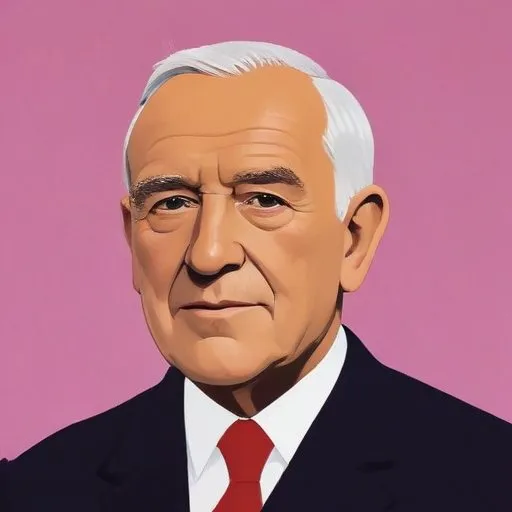
A pioneering figure in Australian politics, he played a key role in shaping Queensland's early development and was a strong advocate for Australian federation.
Sir Samuel Walker Griffith, the inaugural Chief Justice of Australia, left an indelible mark on the country's history with his pivotal role in shaping the Australian Constitution. His remarkable journey, spanning over five decades, was characterized by excellence in law, politics, and governance, earning him a revered place in Australian history.
Griffith was born on June 21, 1845, in Wales, and migrated to Moreton Bay, Queensland, with his family at the age of eight. He pursued his education at the University of Sydney, where he developed a strong foundation in law and politics. After completing his studies, he was called to the bar in 1867, setting the stage for a distinguished career in law and politics.
Griffith's political career took off in 1872, when he was elected to the Queensland Legislative Assembly. He soon became the Attorney-General of Queensland, serving from 1874 to 1878, and later led the liberal faction in parliament. His two terms as Premier of Queensland (1883-1888 and 1890-1893) were marked by significant reforms and initiatives, including the establishment of the Queensland Maritime Defence Force and support for the newly annexed Territory of Papua.
Griffith's most enduring legacy is his contribution to the drafting of the Australian Constitution. Alongside Andrew Inglis Clark, he penned the draft constitution presented to the 1891 constitutional convention. Although not all his proposals were adopted, many of his ideas were incorporated into the final constitution enacted in 1900. This monumental achievement cemented his position as a visionary in Australian politics.
In 1903, Griffith was appointed as the inaugural Chief Justice of Australia, a position he held until 1919. During his tenure, he played a crucial role in shaping the country's judicial system, presiding over significant cases and guiding the development of the High Court of Australia.
Griffith's contributions to Australian politics, law, and governance continue to shape the country's social and political fabric. His commitment to federation and his role in drafting the Constitution have had a lasting impact on Australian society, earning him a revered place in the nation's history.
Griffith's political philosophy was characterized by a strong commitment to liberalism, democracy, and federalism. He believed in the importance of a robust and independent judiciary, and his contributions to the Constitution reflect his dedication to these principles.
Griffith's legacy extends beyond his remarkable achievements in law and politics. He played a vital role in shaping Australia's national identity and institutions, leaving behind a rich heritage that continues to inspire future generations of Australians.
Sir Samuel Walker Griffith's remarkable life and achievements serve as a testament to his vision, leadership, and commitment to the development of Australia. As the nation continues to evolve, his contributions remain an integral part of its history and identity.
Born in 1862
The 5th Prime Minister of Australia, a key figure in the country's early 20th-century politics, known for his role in shaping Australia's social and economic landscape. He played a crucial part in establishing the country's old-age pension and maternity allowance systems.
Born in 1867
Third Prime Minister of Australia, serving from 1904 to 1905, known for his efforts to establish a national government and implement progressive reforms.
Born in 1845
The 4th Prime Minister of Australia, a Scottish-Australian lawyer and politician who served from 1904 to 1905, known for his role in shaping the country's early years and contributing to its growth.
Born in 1856
The 2nd Prime Minister of Australia, a key figure in the country's early development, known for his role in shaping Australia's constitution and federation. He played a crucial part in uniting the country's six colonies into a single nation.
Born in 1849
Australia's first Prime Minister, who played a key role in the country's federation and shaped its early government, is most known for uniting the country's six colonies into one nation. He was a strong advocate for Australian independence and self-governance.
Born in 1847
First Premier of Western Australia, instrumental in the state's early development and exploration, known for his pioneering spirit and leadership.
Born in 1850
The 20th Premier of South Australia, a pioneering figure who introduced progressive reforms, including women's suffrage and workers' compensation, shaping the state's social and economic landscape.
Born in 1851
The 18th Premier of Victoria, serving from 1894 to 1899, is most known for his progressive reforms, including the establishment of a state bank and workers' compensation. He played a significant role in shaping Victoria's economy and social policies.
