


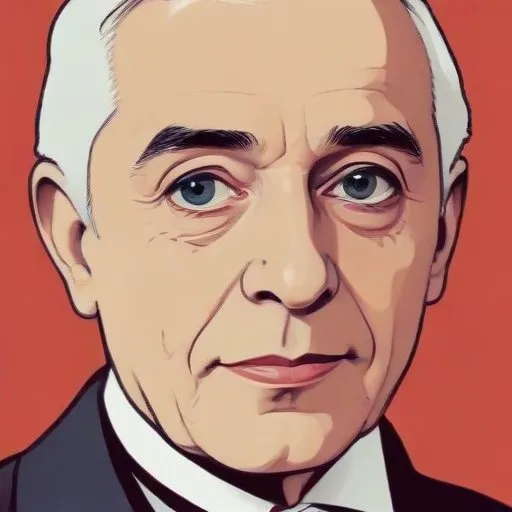
A renowned economic historian and biographer, best known for his authoritative three-volume biography of John Maynard Keynes, which won numerous awards and acclaim.
Robert Skidelsky, a renowned British economist and historian, is best known for his comprehensive and authoritative biography of John Maynard Keynes, a pioneering economist of the 20th century. Skidelsky's work has not only shed new light on Keynes' life and contributions but has also influenced the understanding of economics and economic policy globally.
Born on April 25, 1939, in Harrogate, Yorkshire, England, Skidelsky was educated at Oxford University, where he earned his Bachelor's and Master's degrees in Philosophy, Politics, and Economics. He later pursued his Ph.D. in Economics at Cambridge University.
Skidelsky's academic career has spanned over four decades, with teaching positions at various institutions, including the University of Oxford, University of Warwick, and the University of Buckingham. He has also held visiting professorships at prestigious universities, such as Harvard and Stanford.
Skidelsky's magnum opus is his three-volume biography of John Maynard Keynes, which took him over 20 years to complete. The work, titled John Maynard Keynes: Hopes Betrayed, The Economist as Saviour, and Fighting for Britain, is considered a seminal work on Keynes' life and economics.
In addition to his biography of Keynes, Skidelsky has written numerous books and articles on economics, politics, and history. His books, such as The World After Communism and
Skidelsky's work has been influenced by his commitment to social democracy and his critique of neoliberalism. He has argued that the pursuit of economic growth and efficiency should be balanced with social welfare and distributive justice.
Skidelsky has also been a vocal critic of the dominance of neoclassical economics in academic and policy circles. He has advocated for a more nuanced understanding of economics, incorporating insights from history, philosophy, and politics.
In 1991, Skidelsky was created a Life Peer and took the title Baron Skidelsky of Totton. He has been married to Augusta Hope, a retired teacher, since 1966, and they have two daughters together.
Skidelsky has been an active member of the House of Lords, contributing to debates on economic policy, education, and foreign affairs.
Skidelsky's work has had a profound impact on our understanding of economics and economic policy. His biography of Keynes has influenced a generation of economists and policymakers, including prominent figures such as Paul Krugman and Joseph Stiglitz.
Skidelsky's critique of neoliberalism and advocacy for social democracy have also shaped public discourse and informed policy debates.
Robert Skidelsky, Baron Skidelsky, is a towering figure in the field of economics and economic history. His contributions to our understanding of Keynes and economics have been immense, and his impact on modern society continues to be felt.
Born in 1883
A pioneering economist who revolutionized modern economic theory with his groundbreaking ideas on government intervention and fiscal policy, shaping global economic policies.
Born in 1883
A pioneer of innovation theory, he's credited with coining the term "creative destruction" to describe how new technologies and businesses disrupt existing ones, driving economic growth and progress.
Born in 1912
A Nobel Prize-winning economist who championed free market capitalism and limited government intervention, known for his advocacy of laissez-faire economics and influential writings on monetary policy.
Born in 1915
A renowned economist and academic who made significant contributions to the field of economics, particularly in the areas of macroeconomics and international trade. He was awarded the Nobel Prize in Economics in 1970.
Born in 1924
A Nobel Prize-winning economist who developed a growth model that showed technological progress is the primary driver of economic growth, and is known for his work on the theory of economic growth.
92 Years Old
A renowned economist and philosopher who has made significant contributions to welfare economics, social choice theory, and development economics, and is known for his work on poverty, famine, and human development.
85 Years Old
A Nobel Prize-winning economist who developed the concept of "information asymmetry," which explains how unequal access to information affects markets and transactions. His work has far-reaching implications for understanding economic behavior and policy-making.
82 Years Old
A Nobel Prize-winning economist and academic who shed light on the signaling theory of education, showing how education serves as a signal of an individual's ability to potential employers.
