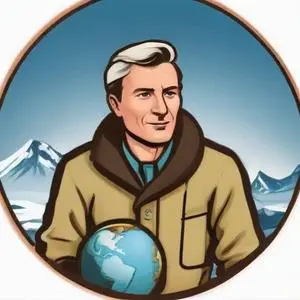
Robert Swan: The Unyielding Champion of Antarctica
The Pioneering Explorer
Robert Swan, OBE, FRGS, is the first person to walk to both poles, a feat that has etched his name in the annals of history. This remarkable achievement has catapulted him to the forefront of polar exploration, earning him a reputation as a fierce advocate for the protection of Antarctica and a champion of renewable energy.
Early Life and Education
Born on July 28, 1956, in Durham, England, Robert Swan's fascination with the unknown was nurtured from a young age. He attended Aysgarth School and later Sedbergh School (1969-1974) before pursuing a BA in Ancient History at St. Chad's College, Durham University (1976-1979).
South Pole Expedition: In the Footsteps of Scott
In 1984, Swan embarked on his maiden Antarctic expedition, aptly titled "In the Footsteps of Scott." Alongside his team, he set sail on the Southern Quest, traversing 14,842 nautical miles to reach the frozen continent. The grueling journey was punctuated by a historic meeting with Bill Burton, the last surviving member of Scott's 1912 expedition, in Lyttelton, New Zealand.
Upon arrival, Swan and his team spent the Antarctic winter at the Jack Hayward Base, where they prepared for the arduous trek to the South Pole. On January 11, 1986, after 70 days of unassisted marching, Swan, Roger Mear, and Gareth Wood reached the South Pole, hauling 350-pound sledges without the aid of radio communications or backup support. This remarkable feat cemented their place in history as the longest unassisted march ever made.
The Birth of 2041
In the aftermath of his South Pole expedition, Swan founded 2041, a company dedicated to the preservation of Antarctica and the promotion of renewable energy. Through 2041, he has passionately advocated for the protection of the Antarctic environment, inspiring a new generation of explorers and environmentalists.
South Pole Energy Challenge: A Renewable Legacy
In November 2017, Swan embarked on the South Pole Energy Challenge, a 600-mile journey to the South Pole with his son, Barclay. This pioneering expedition relied solely on renewable energy, underscoring the importance of sustainable practices in polar exploration.
Awards and Honors
- OBE (Order of the British Empire)
- FRGS (Fellow of the Royal Geographical Society)
Legacy and Impact
Through his unwavering dedication to the preservation of Antarctica, Robert Swan has inspired countless individuals to take action against climate change. His remarkable achievements serve as a beacon of hope, illuminating the path towards a sustainable future. As the world continues to grapple with the challenges of environmental degradation, Swan's unrelenting passion and commitment to the Antarctic environment will remain an enduring testament to humanity's capacity for exploration and discovery.
FAQ
What is Robert Swans mission to protect Antarctica?
Robert Swans mission is to protect Antarctica from pollution and climate change through his organization, 2041 Foundation, which aims to preserve the continents fragile ecosystem for future generations. Sub-question: What is the 2041 Foundation and its goals?
What is Robert Swans notable expedition to Antarctica?
Robert Swans notable expedition to Antarctica was in 1985-1986, where he became the first person to reach the South Pole alone on foot, a journey of 900 miles that took 70 days to complete.
What award did Robert Swan receive for his environmental work?
Robert Swan received the United Nations Environment Programmes (UNEP) Global 500 Award for his outstanding contributions to environmental protection and conservation.
What is Robert Swans role in promoting sustainable living?
Robert Swan is a vocal advocate for sustainable living and has worked with various organizations to promote eco-friendly practices, reduce carbon footprint, and raise awareness about climate change.
How does Robert Swan inspire young people to take action on environmental issues?
Robert Swan inspires young people to take action on environmental issues through his educational programs, public speaking engagements, and by sharing his own experiences as an explorer and conservationist.