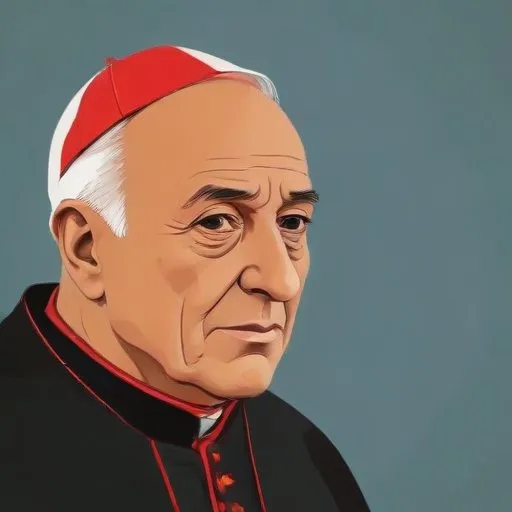
Rodolfo Pio da Carpi: The Renowned Italian Cardinal and Humanist
A Diplomat and Patron of the Arts
Rodolfo Pio da Carpi was a distinguished Italian cardinal, humanist, and patron of the arts, known for his exceptional diplomatic skills and cultural contributions. Born on February 22, 1500, in Carpi, near Modena, Italy, he was the nephew of a diplomat and went on to become a skilled diplomat himself, negotiating with prominent figures such as Emperor Charles V and King Francis of France on behalf of the Pope.
Family and Education
Rodolfo Pio da Carpi came from a noble family, the lords of Carpi, who had made a name for themselves in the 14th century. His uncle, Alberto Pio da Carpi, was a noted humanist scholar who had been educated by Pico della Mirandola. This connection played a significant role in shaping Rodolfo's background and education. He was invested with the subsidiary fiefs of Meldola and Sassuolo in 1518, thanks to the influence of Pope Leo X.
Diplomatic Career
Rodolfo's diplomatic career took off at the age of thirty, when he began negotiating with Emperor Charles V and King Francis of France on behalf of the Pope. He played a crucial role in establishing the Inquisition at Milan and served on the Roman Inquisition. His diplomatic prowess earned him recognition, and he became a trusted figure in the papal court.
Humanist Pursuits
Rodolfo Pio da Carpi was an ardent humanist, and his love for learning and art led him to form a notable library. He actively participated in the humanist studies of 16th-century Rome, contributing to the cultural landscape of the city. His uncle's legacy as a humanist scholar had a profound impact on Rodolfo's own pursuit of knowledge and cultural enrichment.
Legacy and Impact
Rodolfo Pio da Carpi's legacy extends beyond his diplomatic achievements and cultural contributions. He was a testament to the Renaissance humanist ideals, which emphasized the importance of education, art, and intellectual pursuits. His impact on the development of humanism in 16th-century Rome was significant, and his reputation as a patron of the arts has endured through the centuries.
Personal Milestones and Key Life Events
- In 1516, he was a Chevalier of the Knights of S. John of Jerusalem and Commendatory of the church of S. Lorenzo di Colorno in the diocese of Parma.
- Pope Leo X granted him the church of the Holy Trinity in Ferrara in 1518.
Historical Context and Legacy
Rodolfo Pio da Carpi lived during a time of great cultural and intellectual transformation in Europe. His contributions to humanism and diplomacy helped shape the cultural landscape of 16th-century Rome, earning him a place in history as a notable figure of the Renaissance. His legacy serves as a testament to the power of education, art, and intellectual pursuits in shaping society.
Rodolfo Pio da Carpi's remarkable life and achievements continue to inspire and educate us about the importance of cultural enrichment, intellectual pursuits, and diplomatic excellence.
FAQ
Who was Rodolfo Pio da Carpi and what was his role in the Catholic Church?
Rodolfo Pio da Carpi was an Italian cardinal who served as the Bishop of Faenza from 1544 to 1564. He was a prominent figure in the Catholic Church during the Counter-Reformation period.
What was Rodolfo Pio da Carpis contribution to the Council of Trent?
Rodolfo Pio da Carpi played a significant role in the Council of Trent, where he helped to shape the Catholic Churchs response to the Protestant Reformation. He was a strong advocate for church reform and helped to draft several key documents.
What was Rodolfo Pio da Carpis stance on the Protestant Reformation?
Rodolfo Pio da Carpi was a staunch opponent of the Protestant Reformation, viewing it as a threat to the authority of the Catholic Church. He worked tirelessly to promote Catholic doctrine and to counter Protestant theology.
What was Rodolfo Pio da Carpis relationship with Pope Pius IV?
Rodolfo Pio da Carpi was a close advisor to Pope Pius IV, who appointed him as the Bishop of Faenza. The two worked closely together to implement church reforms and to combat Protestantism.
What is Rodolfo Pio da Carpis legacy in the Catholic Church?
Rodolfo Pio da Carpis legacy in the Catholic Church is one of reform and renewal. He worked to promote Catholic doctrine and to strengthen the Churchs institutions, earning him a reputation as a devoted servant of the Church.