


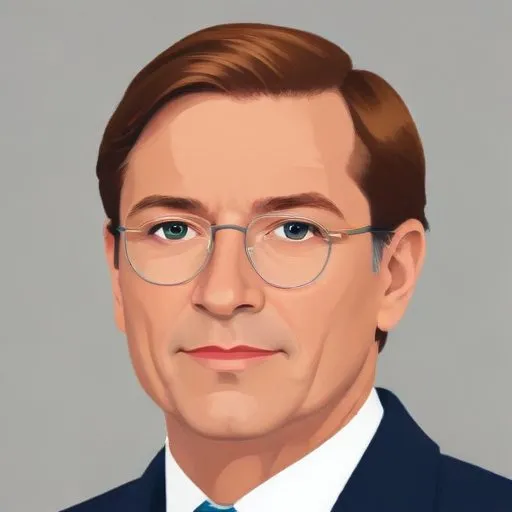
A Dutch physician and politician who served as Minister of Defence, known for his contributions to the country's military and healthcare systems. He played a significant role in shaping the Netherlands' defence policies during his tenure.
Roelof Johannes Hendrik Kruisinga was a renowned Dutch politician and physician who left an indelible mark on the country's medical and political landscape. As a dedicated member of the Christian Historical Union (CHU) and later the Christian Democratic Appeal (CDA) party, Kruisinga's commitment to public service and healthcare reform was unwavering, earning him a reputation as a champion of social welfare and medical advancement.
Born on August 27, 1922, in the Netherlands, Kruisinga's academic journey began at the Gymnasium in Zutphen, where he studied from 1935 to 1939. He then enrolled at the University of Groningen in 1941, pursuing a degree in Medicine. However, his studies were interrupted by World War II, during which he was arrested by the Sicherheitsdienst (SD) in 1942 and detained in the ilag of Sint-Michielsgestel. Released in 1944, Kruisinga returned to the University of Groningen, eventually earning his Bachelor of Medical Sciences degree in 1946 and his Master of Medicine degree in 1950.
Kruisinga's medical expertise was multifaceted, with a special focus on otorhinolaryngology. He worked as a medical researcher at the University Medical Center Groningen from 1950 to 1955, during which time he also served as a Sergeant in the Royal Netherlands Army from 1951 to 1953. In 1951, he embarked on a postgraduate education in Surgery at the University of Aberdeen, later transferring to Magdalen College, University of Oxford, where he earned his Master of Surgery in 1953. Kruisinga's academic prowess was further solidified with his Doctor of Medicine and Doctor of Philosophy (MD, PhD) degrees from the University of Groningen in 1955.
Kruisinga's entry into politics marked a significant shift in his career, as he transitioned from medicine to public service. He worked as an inspector for the Health Care Inspectorate of the Ministry of Social Affairs and Health in Friesland from 1960 to 1962, before becoming a civil servant for the Ministry of Social Affairs and Health from 1962 to 1967. During this period, he held the position of Deputy Secretary-General of the Ministry of Social Affairs and Health and Director.
Roelof Kruisinga's dual legacy in medicine and politics is a testament to his dedication to the betterment of society. As a physician, he contributed significantly to the field of otorhinolaryngology, while as a politician, he championed healthcare reform and social welfare policies. His commitment to public service and medical advancement continues to inspire future generations of healthcare professionals and policymakers alike.
Roelof Kruisinga's life was marked by personal milestones and achievements, including his marriage and family. Despite the challenges he faced during World War II, Kruisinga remained committed to his education and career, earning him numerous accolades and recognition within the medical and political communities.
Kruisinga's remarkable journey came to an end on December 7, 2012, leaving behind a legacy of service, dedication, and a profound impact on the lives of countless individuals in the Netherlands and beyond.
84 Years Old
Deputy Prime Minister of the Netherlands, leader of the People's Party for Freedom and Democracy, and influential figure in Dutch politics during the 1970s and 1980s. Known for his charismatic leadership and economic policies.
87 Years Old
The Prime Minister of the Netherlands from 1982 to 1994, known for leading the country through a period of economic growth and implementing significant welfare state reforms. He also served as the United Nations High Commissioner for Refugees from 2001 to 2005.
87 Years Old
Led the Netherlands as Prime Minister from 1994 to 2002, implementing significant economic reforms and guiding the country's integration into the European Union. He's also known for his role in shaping the country's social and economic policies.
95 Years Old
A Dutch statesman who served as Prime Minister of the Netherlands from 1977 to 1982, known for his progressive policies and European integration efforts.
70 Years Old
A Dutch jurist and politician who served as Prime Minister of the Netherlands from 2002 to 2010, known for his Christian democratic views and leadership during a period of significant social and economic change.
59 Years Old
The Prime Minister of the Netherlands, leading the country since 2010, known for his economic policies and handling of the European migrant crisis.
78 Years Old
The 11th Secretary General of NATO, a Dutch diplomat and politician, is known for leading the alliance during a critical period of global security challenges, including the War in Afghanistan. He played a key role in shaping NATO's response to emerging threats.
