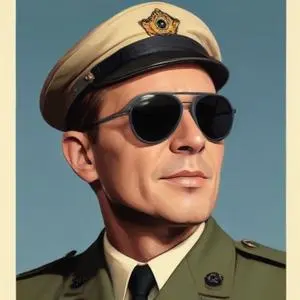
Roger Bushell: The Mastermind Behind the Great Escape
The Daring Aviator and Prisoner of War
Roger Bushell is famously known for masterminding the Great Escape, a daring escape attempt from Stalag Luft III, a German prisoner-of-war camp, during World War II. Tragically, he was one of the 50 escapees recaptured and subsequently murdered by the Gestapo.
Early Life and Education
Born on August 30, 1910, in Springs, Transvaal, South Africa, to English parents, Benjamin Daniel and Dorothy Wingate Bushell (née White), Roger Bushell received a first-class education. He was schooled in Johannesburg before attending Wellington College in Berkshire, England, at the age of 14. Later, he studied law at Pembroke College, Cambridge, where he developed a passion for rugby, cricket, and skiing.
A Sporting Talent
Bushell excelled in various sports, including rugby, cricket, and skiing. In the early 1930s, he was declared the fastest Briton in the male downhill category. He even had a black run named after him in St. Moritz, Switzerland, in memory of his efforts to organize the Swiss-Anglo ski meetings. His sporting achievements were matched by his linguistic skills, becoming fluent in French and German with a remarkable accent.
The Aviator and War Efforts
Despite his sporting prospects, Bushell's primary wish was to fly. In 1932, he joined No. 601 Squadron Auxiliary Air Force (AAF), often referred to as "The Millionaires' Mob" due to the high number of wealthy individuals who joined the squadron. During World War II, he served as a Squadron Leader in the Royal Air Force (RAF).
The Great Escape
Bushell's most notable achievement was masterminding the Great Escape, a massive escape attempt from Stalag Luft III. He orchestrated the digging of three tunnels, code-named "Tom," "Dick," and "Harry," and oversaw the creation of forged documents, civilian clothes, and escape equipment. On the night of March 24, 1944, 76 prisoners, including Bushell, escaped through the tunnels. Although most were recaptured, the Great Escape remains one of the most daring and ingenious escape attempts in history.
Tragic End and Legacy
Sadly, Bushell was recaptured on March 28, 1944, and executed by the Gestapo on March 29, 1944, along with 49 other prisoners. His bravery and determination have inspired generations, and he is remembered as a hero and a true pioneer in the history of prisoner-of-war escapes.
Personal Milestones and Key Life Events
- 1931: Won the slalom event of the annual Oxford-Cambridge ski race
- 1932: Joined No. 601 Squadron Auxiliary Air Force (AAF)
- 1944: Masterminded the Great Escape from Stalag Luft III
- March 24, 1944: Escaped from Stalag Luft III through "Harry" tunnel
- March 28, 1944: Recaptured by the Germans
- March 29, 1944: Executed by the Gestapo
Inspirational Stories and Motivations
Roger Bushell's story serves as a testament to the power of determination, bravery, and ingenuity in the face of adversity. His legacy continues to inspire people around the world, reminding us that even in the darkest of times, the human spirit can persevere and overcome seemingly insurmountable obstacles.
FAQ
What was Roger Bushells role in World War II?
Roger Bushell was a South African-English soldier and pilot who played a significant role in World War II. He was a member of the Royal Air Force and organized the Great Escape from Stalag Luft III, a German prisoner-of-war camp. Bushell was known for his bravery and leadership skills, which earned him the respect of his fellow prisoners.
How did Roger Bushell escape from prison camps?
Roger Bushell was known for his multiple escape attempts from prison camps during World War II. He escaped from Dulag Luft, a German transit camp, and later from Stalag Luft III, where he organized the Great Escape. Bushell used his skills as a pilot to create detailed maps and plans for the escapes.
What was Roger Bushells fate during World War II?
Roger Bushell was captured by the Germans during World War II and executed by firing squad on March 29, 1944, along with 49 other prisoners who had taken part in the Great Escape. His bravery and sacrifice are still remembered today as a symbol of resistance against the Nazi regime.
Was Roger Bushell a hero of World War II?
Yes, Roger Bushell is widely regarded as a hero of World War II. His leadership and bravery during the Great Escape, as well as his multiple escape attempts, made him a legendary figure among Allied prisoners of war. His sacrifice will always be remembered as a testament to the courage and resilience of those who fought against the Nazi regime.
What is Roger Bushells legacy today?
Roger Bushells legacy continues to inspire people today. The Great Escape, a 1963 film about the escape, features Bushell as a main character. He is also remembered through various memorials and museums, including the Royal Air Force Museum in London, which has a dedicated exhibit on his life and bravery.