


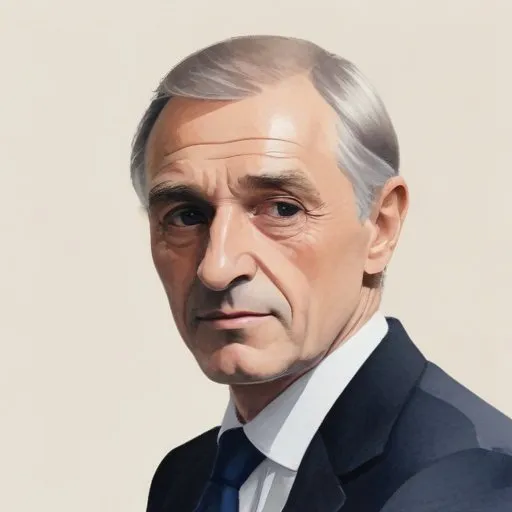
A 17th-century painter and art theorist who developed a influential art theory system, ranking artists by their skill level, and created a famous art academy.
Roger de Piles, a French painter, engraver, art critic, and diplomat, left an indelible mark on the art world and beyond. Known for his perceptive critiques and innovative artistic approaches, De Piles' work traversed the realms of aesthetics, philosophy, and politics, earning him a reputation as a true Renaissance man.
Born on October 7, 1635, in Clamecy, France, De Piles studied philosophy and theology before devoting himself to painting. His educational background and artistic inclinations laid the foundation for his future endeavors as an art critic and diplomat.
In 1662, De Piles became the tutor to Michel Amelot de Gournay, a position that would take him on a grand tour of Europe. During this time, he honed his artistic skills, admiring the works of masters such as Giorgione, Correggio, and Rembrandt. His travels also allowed him to develop his diplomatic skills, eventually becoming the secretary to Amelot's various missions as French ambassador to Venice, Portugal, and Spain.
De Piles' most significant contribution to art theory lies in his Dialogue sur le coloris, a treatise on color and painting that showcased his astute observations and innovative approaches. Written during his imprisonment in the Hague (1692-1697), this work cemented his reputation as an art critic and aesthete.
De Piles' diplomatic career was marked by intrigue and adventure. He served as a confidential agent for Louis XIV, carrying out secret missions in Germany and Austria. However, his diplomatic endeavors were not without risk; he was arrested in the Hague in 1692 and imprisoned for five years, using this time to write his seminal work on art criticism.
De Piles' legacy extends beyond his own artistic contributions to the world of art criticism, aesthetics, and diplomacy. His work influenced generations of artists, art historians, and critics, earning him a place among the most important figures in the history of art theory. His ability to navigate the complexities of art, politics, and diplomacy made him a true Renaissance man, whose impact continues to resonate today.
"Color is the very essence of painting, and the most difficult thing to learn."
In conclusion, Roger de Piles was a true polymath, whose contributions to art, aesthetics, and diplomacy continue to inspire and influence generations of artists, critics, and scholars. His remarkable life, marked by adventure, intrigue, and creativity, serves as a testament to the power of human ingenuity and the Renaissance spirit.
Born in 1619
A dominant figure in 17th-century French art, he was a painter, art theorist, and director of the Gobelins Manufactory, creating grandiose and dramatic works that epitomized the French Baroque style. He wrote extensively on art theory, influencing generations of artists.
Born in 1732
A prolific Rococo painter and etcher, renowned for his delicate, whimsical, and often erotic works that capture the carefree spirit of 18th-century French aristocracy. His art often featured lush landscapes, gentle colors, and playful scenes of love and leisure.
Born in 1703
A prominent artist of the Rococo style, known for his delicate and ornate paintings, often depicting mythological and pastoral scenes, as well as designing sets for the Paris Opera.
Born in 1686
A prominent 18th-century French painter and engraver, renowned for his exquisite still-life compositions and portraits of Louis XV's royal hunts, showcasing remarkable attention to detail and realism.
Born in 1659
A prominent portrait painter of the French monarchy and aristocracy, capturing the essence of 17th and 18th century European royalty with exquisite detail and realism.
