


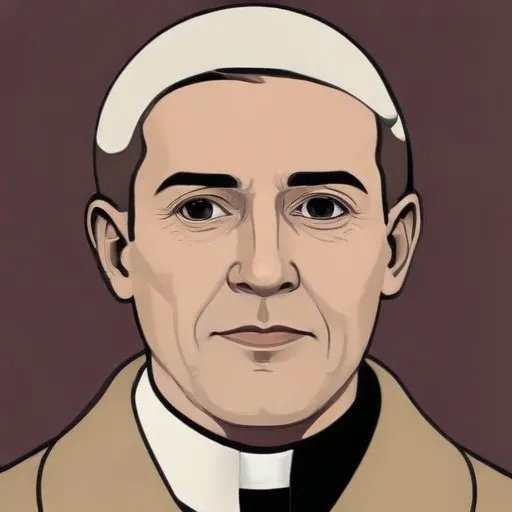
A 16th-century priest who defied the English monarchy's religious reforms, ultimately leading to his execution, and is remembered for his bravery and devotion to Protestantism.
Rowland Taylor, a devout Protestant and advocate for religious reform, is remembered for his unwavering dedication to his faith, which ultimately led to his martyrdom during the Marian Persecutions. As the Rector of Hadleigh in Suffolk, Taylor's defiance in the face of oppression earned him a place in the annals of English history as a champion of Protestantism.
Taylor was born on October 6, 1510, in Rothbury, Northumberland. He received his LL.B. degree from the University of Cambridge in 1530 and later obtained his LL.D. in 1534. During his time at Cambridge, Taylor served as the principal of Burden Hostel, where he honed his skills as a scholar and educator.
Taylor's wife, Margaret Tyndale, was the niece of William Tyndale, the renowned English Bible translator. This familial connection highlights Taylor's deep roots in the Protestant Reformation movement. His association with Tyndale, who was burned at the stake in 1536, foreshadowed Taylor's own fate.
In the late 1530s, Taylor served as chaplain and commissary general to Hugh Latimer, Bishop of Worcester. After Latimer's resignation, Taylor was taken under the wing of Thomas Cranmer, the Archbishop of Canterbury. Cranmer ordained Taylor and appointed him as his chaplain, allowing him to preach throughout the diocese of London.
In 1544, Taylor was presented to the living of Hadleigh, Suffolk, where he continued to preach and advocate for Protestant reform. However, with the ascension of Mary I (Mary Tudor, also known as Bloody Mary) to the throne in 1553, Taylor's preaching became increasingly perilous. Despite the dangers, Taylor remained resolute in his convictions, rejecting the authority of the Catholic Church and its attempts to suppress Protestantism.
In 1555, Taylor was arrested and put on trial for heresy. Refusing to recant his Protestant beliefs, Taylor was condemned to death and burned at the stake at Aldham Common on February 9, 1555. His courageous defiance in the face of death solidified his place as a Protestant martyr and a symbol of resistance against persecution.
Taylor's sacrifice did not go in vain. His story inspired generations of Protestants, serving as a testament to the power of conviction and faith. As a champion of religious reform, Taylor played a pivotal role in shaping the course of English history, leaving behind a legacy that continues to resonate today.
Taylor's bravery and devotion have made him an enduring figure in English Protestantism, a beacon of hope in the face of oppression, and a shining example of the power of faith to transform and inspire.
Born in 1489
Leader of the English Reformation, instrumental in creating the Church of England and authoring the Book of Common Prayer.
51 Years Old
Noted for his eclectic blend of rock, pop, and electronic elements, this artist is a critically acclaimed singer-songwriter and bassist with a devoted fan base.
Born in 1284
The king whose disastrous reign led to his eventual deposition and mysterious death, remembered for his alleged homosexual relationships and power struggles with nobles.
Born in 1516
The first queen to rule England in her own right, Bloody Mary tried to restore Catholicism, earning her notorious reputation for burning hundreds of Protestants at the stake.
Born in 1533
The Virgin Queen, a powerful and beloved monarch, ruled England during a golden age of culture, literature, and exploration, establishing the Church of England and defeating the Spanish Armada.
