


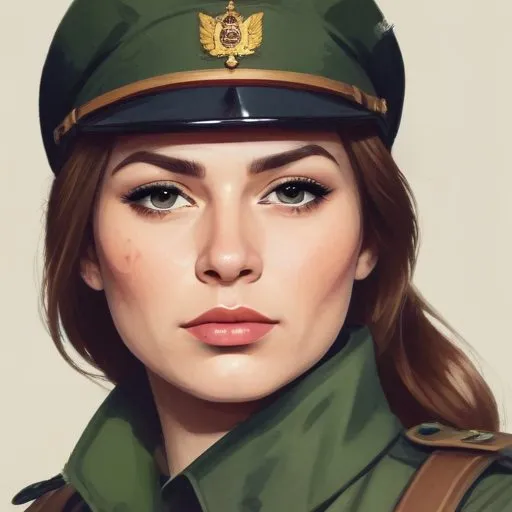
A Soviet sergeant and sniper, known for her exceptional marksmanship and bravery during World War II, credited with 54 confirmed kills.
Roza Shanina, a Soviet sniper during World War II, is credited with over 50 kills, earning her the nickname "the unseen terror of East Prussia". Her exceptional shooting accuracy made her a force to be reckoned with on the front lines, where she would often make doublets, hitting two targets with quick succession shots.
Born on April 3, 1924, in the Russian village of Edma, Arkhangelsk Oblast, Roza Shanina was named after the Marxist revolutionary Rosa Luxemburg. She grew up in a family of modest means, with her father, Georgiy Yegor Mikhailovich Shanin, a logger who had been disabled during World War I, and her mother, Anna Alexeyevna Shanina, a kolkhoz milkmaid. Roza had six siblings and was known for her above-average height, light brown hair, and blue eyes.
After finishing four classes of elementary school, Roza continued her education in the village of Bereznik, walking 13 kilometers to school every day. Her life took a dramatic turn when her brother was killed in 1941, prompting her to volunteer for the military. Shanina chose to become a sniper, driven by a desire to avenge her brother's death.
Shanina's exceptional marksmanship skills quickly gained her recognition, and she became one of the most feared snipers on the front lines. In 1944, a Canadian newspaper described her as "the unseen terror of East Prussia". Her achievements earned her the Order of Glory, making her the first servicewoman of the 3rd Belorussian Front to receive this honor.
During her time in the military, Shanina kept a war diary, which was first published in 1965. The diary provides a unique insight into her experiences and thoughts during the war, offering a glimpse into the life of a female sniper on the front lines.
Roza Shanina's bravery and skill have inspired countless people, and her legacy continues to fascinate historians and enthusiasts alike. Her story has been immortalized in books, films, and documentaries, cementing her place in history as one of the most iconic female snipers of World War II.
Roza Shanina's story serves as a powerful reminder of the importance of courage, determination, and sacrifice. Her bravery in the face of adversity continues to inspire people, demonstrating the impact one person can have on the course of history.
Roza Shanina's war diary and letters have been a valuable source of insight into her thoughts and feelings during the war. One of her most notable quotes is: "The Germans are not people, they are beasts... I'll take my revenge."
Roza Shanina's story is set against the backdrop of World War II, one of the darkest periods in human history. Her bravery and sacrifice serve as a testament to the human spirit, inspiring future generations to strive for greatness.
Born in 1916
A Ukrainian-Russian soldier and sniper, credited with over 300 confirmed kills, who became a legendary figure in the Soviet Union during World War II, and a symbol of female empowerment.
Born in 1915
A Soviet sniper credited with killing over 200 German soldiers during the Battle of Stalingrad, earning him legendary status as a hero of the Eastern Front.
Born in 1896
A Soviet military leader who played a crucial role in defeating Nazi Germany in World War II, and later became a key figure in Soviet politics.
Born in 1896
A Soviet military leader who played a crucial role in several key battles, including the Battle of Stalingrad and the capture of Berlin, earning him the highest military honors. He was a skilled strategist and tactician who helped turn the tide of the war in favor of the Allies.
Born in 1898
A pioneer of montage editing, he revolutionized filmmaking with his iconic scenes and theories, influencing generations of directors.
