


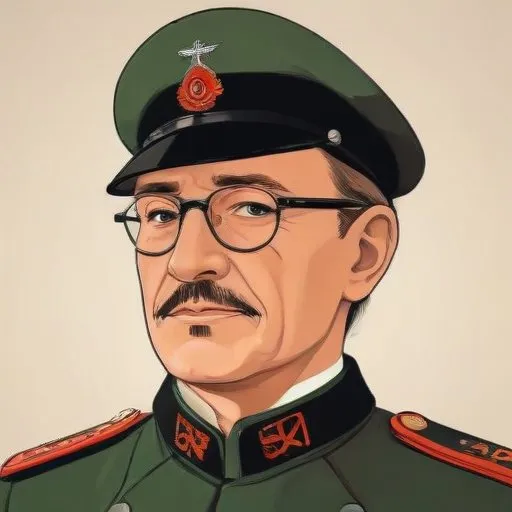
Co-founder of influential German news magazine Der Spiegel, known for fearless investigative journalism and shaping post-war Germany's political discourse.
Rudolf Augstein is renowned as one of the most influential German journalists of the 20th century, best known for founding and publishing Der Spiegel, the iconic investigative weekly magazine that continues to shape Germany's media landscape. As a journalist, publicist, and politician, Augstein left an indelible mark on modern German society, fearlessly challenging the status quo and pushing the boundaries of free speech.
Born on November 5, 1923, in Hanover, Germany, Augstein served as a radio operator and artillery observer in the German Army during World War II, eventually attaining the rank of Reserve Officer (Leutnant der Reserve). After the war, he embarked on a journey that would define his legacy: establishing Der Spiegel in 1946-1947.
In 1961-1962, Augstein was arrested and jailed for 103 days due to the Spiegel Affair, a controversy surrounding the magazine's critical reporting on the German government's handling of the Cold War. This event not only cemented Augstein's reputation as a fearless journalist but also led to the resignation of Minister of Defense Franz Josef Strauß.
Augstein briefly served as a member of the Bundestag for the Free Democratic Party of Germany (FDP) from 1972 to 1973, representing North Rhine-Westphalia. However, he soon returned to his journalistic pursuits, believing he could exert more influence through his magazine than in politics.
In his later years, Augstein continued to write critically acclaimed books, including Preuens Friedrich und die Deutschen (1981) and Otto von Bismarck (1990). He remained an outspoken critic, fiercely engaging with historians like Ernst Nolte and Andreas Hillgruber during the Historikerstreit of 1986-1987.
Rudolf Augstein's unwavering commitment to investigative journalism and his unrelenting criticism of those in power have left a lasting impact on German society. Through Der Spiegel, he empowered a generation of journalists and inspired a culture of critical thinking.
Rudolf Augstein passed away on November 7, 2002, but his legacy continues to inspire generations of journalists, politicians, and citizens alike. His fearless pursuit of truth and his commitment to free speech remain a beacon of hope in the face of adversity.
Born in 1699
A renowned Prussian cavalry general, he's celebrated for his exceptional military tactics and victories during the Seven Years' War, earning him the respect of Frederick the Great.
Born in 1918
A German leader who served as Chancellor from 1974 to 1982, known for his pragmatic and socially liberal policies, and his key role in shaping the European Union. He was also a respected economist and published author.
Born in 1876
Led post-war West Germany's reconstruction and served as a key figure in shaping the country's modern identity, earning him the title "Father of the Federal Republic."
