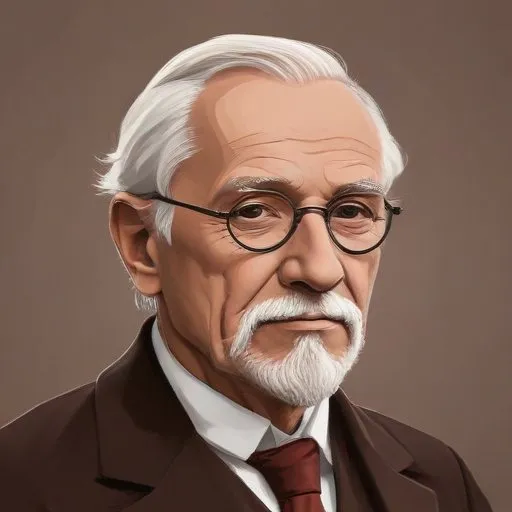
Rudolf Christoph Eucken

Rudolf Christoph Eucken

Rudolf Christoph Eucken was born on January 5th, 1846

Full Name: Rudolf Christoph Eucken
Occupation: Philosopher and author
Nationality: German
Born: January 5, 1846
Place of Birth: Aurich, Kingdom of Hanover
Zodiac Sign: Capricorn
Notable Work: Die Lebensanschauungen der großen Denker
Nobel Prize: 1908

A German philosopher and author who explored the human experience, morality, and the role of individualism in society, earning him the Nobel Prize in Literature in 1908.

Written by: Aisha Patel Aisha Patel

Rudolf Christoph Eucken: The Nobel Laureate Philosopher of Life

A Search for Truth and Idealism

Rudolf Christoph Eucken, a renowned German philosopher, was awarded the 1908 Nobel Prize in Literature for his tireless pursuit of truth and his profound contributions to philosophical thought. Through his works, Eucken vindicated and developed an idealistic philosophy of life, characterized by its warmth, strength, and penetrating power of thought.

Early Life and Education

Born on January 5, 1846, in Aurich, Kingdom of Hanover (now Lower Saxony), Eucken's early life was marked by the loss of his father, Ammo Becker Eucken, when he was just a child. His mother, Ida Maria, ne Gittermann, brought him up with dedication and care. Eucken's educational journey began in Aurich, where he was instructed by the classical philologist and philosopher Ludwig Wilhelm Maximilian Reuter. He furthered his studies at Göttingen University (1863-1866) and Berlin University, where he was deeply influenced by Hermann Lotze and Friedrich Adolf Trendelenburg.

Career and Academic Pursuits

Eucken earned his PhD in classical philology and ancient history from Göttingen University in 1866 with a dissertation titled "De Aristotelis dicendi ratione." Although his degree was in classical philology, his inclination towards philosophy led him to focus on the philosophical side of theology. In 1871, Eucken became Professor of Philosophy at the University of Basel, Switzerland, a position he held until 1874, when he moved to the University of Jena. He spent the next 46 years at Jena, until his retirement in 1920. Notably, Eucken spent half of 1912-1913 as an exchange professor at Harvard University.

Philosophical Contributions and Beliefs

Eucken's philosophical work was characterized by his emphasis on the importance of individualism, intellectualism, and idealism. He believed in the supreme value of human existence and the pursuit of knowledge, which he considered essential for spiritual growth and self-realization. His philosophy was deeply rooted in the ideas of Immanuel Kant, Friedrich Nietzsche, and Arthur Schopenhauer, among others. Eucken's works encompassed a wide range of topics, including metaphysics, ethics, and aesthetics.

Major Works and Career Highlights

Some of Eucken's notable works include:

Influence on Modern Society and Legacy

Eucken's philosophical ideas have had a profound impact on modern thought, emphasizing the importance of individualism, intellectualism, and idealism. His influence extends beyond the realm of philosophy, shaping the intellectual landscape of the late 19th and early 20th centuries. Today, Eucken's works continue to inspire and influence scholars, thinkers, and philosophers around the world.

Awards and Honors

In recognition of his outstanding contributions to philosophy and literature, Eucken was awarded the 1908 Nobel Prize in Literature. This prestigious honor solidified his position as a leading philosopher of his time.

Personal Milestones and Key Life Events

Eucken's life was marked by several significant events, including the loss of his father in early childhood and his appointment as Professor of Philosophy at the University of Basel at the age of 25. His time spent as an exchange professor at Harvard University in 1912-1913 was a pivotal moment in his academic career.

Trivia and Fun Facts

Did you know that Eucken's dissertation, "De Aristotelis dicendi ratione," was published in 1866, the same year he earned his PhD? Or that he was a strong contender for the professorship of philosophy at the University of Basel, ultimately beating Friedrich Nietzsche in the competition?

Conclusion

Rudolf Christoph Eucken, a Nobel laureate and renowned philosopher, left an indelible mark on the world of philosophy and literature. His tireless pursuit of truth, his emphasis on individualism and idealism, and his profound contributions to philosophical thought continue to inspire and influence scholars and thinkers today.
Timeline
1846
Birth of Rudolf Christoph Eucken
Rudolf Christoph Eucken was born on January 5, 1846, in Germany. He would go on to become a philosopher and author.
1866
Study of Philosophy
Eucken began studying philosophy at the University of Göttingen in 1866, which shaped his philosophical ideas.
1871
Academic Career Begins
Eucken started his academic career in 1871, teaching philosophy at the University of Basel.
1908
Nobel Prize in Literature
Eucken was awarded the Nobel Prize in Literature in 1908, recognizing his contributions to philosophy and literature.
1926
Death of Rudolf Christoph Eucken
Rudolf Christoph Eucken passed away on September 14, 1926, leaving behind a legacy of philosophical and literary works.
Rudolf Christoph Eucken

Rudolf Christoph Eucken Quiz

Rudolf Christoph Eucken's philosophical ideas focused on the importance of

Score: 0/5
FAQ
What were Rudolf Christoph Euckens contributions to philosophy?
Rudolf Christoph Eucken was a German philosopher and author who made significant contributions to the fields of philosophy, literature, and theology. He was awarded the Nobel Prize in Literature in 1908.
How did Rudolf Christoph Eucken impact the development of German philosophy?
Rudolf Christoph Euckens philosophical work had a profound impact on the development of German philosophy, influencing thinkers such as Friedrich Nietzsche and Martin Heidegger.
What were Rudolf Christoph Euckens views on the relationship between philosophy and literature?
Rudolf Christoph Eucken believed that philosophy and literature were intertwined, and that literature could be a powerful tool for exploring philosophical ideas and themes.
How did Rudolf Christoph Euckens work influence literary movements?
Rudolf Christoph Euckens work had a significant impact on literary movements, including the development of Expressionism and Existentialism.
What is Rudolf Christoph Euckens legacy in philosophy and literature?
Rudolf Christoph Euckens legacy in philosophy and literature is that of a pioneering thinker who explored the intersections between philosophy, literature, and theology. His work continues to inspire and influence scholars and writers around the world.

Related People:

Arthur Schopenhauer

Born in 1788

A pessimistic philosopher who wrote about the human condition, emphasizing the struggles and sufferings of life, and is famous for his concept of the "will to life".

Immanuel Kant

Born in 1724

Developed influential philosophical frameworks, such as the Critique of Pure Reason, that shaped modern Western thought on ethics, morality, and human understanding.

Georg Wilhelm Friedrich Hegel

Born in 1770

A German philosopher and academic who developed a comprehensive and systematic philosophy that emphasized the unity of all things and the dialectical process of thesis, antithesis, and synthesis. His ideas have had a profound impact on modern thought, influencing fields such as philosophy, politics, and art.

Ferdinand Tönnies

Born in 1855

Developed the concept of Gemeinschaft and Gesellschaft, which distinguishes between community-based and society-based social organizations. His work laid the foundation for modern sociology and social theory.

Ernst Cassirer

Born in 1874

A philosopher who developed the concept of "symbolic forms" to understand human culture and knowledge, and is known for his work on the philosophy of science and the Enlightenment.

Martin Heidegger

Born in 1889

A German philosopher and academic who explored the meaning of existence, time, and human existence, influencing 20th-century philosophy with his concept of "Being-in-the-world".

Karl Jaspers

Born in 1883

A German-Swiss psychiatrist and philosopher who developed the concept of existentialism, emphasizing individual freedom and responsibility, and wrote extensively on philosophy, psychology, and politics. His work explored the human condition, morality, and the search for meaning.