


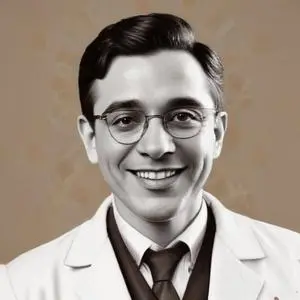
A Nobel Prize-winning chemist and academic who developed the theory of electron transfer, a fundamental concept in chemistry, and made significant contributions to our understanding of chemical reactions.
Rudolph A. Marcus, a Canadian-born American chemist, is renowned for his groundbreaking contributions to the theory of electron transfer reactions in chemical systems, earning him the prestigious 1992 Nobel Prize in Chemistry. His pioneering work, now known as Marcus theory, provides a thermodynamic and kinetic framework for describing one-electron outersphere electron transfer, revolutionizing the field of chemistry.
Born on July 21, 1923, in Montreal, Quebec, Marcus grew up in a Jewish family with a strong background in science. His interest in mathematics and the sciences began at a young age, and he excelled in mathematics at Baron Byng High School.
He pursued higher education at McGill University, where he studied under the guidance of Carl A. Winkler, a student of Cyril Hinshelwood from the University of Oxford. Marcus's academic excellence earned him a B.Sc. in 1943 and a Ph.D. in 1946, both from McGill University.
After completing his Ph.D., Marcus worked at the National Research Council Canada, followed by the University of North Carolina, and the Polytechnic Institute of Brooklyn. In 1952, he developed the Rice-Ramsperger-Kassel-Marcus (RRKM) theory, a significant milestone in his research career.
In 1964, he taught at the University of Illinois, where he continued to refine his approach to solving complex problems with his distinctive "full tilt" method. In 1978, Marcus joined the California Institute of Technology (Caltech), where he remains a professor to this day.
Marcus's most significant contribution to the field of chemistry is his theory of electron transfer, which provides a comprehensive framework for understanding the kinetics and thermodynamics of one-electron outersphere electron transfer reactions.
This theory has far-reaching implications for fields such as electrochemistry, biochemistry, and materials science, enabling scientists to better understand and manipulate electron transfer reactions at the molecular level.
Rudolph A. Marcus's pioneering work has had a profound impact on the field of chemistry, paving the way for significant advances in our understanding of electron transfer reactions. His theory has inspired generations of scientists and continues to influence research in fields such as energy, catalysis, and biomedicine.
As a testament to his enduring legacy, Marcus remains an active and influential figure in the scientific community, continuing to inspire and educate the next generation of scientists and researchers.
Through his remarkable career, Rudolph A. Marcus has left an indelible mark on the world of chemistry, inspiring future generations to continue pushing the boundaries of human knowledge and understanding.
Born in 1901
Pioneering chemist and peace activist who won two unshared Nobel Prizes, one for chemistry and one for peace, for his groundbreaking work on the nature of the chemical bond and his tireless efforts to promote nuclear disarmament.
Born in 1893
A pioneering scientist who discovered deuterium, a heavy isotope of hydrogen, and later contributed to the discovery of many other elements, revolutionizing our understanding of the universe.
Born in 1912
A renowned chemist and academic who discovered and isolated ten transuranic elements, including plutonium, and was a leading figure in the development of nuclear energy. His work had a profound impact on our understanding of the periodic table and the properties of atomic nuclei.
89 Years Old
A Nobel Prize-winning chemist who pioneered the field of organic chemistry and introduced the concept of orbital symmetry, revolutionizing our understanding of chemical reactions.
Born in 1912
Developed groundbreaking methods for synthesizing and using boranes, a class of compounds crucial in organic chemistry, earning the Nobel Prize in Chemistry in 1979.
Born in 1915
A Nobel Prize-winning chemist who pioneered the understanding of electron transfer reactions, revolutionizing the field of inorganic chemistry.
86 Years Old
Pioneering chemist and Nobel laureate who developed laser-induced fluorescence, revolutionizing chemical analysis and detection. Known for his groundbreaking work in analytical chemistry and its applications.
