


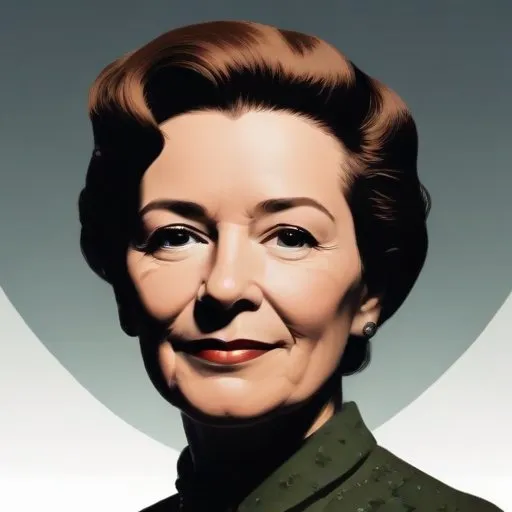
A pioneering female composer who blended modernist and folk music traditions, creating innovative works that explored new sounds and techniques.
Ruth Crawford Seeger, a trailblazing composer and folk music expert, heralded the emerging modernist aesthetic in the American music scene of the early 20th century. Her groundbreaking work, particularly her String Quartet of 1931, solidified her position as a central member of the ultramoderns, a group of avant-garde composers who reshaped the country's musical landscape.
Born Ruth Porter Crawford on July 3, 1901, in East Liverpool, Ohio, she grew up in a family of modest means, with her father, Clark Crawford, serving as a Methodist minister. Her early life was marked by frequent relocations, as her family moved to various cities in Ohio, Missouri, and Indiana, before finally settling in Jacksonville, Florida.
The loss of her father to tuberculosis in 1914 had a profound impact on Ruth, and her mother, Clara, struggled to maintain their middle-class lifestyle. Despite these challenges, Ruth found solace in music and poetry, beginning to study piano at the tender age of six and later pursuing her passion for writing.
In 1913, Ruth began taking piano lessons with Bertha Foster, a renowned music teacher in Jacksonville, and later with Madame Valborg Collett, a student of Agathe Backer Gröndahl. Under their guidance, she honed her skills as a pianist and started composing music for her young pupils in 1918 and 1919.
After graduating from high school in 1918, Ruth pursued a career as a concert pianist, performing at various musical events in Jacksonville. Her experience as a piano teacher at Foster's school and her early compositions laid the foundation for her future success as a composer.
In 1921, Ruth moved to Chicago, where she enrolled at the American Conservatory of Music, initially planning to continue her studies as a concert pianist. However, her exposure to the works of modernist composers, such as Arnold Schoenberg and Igor Stravinsky, sparked a creative transformation, and she began to focus on composition.
Ruth's String Quartet of 1931, considered one of her most iconic works, showcases her mastery of modernist techniques, including atonality and dissonance. This piece, along with her other compositions, solidified her position among the ultramoderns, a group of composers who sought to break free from traditional musical forms.
Her association with this group, which included composers like Henry Cowell, Charles Ives, and Carl Ruggles, further established her reputation as a leading figure in American modernist music.
In the late 1930s, Ruth shifted her focus towards folk music, studying and transcribing American folk songs. Her work in this field was instrumental in preserving and promoting American folk music traditions.
During this period, Ruth also dedicated herself to raising her family, including her four children with her husband, Charles Seeger, a musicologist and composer. Despite her reduced compositional output, her contributions to folk music research and education remained significant.
Ruth Crawford Seeger's pioneering work as a composer and folk music specialist has inspired generations of musicians and composers. Her music, characterized by its innovative and modernist approach, continues to be celebrated and performed around the world.
Her influence can be seen in the work of later composers, such as Elliott Carter, who drew upon her modernist techniques. Ruth's legacy extends beyond her music, as she paved the way for women composers and folk music enthusiasts, ensuring her place as a trailblazing figure in American music history.
Ruth received various honors and awards for her contributions to music, including a Guggenheim Fellowship in 1930 and a grant from the American Academy of Arts and Letters in 1949.
Born in 1919
A legendary folk musician and social activist, known for his iconic banjo-playing and protest songs that inspired generations to take action for civil rights and environmental causes.
Born in 1915
A pioneering musicologist and folklorist who traveled the American South, recording and preserving traditional music, stories, and oral histories, helping to popularize blues, jazz, and folk music.
Born in 1897
A pioneering composer and pianist who experimented with avant-garde techniques, creating innovative works that blended traditional and modern styles. Known for his radical approach to music, pushing boundaries and inspiring future generations.
84 Years Old
A visionary musician and producer who co-founded The Velvet Underground, pushing boundaries in rock music and influencing generations of artists. Known for experimental and avant-garde work .
Born in 1926
A pioneer of indeterminacy in music, creating subtle, atmospheric soundscapes that defy traditional composition, and teaching generations of musicians to think outside the box.
Born in 1908
A pioneering composer of modern classical music, known for his complex and innovative works that pushed the boundaries of harmony and rhythm.
96 Years Old
A pioneer of avant-garde music, this composer and educator is renowned for his innovative and theatrical works that often feature unconventional instruments and techniques.
