


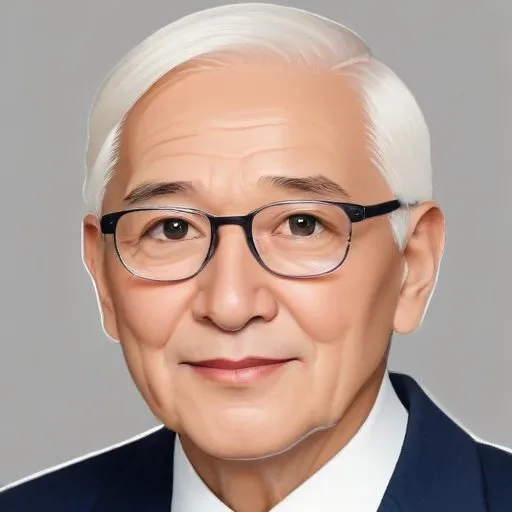
A renowned linguist and semanticist who served as a US Senator, known for his work on the nature of language and its relationship to thought, and for being a vocal critic of student activism during the 1960s.
S. I. Hayakawa, a Canadian-born American academic and politician, is renowned for his remarkable journey as a professor of English, president of San Francisco State University, and U.S. Senator from California. His profound impact on education, politics, and semantics has left an indelible mark on modern society.
Born in Vancouver, British Columbia, on July 18, 1906, Hayakawa was educated in the public schools of Calgary, Alberta, and Winnipeg, Manitoba. He graduated from the University of Manitoba in 1927, earning his MA in English from McGill University in 1928, and his PhD in English from the University of Wisconsin-Madison in 1935.
Hayakawa's academic career spanned several prestigious institutions. He lectured at the University of Chicago from 1950 to 1955, during which he presented a seminal talk at the 1954 Conference of Activity Vector Analysts at Lake George, New York. His theory of personality from the semantic point of view, later published as The Semantic Barrier, significantly influenced A. E. van Vogt's Null-A novels. Hayakawa's ideas on general semantics also earned him a character mention in van Vogt's The World of Null-A, introducing him as "Professor Hayakawa, today's Mr. Null-A himself, the elected head of the International Society for General Semantics."
As an English professor at San Francisco State College (now San Francisco State University) from 1955 to 1968, Hayakawa trained notable students, including commune leader Stephen Gaskin and author Gerald Haslam. His commitment to education and semantic theory led to his appointment as acting president of San Francisco State College in 1968, amidst a student strike.
In 1977, Hayakawa was elected as U.S. Senator from California, serving until 1983. His tenure was marked by his dedication to education, civil rights, and social justice. As a strong advocate for bilingual education, he introduced the Bilingual Education Act in 1978, which aimed to provide funding for bilingual education programs.
Hayakawa's work on general semantics and its application to human behavior and communication has had a profound impact on modern thought. His emphasis on the importance of language and perception in shaping our understanding of reality continues to influence fields such as psychology, philosophy, and education.
S. I. Hayakawa's legacy extends beyond academia and politics. His work on general semantics has influenced fields such as psychology, philosophy, and education. His commitment to bilingual education and social justice has inspired generations of educators, policymakers, and social activists.
In conclusion, S. I. Hayakawa's remarkable life and career serve as a testament to the power of education, intellectual curiosity, and dedication to the betterment of society. His impact on modern thought and society continues to inspire and educate future generations.
Born in 1911
The charismatic leader who championed conservative policies, helped end the Cold War, and is often credited with restoring American pride and optimism. He's also remembered for his folksy, actor-honed communication style.
Born in 1913
The 38th President of the United States, a former football star and lawyer, is known for being the first vice president to assume the presidency under the 25th Amendment and for his controversial pardon of Richard Nixon. He's also remembered for his humble and accidental rise to the presidency.
Born in 1924
A naval officer turned politician who served as the 39th President of the United States, known for his commitment to human rights and social justice, and awarded the Nobel Peace Prize in 2002.
Born in 1913
The 37th President of the United States, a polarizing figure who led the country through significant domestic and foreign policy changes, infamous for his involvement in the Watergate scandal.
Born in 1911
The 38th Vice President of the United States was a prominent liberal politician and journalist who played a key role in shaping the country's civil rights policies. He's most known for his strong support of the Civil Rights Act of 1964.
Born in 1916
A poet and politician who ran for president in 1968, known for his anti-war stance and inspiring a generation of young people to get involved in politics.
Born in 1925
A Navy officer, lawyer, and politician who served as US Attorney General, playing a key role in the Civil Rights Movement and advocating for social justice. He was a prominent figure in American politics during the 1960s.
Born in 1917
The 35th President of the United States was a charismatic leader who navigated the country through the Cuban Missile Crisis and advocated for civil rights, leaving a lasting legacy in American politics.
