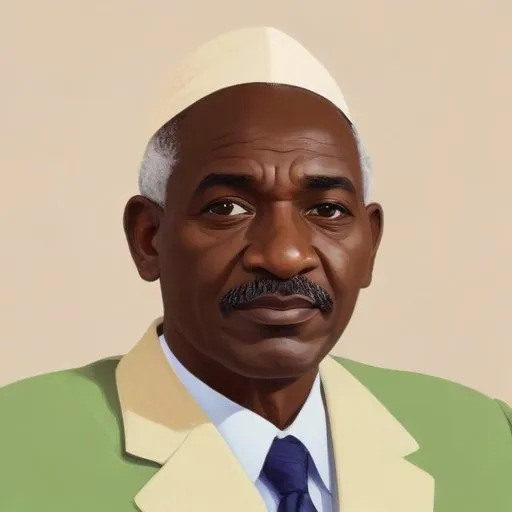
Sadiq alMahdi: The Sunderland Imam and Prime Minister
A Legacy of Leadership and Political Turmoil
Sadiq alMahdi, also known as Sadiq as-Siddiq, is renowned for being the Prime Minister of Sudan on two separate occasions, from 1966 to 1967 and again from 1986 to 1989. As the head of the National Umma Party and Imam of the Ansar, a Sufi order, alMahdi's political career was marked by periods of turmoil, power struggles, and shifts in allegiance.
Early Life and Family Background
Born on December 25, 1935, Sadiq alMahdi hailed from a prominent Sudanese family with a rich political and religious heritage. His uncle, Imam al-Hadi al-Mahdi, was a respected religious leader, and his family's legacy was deeply rooted in the Ansar Sufi order, which pledged allegiance to Muhammad Ahmad, the self-proclaimed Mahdi (messianic savior) of Islam.
First Term as Prime Minister (1966-1967)
In July 1966, alMahdi became Prime Minister of Sudan after Muhammad Ahmad Mahgoub resigned due to a parliamentary vote of censure. AlMahdi's faction of the National Umma Party formed a coalition government with the National Unionist Party (NUP), with
Ismail al-Azhari as president. During his first term, alMahdi championed regional development and greater autonomy for the southern provinces, albeit unsuccessfully. His proposals were met with resistance from educated Sudanese civilians and army officers, ultimately leading to his loss of support from coalition partners in May 1967.
Opposition and Return to Power (1967-1986)
After losing his first term as Prime Minister, alMahdi's faction won more seats in the 1968 elections, but he personally lost his seat to a candidate from Mahgoub's faction. During the intervening years, alMahdi's party rebuilt its strength, and he re-emerged as a prominent political figure. In 1986, he secured a second term as Prime Minister, which lasted until his ousting on June 30, 1989.
Philosophical Contributions and Beliefs
As the Imam of the Ansar, alMahdi's leadership was guided by his deep commitment to Sufism and the principles of the Ansar order. His philosophical contributions centered on promoting unity, justice, and equality within Sudanese society. AlMahdi's beliefs emphasized the importance of dialogue, cooperation, and reconciliation in resolving national conflicts.
Controversies and Public Perception
Throughout his political career, alMahdi faced criticism for his handling of various crises, including the turbulent relations between the northern and southern regions of Sudan. His leadership style was often perceived as autocratic, leading to disagreements with opposition parties and human rights activists.
Personal Milestones and Key Life Events
- December 25, 1935: Born in Sudan
- 1966-1967: First term as Prime Minister
- 1986-1989: Second term as Prime Minister
- June 30, 1989: Ousted from power
- November 26, 2020: Passed away
Legacy and Impact on Modern Sudan
Sadiq alMahdi's legacy is marked by periods of turmoil, power struggles, and attempts to unite Sudan's fractured political landscape. His commitment to Sufism and the Ansar order remains an integral part of Sudan's religious heritage. As a prominent political figure, alMahdi's leadership continues to influence Sudanese politics, with his legacy serving as a reminder of the complexities and challenges facing the country.
Quotes and Memorable Sayings
- "Unity is the only way to achieve true freedom and justice in Sudan."
- "The path to progress lies in the reconciliation of our differences, not in the perpetuation of conflict."
Historical Context and Comparative Analysis
Sadiq alMahdi's political career unfolded against the backdrop of Sudan's post-colonial era, marked by nationalist movements, power struggles, and ideological rivalries. In comparison to his contemporaries, alMahdi's leadership style was notable for its emphasis on unity and cooperation, albeit with varying degrees of success.
Personal Relationships and Anecdotes
AlMahdi's family played a significant role in shaping his political career, with his uncle, Imam al-Hadi al-Mahdi, serving as a respected religious leader and mentor. Throughout his life, alMahdi maintained close relationships with other prominent Sudanese political and religious figures, often navigating complex alliances and rivalries.
Awards and Honors
Sadiq alMahdi received various awards and honors for his contributions to Sudanese politics and his commitment to Sufism, including recognition from international organizations and Islamic institutions.
Charitable Work and Social Contributions
Throughout his life, alMahdi was involved in various charitable initiatives, focusing on education, healthcare, and community development. His philanthropic efforts aimed to promote social justice and equality within Sudanese society.
Inspirational Stories and Motivations
Sadiq alMahdi's life serves as an inspiration to those seeking to make a positive impact in Sudanese politics. His commitment to unity, justice, and equality remains a powerful motivator for future generations of political leaders and social activists.
Visual Timeline and Milestones
 Early life and family background
 First term as Prime Minister (1966-1967)
 Opposition and return to power (1967-1986)
 Second term as Prime Minister (1986-1989)
 Later life and legacy
Trivia and Fun Facts
- Sadiq alMahdi was a skilled orator, known for his eloquence and persuasive abilities.
- He was an avid reader, with a particular interest in Islamic history and philosophy.
- AlMahdi was a strong advocate for women's education and empowerment.
Predictions and Speculations
As Sudan continues to navigate its complex political landscape, Sadiq alMahdi's legacy serves as a reminder of the challenges and opportunities that lie ahead. His commitment to unity, justice, and equality remains a powerful inspiration for future generations of Sudanese leaders, and his legacy will likely continue to shape the country's political discourse for years to come.