


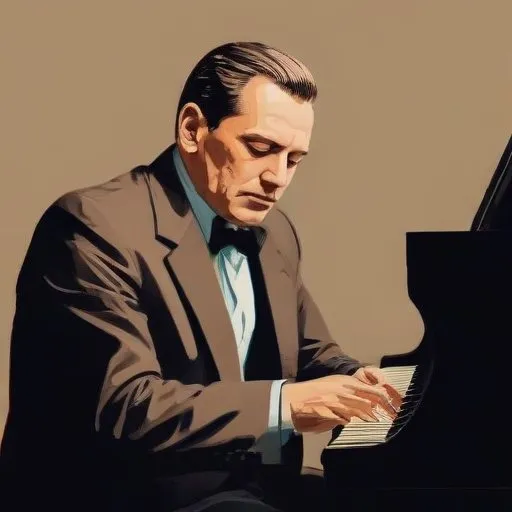
A German Renaissance man who excelled in music, composing piano concertos, and made significant contributions to the field of physics, particularly in the study of electricity.
Salomon Kalischer was a German Jewish composer, pianist, and physicist who made significant contributions to the fields of music and science. Born on October 8, 1845, in Thorn, Toruń, Prussia (now Poland), Kalischer's work spanned multiple disciplines, earning him recognition as a true Renaissance man.
Kalischer's early life was marked by a strong emphasis on education. He studied at the Jewish Theological Seminary of Breslau and later attended the universities of Breslau and Berlin, where he earned his Ph.D. in 1868. His dissertation, titled "De Aristotelis Rhetoricis et Ethicis Nicomachis et in Quo et Cur Inter Se quum Congruant tum Differant," was awarded a prize by the philosophical faculty of the University of Berlin.
Following his graduation, Kalischer worked as a tutor in Amsterdam before returning to Berlin to pursue his passion for physics and chemistry. In 1876, he established himself as a privatdocent at the Bauakademie of Berlin, later becoming a lecturer and eventually a professor of physics at the Technische Hochschule at Charlottenburg (now Technische Universität Berlin).
Throughout his career, Kalischer demonstrated a remarkable ability to balance his love for music and science. As a composer, he created numerous works, while his scientific pursuits led to publications on topics such as physics, chemistry, and electricity. His literary works included the editing of Goethe's scientific writings, as well as translations of Michael Faraday's Experimental Researches in Electricity into German.
Kalischer's work had a profound impact on his field, and his contributions continue to inspire generations of scientists and musicians. He passed away on September 22, 1924, in Marienbad, leaving behind a legacy that transcends disciplinary boundaries.
Kalischer's unique blend of artistic and scientific talent has inspired countless individuals to pursue careers in both music and science. His work serves as a testament to the power of interdisciplinary collaboration and the importance of exploring multiple passions.
Today, Kalischer's contributions to physics, chemistry, and music remain a vital part of his legacy, reminding us of the importance of nurturing creativity and intellectual curiosity. As a true pioneer, Salomon Kalischer continues to inspire and motivate individuals to pursue their passions, no matter how diverse they may be.
Born in 1770
A musical genius who expanded the possibilities of classical music, creating iconic symphonies and piano sonatas that continue to inspire and influence generations of artists.
Born in 1811
A virtuosic pianist and composer who revolutionized classical music with his technically demanding and emotionally expressive works, blending Hungarian folk influences with Romantic-era drama.
Born in 1810
A Polish pianist and composer renowned for his delicate, expressive, and technically demanding piano music that evokes deep emotions and continues to inspire generations of musicians and music lovers. His nocturnes, waltzes, and preludes are staples of classical music.
Born in 1810
A renowned Romantic-era composer and influential music critic, known for his expressive and emotionally charged works, including symphonies, piano music, and art songs.
Born in 1833
A renowned pianist and composer, he crafted complex, expressive works that blended traditional and innovative techniques, leaving an indelible mark on classical music.
Born in 1829
A renowned Russian musician of the Romantic era, celebrated for his virtuosic piano performances and compositions that blended Russian folk elements with Western classical music traditions.
Born in 1835
A French Romantic-era mastermind who composed iconic works like "The Carnival of the Animals" and "Danse Macabre", leaving an indelible mark on classical music.
Born in 1822
A Belgian organist and composer who created iconic works that blended Romanticism and Impressionism, leaving a lasting impact on classical music.
