


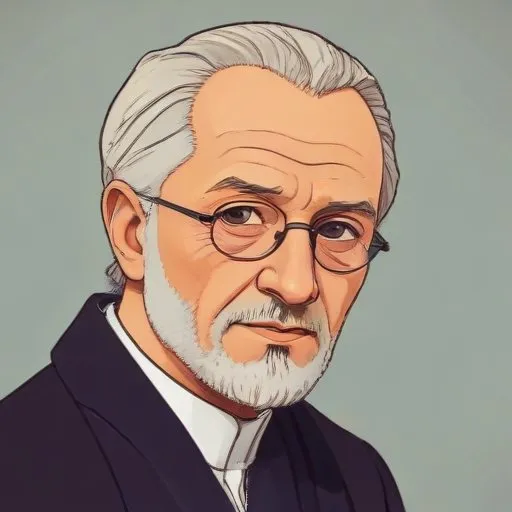
A 16th-century Lutheran theologian and traveler who wrote about his journeys to the Middle East and Eastern Europe, providing valuable insights into the cultures and customs of the time.
Salomon Schweigger, a 16th-century German Lutheran theologian, minister, anthropologist, and orientalist, is renowned for his groundbreaking travels to the Balkans, Constantinople, and the Middle East. His extraordinary journeys culminated in the publication of a seminal travel book, which offered a captivating glimpse into the mysteries of the East, making him an luminary of his time.
Born on March 30, 1551, in Sulz am Neckar, Schweigger was immersed in the world of classical philology and theology from a young age. After completing his studies at the University of Tübingen, he embarked on a remarkable journey as an embassy chaplain to Istanbul, where he spent several years attached to the Habsburg embassy.
Schweigger's travel diary is a treasure trove of observations and insights into the Ottoman Empire during the 16th century. He vividly captured the essence of Turkish life, describing the attire, customs, and traditions of the people. His curiosity about the local jewelry, particularly the nose rings worn by women, showcases his fascination with the exotic.
He also delved into the history and origins of various ethnic groups, such as the Serbians, Bulgarians, and Rascians, which he attributed to the ancient German tribes of Daci. His thirst for knowledge led him to document the intricacies of jugglers, fires, and Turkish music, offering a unique perspective on the cultural landscape of the era.
Schweigger's literary contributions are a testament to his linguistic prowess. He translated the Quran into German, making it accessible to a broader audience in Europe. This monumental work not only bridged the gap between East and West but also demonstrated his commitment to intercultural understanding.
After his return to Germany, Schweigger devoted himself to a life of contemplation and scholarship. He continued to write and translate, leaving behind a rich legacy of works that would influence generations to come. His quiet dedication to his craft earned him the respect of his contemporaries, cementing his position as a luminary in the world of theology and oriental studies.
Schweigger's extraordinary life and works have left an indelible mark on the world of anthropology, theology, and oriental studies. His contributions have not only enriched our understanding of the Ottoman Empire but have also fostered a deeper appreciation for the cultural diversity of the East. As a testament to his pioneering spirit, his name has become synonymous with the pursuit of knowledge and intercultural understanding.
Born in 1483
A German monk and priest who sparked the Protestant Reformation, challenging Catholic Church authority and shaping Western Christianity. He's famous for nailing 95 theses to a church door, sparking a religious revolution.
Born in 1509
A French pastor and theologian who played a key role in the Protestant Reformation, shaping Christian theology and influencing Western civilization. He's famous for his teachings on predestination and his role in establishing Calvinism.
Born in 1484
Leader of the Swiss Reformation, advocating for church reform and inspiring other Protestant movements.
Born in 1497
A 16th-century Renaissance scholar who made significant contributions to the development of the Protestant Reformation and education, known for his theological writings and astronomical observations.
Born in 1504
A prominent figure in the Swiss Reformation, he played a key role in shaping Protestant theology and wrote influential works on covenant theology. His writings had a lasting impact on Reformed Christianity.
