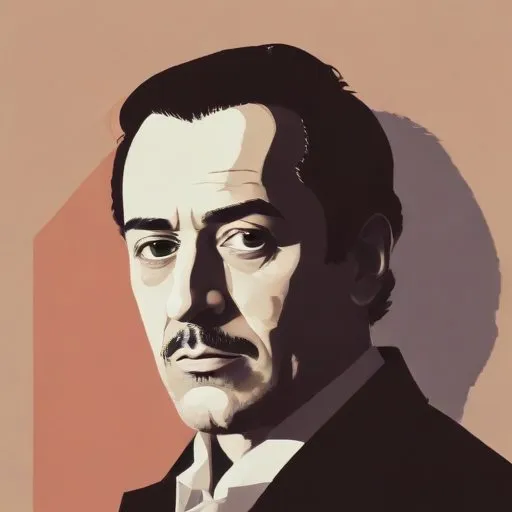
Salvador Bacarisse: The Spanish Composer Who Revolutionized Music
A Legacy of Innovation
Salvador Bacarisse, a renowned Spanish composer, is best known for his groundbreaking contributions to the world of classical music, particularly in the neoromantic style. His most famous work, the Concertino for Guitar and Orchestra in A minor, Op. 72, composed in 1952, has become a staple of guitar repertoire.
Early Life and Education
Born on September 12, 1898, in Madrid, Spain, Bacarisse began his musical journey at the Real Conservatorio de Música, where he studied piano under Manuel Fernández Alberdi and composition under Conrado del Campo.
The Grupo de los Ocho and the Promotion of New Music
Bacarisse was a leading member of the Grupo de los Ocho, a group of eight Spanish composers who sought to combat musical conservatism and promote new music. This spirit of innovation and creativity continued when he became the artistic director of Unión Radio, a role he held until 1936.
Exile and Radio Broadcasting
Following the Spanish Civil War, Bacarisse exiled himself to Paris, rejecting the Francoist State. From 1945 until his death, he worked as a broadcaster for Radio-Télévision Française, creating Spanish-language programs that showcased his love for music.
Compositional Works
Bacarisse's compositional output was vast and diverse, including works for piano, mixed chamber ensembles, operas, and orchestral pieces. Some notable works include:
- El tesoro de Boabdil, an opera that won a French radio award in 1958
- Four piano concertos and a violin concerto
- His iconic Concertino for Guitar and Orchestra in A minor, Op. 72
Philosophical Contributions and Beliefs
Bacarisse's music was deeply rooted in his passion for innovation and his desire to break free from traditional musical constraints. He believed in the power of music to bring people together and transcend boundaries.
Personal Milestones and Key Life Events
Some notable milestones in Bacarisse's life include:
- 1898: Born in Madrid, Spain
- 1936: Became artistic director of Unión Radio
- 1939: Exiled himself to Paris after the Spanish Civil War
- 1945: Began working as a broadcaster for Radio-Télévision Française
- 1963: Passed away on August 5
Influence on Modern Society
Bacarisse's contributions to music have had a lasting impact on modern society. His music continues to inspire and influence generations of composers and musicians.
Quotes and Memorable Sayings
While there are no direct quotes from Bacarisse, his music speaks volumes about his passion for innovation and his dedication to his craft.
Historical Context and Legacy
Bacarisse's life and work are a testament to the power of music to transcend time and boundaries. His legacy continues to inspire and influence musicians and composers around the world.
By Emily Carter
FAQ
What were Salvador Bacarisses contributions to Spanish music?
Salvador Bacarisse was a Spanish composer who made significant contributions to Spanish music, particularly in the genres of chamber music and opera. He was known for his romantic and expressive style, which was influenced by Spanish folk music.
What was Salvador Bacarisses most famous work?
Salvador Bacarisses most famous work is his opera La Huffman, which premiered in 1932. The opera was praised for its lyricism and its exploration of themes related to love and identity.
How did Salvador Bacarisses work reflect his Spanish heritage?
Salvador Bacarisses work was deeply rooted in his Spanish heritage, drawing on traditional folk melodies and rhythms. His music often featured complex harmonies and rich textures, which reflected the cultural and artistic traditions of Spain.
What was Salvador Bacarisses role in Spanish musical life?
Salvador Bacarisse was an important figure in Spanish musical life, serving as a professor of composition at the Madrid Conservatory and playing a key role in the development of Spanish music in the early 20th century.
How did Salvador Bacarisses work influence subsequent generations of composers?
Salvador Bacarisses work had a lasting impact on subsequent generations of composers, influencing the development of Spanish music and inspiring new generations of musicians and composers.