


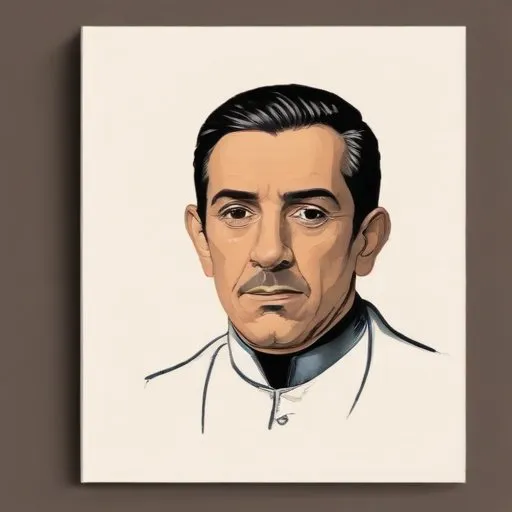
A Spanish historian and diplomat who wrote extensively on Spanish and European history, and served as a key figure in the League of Nations.
Spanish diplomat, writer, historian, and pacifist Salvador de Madariaga y Rojo was a multifaceted individual who left an indelible mark on the world stage. Nominated for both the Nobel Prize in Literature and the Nobel Peace Prize, Madariaga's commitment to promoting peace, understanding, and cultural exchange earned him the coveted Charlemagne Prize in 1973.
Born on July 23, 1886, in A Coruña, Galicia, Kingdom of Spain, Madariaga graduated with a degree in engineering from Paris, France. This cosmopolitan upbringing would later influence his diplomatic career and writing style.
Madariaga's career as an engineer for the Northern Spanish Railway Company in Spain was short-lived, as he soon became enamored with journalism, working for The Times newspaper in London. During this period, he began publishing his first essays, showcasing his talent for writing and analysis.
In 1921, Madariaga joined the Secretariat of the League of Nations, where he would spend several years working on disarmament and international relations. His stint as Professor of Spanish at Oxford University from 1928 to 1931 saw the publication of his seminal work, Englishmen, Frenchmen, Spaniards, a profound exploration of nation psychology.
In 1931, the Second Spanish Republic appointed Madariaga as Spanish ambassador to the United States and a permanent delegate to the League of Nations, a post he held for five years. His unwavering commitment to international cooperation led to his chairing the Council of the League of Nations in January 1932, where he vociferously condemned Japanese aggression in Manchuria, earning him the nickname "Don Quijote de la Manchuria."
In 1936, Madariaga fled to England to escape the Spanish Civil War, where he became a vocal opponent of the Nationalists and the Spanish State of Francisco Franco. In 1947, he played a pivotal role in drafting the Oxford Manifesto on liberalism, a landmark document that cemented his reputation as a leading liberal thinker.
Salvador de Madariaga's life and work serve as a testament to the power of diplomacy, cultural exchange, and liberal values. His commitment to promoting peace, understanding, and cooperation continues to inspire leaders and thinkers around the world. As a champion of international relations and a fierce defender of liberal principles, Madariaga's legacy will endure for generations to come.
Born in 1898
A Spanish poet, playwright, and director who explored themes of love, death, and Spanish culture through his works, including the famous play "Blood Wedding".
Born in 1904
A Chilean poet and diplomat who wrote passionate and evocative poetry that explored love, politics, and the human condition, and was awarded the Nobel Prize in Literature in 1971.
Born in 1898
A Spanish poet and author, celebrated for his surreal and introspective works that explored the human condition, earning him the Nobel Prize in Literature in 1977.
Born in 1902
A Spanish poet and playwright celebrated for his avant-garde style and powerful anti-fascist writings, which greatly influenced 20th-century Spanish literature.
Born in 1898
A renowned Spanish poet and philologist who made significant contributions to the study of Spanish literature, particularly in the field of Golden Age poetry. He's also known for his own poetry, which explores themes of love, death, and existential crisis.
Born in 1893
A Spanish poet, critic, and academic who explored themes of love, nature, and human existence through lyrical and introspective verse, earning him the Cervantes Prize.
Born in 1896
A leading figure in Spanish literature, known for blending traditional forms with modernist experimentation, and influential in shaping 20th-century Spanish poetry .
