


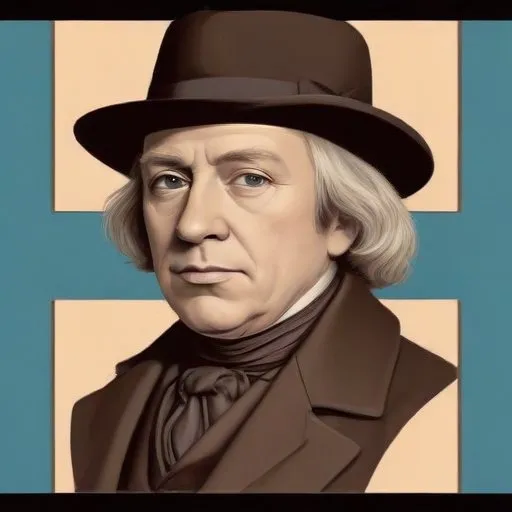
Designed innovative naval vessels and dockyards, revolutionizing British naval architecture and engineering. His work greatly improved shipbuilding and harbor construction, leaving a lasting impact on the industry.
Samuel Bentham was a renowned English mechanical engineer and naval architect, credited with numerous innovations that left a lasting impact on naval architecture, particularly in the field of weaponry. He is best known for his pioneering work on amphibious vessels, articulated barges, and the concept of central inspection, which was later popularized by his brother, Jeremy Bentham.
Born on January 11, 1757, Samuel Bentham was the only surviving sibling of philosopher Jeremy Bentham. His father, Jeremiah Bentham, was an attorney, and his mother died in 1766, leaving behind two sons. At the age of 14, Samuel was apprenticed to a shipwright at Woolwich Dockyard, where he served for seven years before completing his training at the Naval Academy in Portsmouth.
In 1780, Bentham moved to Russia, where he worked in the service of Prince Potemkin, a patron of the arts and sciences. Initially hired as a shipbuilder, Bentham soon discovered opportunities to apply his talents as an engineer and inventor. He constructed industrial machinery, experimented with steel production, and designed novel inventions, including:
During his time in Russia, Bentham was decorated for his role in a decisive victory against the Turks and commanded a battalion of 1,000 men in Siberia. He eventually became responsible for Potemkin's factories and workshops, where he developed and refined his innovative ideas.
Bentham's contributions to naval architecture and engineering had a significant impact on the development of modern warships and maritime technology. His work on amphibious vessels and articulated barges paved the way for future innovations in shipbuilding and naval design. The concept of central inspection, popularized by his brother Jeremy, has had a lasting influence on architectural design and social theory.
In addition to his technical accomplishments, Bentham's experiences in Russia and his relationships with prominent figures like Prince Potemkin and Catherine the Great provide valuable insights into the cultural and intellectual exchange between Europe and Russia during the 18th century.
In 1782, Bentham traveled along the Siberian route to China, visiting Kyakhta and its Chinese pendant, Naimatchin. This journey marked a significant milestone in his life, exposing him to new cultures and ideas that would shape his perspectives on engineering, architecture, and society.
Throughout his life, Bentham maintained a close bond with his brother Jeremy, with whom he shared a passion for innovation and intellectual pursuits. Their relationship serves as a testament to the power of family ties and the importance of sibling relationships in shaping individual accomplishments.
Samuel Bentham's life and work are a testament to the ingenuity and creativity of the 18th century. His innovations in naval architecture and engineering reflect the era's fascination with technological progress and the pursuit of knowledge. As a pioneer in his field, Bentham's legacy continues to inspire generations of engineers, architects, and inventors.
In conclusion, Samuel Bentham's remarkable life and achievements serve as a powerful reminder of the impact that individual ingenuity can have on shaping the course of human history. His pioneering work in naval architecture, engineering, and social theory has left an indelible mark on our understanding of the world and our place within it.
Born in 1748
Developed the concept of utilitarianism, which aims to maximize overall happiness and well-being, and is considered the founder of modern welfare economics.
Born in 1759
Prime Minister of the United Kingdom from 1783 to 1801 and 1804 to 1806, known for leading the country through the French Revolutionary and Napoleonic Wars.
Born in 1806
A visionary engineer who revolutionized transportation with innovative designs, including the iconic Clifton Suspension Bridge, which transformed urban landscapes.
Born in 1771
Developed precision engineering techniques and invented the screw-cutting lathe, revolutionizing manufacturing and enabling mass production.
Born in 1736
Improved steam engine efficiency, revolutionizing industry and transportation. Known for his innovative designs and patents that transformed the Industrial Revolution.
