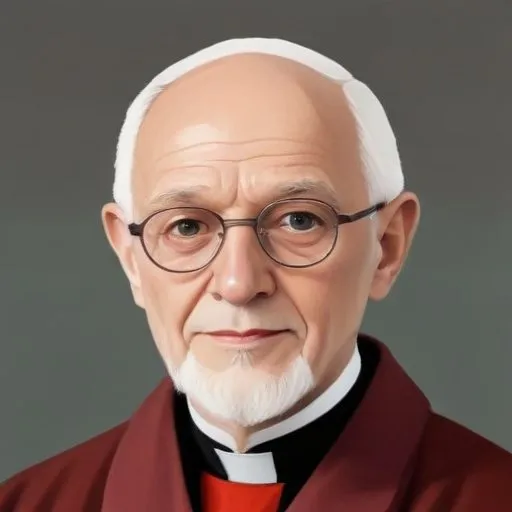
Samuel Werenfels: The Theologian Who Shaped Swiss Reformed Theology
A Champion of Reasonable Orthodoxy
Samuel Werenfels was a renowned Swiss theologian, celebrated for his significant contributions to the development of Swiss Reformed theology. He is particularly known for his advocacy of a more reasonable and inclusive approach to orthodoxy, which earned him a prominent place in the history of Swiss Reformed theology.
Early Life and Education
Werenfels was born on March 1, 1657, in Basel, Switzerland, to Peter Werenfels, an archdeacon, and Margaretha Grynaeus. He pursued his theological and philosophical studies at the University of Basel, followed by visits to esteemed universities in Zurich, Bern, Lausanne, and Geneva.
Academic Career and Travels
In 1685, Werenfels became a professor of Greek at the University of Basel, where he later assumed the roles of professor of rhetoric and member of the theological faculty. His academic journey was interspersed with extensive travels, including a notable journey through Germany, Belgium, and the Netherlands in 1686, accompanied by
Gilbert Burnet. During this period, he received a call from the University of Franeker, which he declined.
Philosophical Contributions and Beliefs
Werenfels' theological stance was marked by a strong emphasis on the historical-grammatical method of biblical interpretation. He famously remarked, "This is the book in which each both seeks and finds his own dogmas," highlighting the potential misuse of the Bible to support personal beliefs. His epigram encapsulates his commitment to a more nuanced and contextual understanding of scripture.
The Helvetic Triumvirate
Werenfels, along with Jean-Alphonse Turrettini and Jean-Frédéric Osterwald, formed the Helvetic triumvirate, a group of influential Swiss theologians who shaped the course of Reformed theology. Their collective efforts fostered a more reasonable and inclusive approach to orthodoxy, which continues to influence theological discourse.
Legacy and Impact
Throughout his life, Werenfels was an active member of several esteemed academic institutions, including the Prussian Academy of Sciences and the Society for the Propagation of the Gospel of London. His later years were marked by a period of retirement, during which he participated in the proceedings against
Johann Jakob Wettstein for heresy, although he later expressed regret for his involvement. Werenfels passed away on June 1, 1740, leaving behind a rich legacy that continues to inspire theological inquiry and exploration.
A Lasting Influence
As a champion of reasonable orthodoxy, Werenfels' contributions have had a profound impact on the development of Swiss Reformed theology. His commitment to the historical-grammatical method and his advocacy for a more nuanced understanding of scripture continue to influence theological discourse. As a member of the Helvetic triumvirate, Werenfels' legacy extends beyond his individual accomplishments, shaping the course of Reformed theology for generations to come.
FAQ
Who was Samuel Werenfels and what were his contributions to theology and literature?
Samuel Werenfels was a Swiss theologian and author, who made significant contributions to the field of theology and literature, particularly in the areas of biblical studies and hymnology.
What were the key ideas of Samuel Werenfels theological work?
Samuel Werenfels theological work was characterized by a focus on biblical studies, particularly the interpretation of Scripture and the development of dogmatic theology.
How did Samuel Werenfels influence the development of theology and literature?
Samuel Werenfels work on theology and literature helped to develop the field in several ways, including the introduction of new biblical interpretation methods and the expansion of hymnology.
What is the significance of Samuel Werenfels in the history of theology and literature?
Samuel Werenfels is significant in the history of theology and literature because he was one of the earliest theologians to focus on biblical studies and hymnology. His work anticipated some of the developments of modern theology.
What can we learn from the life and work of Samuel Werenfels?
The life and work of Samuel Werenfels teach us the importance of intellectual curiosity, perseverance, and dedication to ones craft. He shows us that even in the face of adversity, we can remain committed to our values and ideals.