


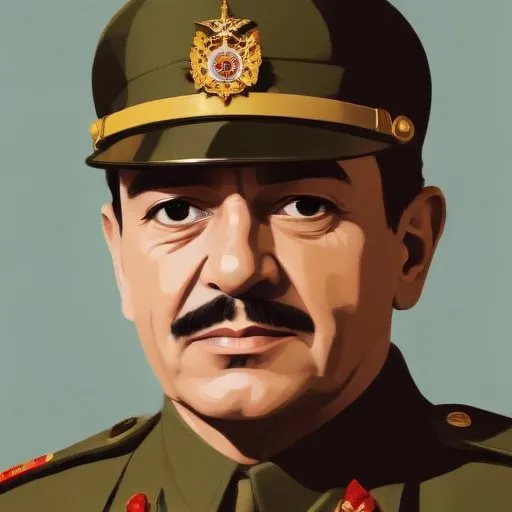
A Spanish general and politician who played a key role in the Spanish Civil War and later became the leader of the Communist Party of Spain, advocating for democracy and human rights.
Santiago Carrillo, the renowned Spanish politician, is best known for his instrumental role in guiding Spain's transition from dictatorship to democracy. As the General Secretary of the Communist Party of Spain (PCE) from 1960 to 1982, Carrillo played a pivotal role in shaping the country's political landscape and promoting democratic values.
Born on January 18, 1915, in Gijón, Asturias, Spain, Carrillo was raised in a family deeply rooted in politics. His father, Wenceslao Carrillo, was a prominent Socialist leader, and his mother, María Rosalía Solares Martínez, instilled in him a strong sense of social justice.
Carrillo's political awakening began at a young age. At 13, he started working at El Socialista, the Spanish Socialist Workers' Party (PSOE) newspaper. He soon joined the Socialist Union, the Workers' General Union, and the Socialist Youth, laying the foundation for his future roles in Spanish politics.
In 1932, Carrillo became a member of the Executive Commission of the Socialist Youth and editor of its newspaper, Renovación. His radical views and charismatic leadership quickly propelled him to the forefront of the Socialist Youth, and in 1933, he was elected as its General Secretary.
During the Spanish Civil War, Carrillo played a crucial role in maintaining public order in Madrid as the head of a Republican militia. However, his actions during this period have been subject to controversy, with some accusing him of being responsible for the massacres of Franco's prisoners in 1936.
Following the Franco regime's victory in 1939, Carrillo was forced into exile, where he became a key figure in the democratic opposition to the dictatorial government. From his base in France, he continued to advocate for democratic reforms and human rights, earning him international recognition as a champion of freedom and justice.
In the 1970s, Carrillo returned to Spain and played a pivotal role in the country's transition to democracy. He embraced Eurocommunism, a more moderate and democratic form of communism, and worked closely with other opposition leaders to bring about peaceful reform.
In 1977, Carrillo was elected to the Congress of Deputies, where he served until 1986. During this period, he continued to promote democratic values and advocate for human rights, earning him widespread respect and admiration.
Santiago Carrillo's legacy is a testament to his unwavering commitment to democracy and human rights. His role in guiding Spain's transition from dictatorship to democracy has inspired generations of politicians and activists around the world.
Santiago Carrillo's life serves as a powerful reminder of the importance of democracy, human rights, and social justice. His unwavering commitment to these values has left an indelible mark on Spanish history, cementing his place as one of the most important figures of the 20th century.
99 Years Old
The Cuban revolutionary who led the country from 1959 to 2008, implementing socialist policies and defying US opposition, becoming an iconic figure in modern history.
95 Years Old
The Cuban revolutionary leader who served as President of Cuba from 2008 to 2018, known for implementing economic reforms and improving relations with the US. He played a key role in shaping Cuba's socialist government and economy.
Born in 1870
Founder of the world's first socialist state, leading the Bolshevik Revolution and establishing the Soviet Union, known for his radical Marxist ideology and authoritarian rule.
Born in 1879
Founded the Red Army and played a crucial role in the Russian Revolution, shaping the course of modern communism. A key figure in 20th-century politics and ideology.
95 Years Old
The last leader of the Soviet Union, who introduced reforms that led to the end of the Cold War and the collapse of communism, earning a Nobel Peace Prize. He's known for his policies of glasnost and perestroika, which transformed the Soviet Union and the world.
Born in 1892
The authoritarian leader who ruled Spain with an iron fist from 1939 to 1975, suppressing opposition and imposing conservative values, while also modernizing the economy. He's infamous for his brutal regime and human rights abuses.
Born in 1908
Chile's first democratically elected Marxist president, who implemented radical socialist reforms and nationalized key industries, but was overthrown in a CIA-backed coup.
